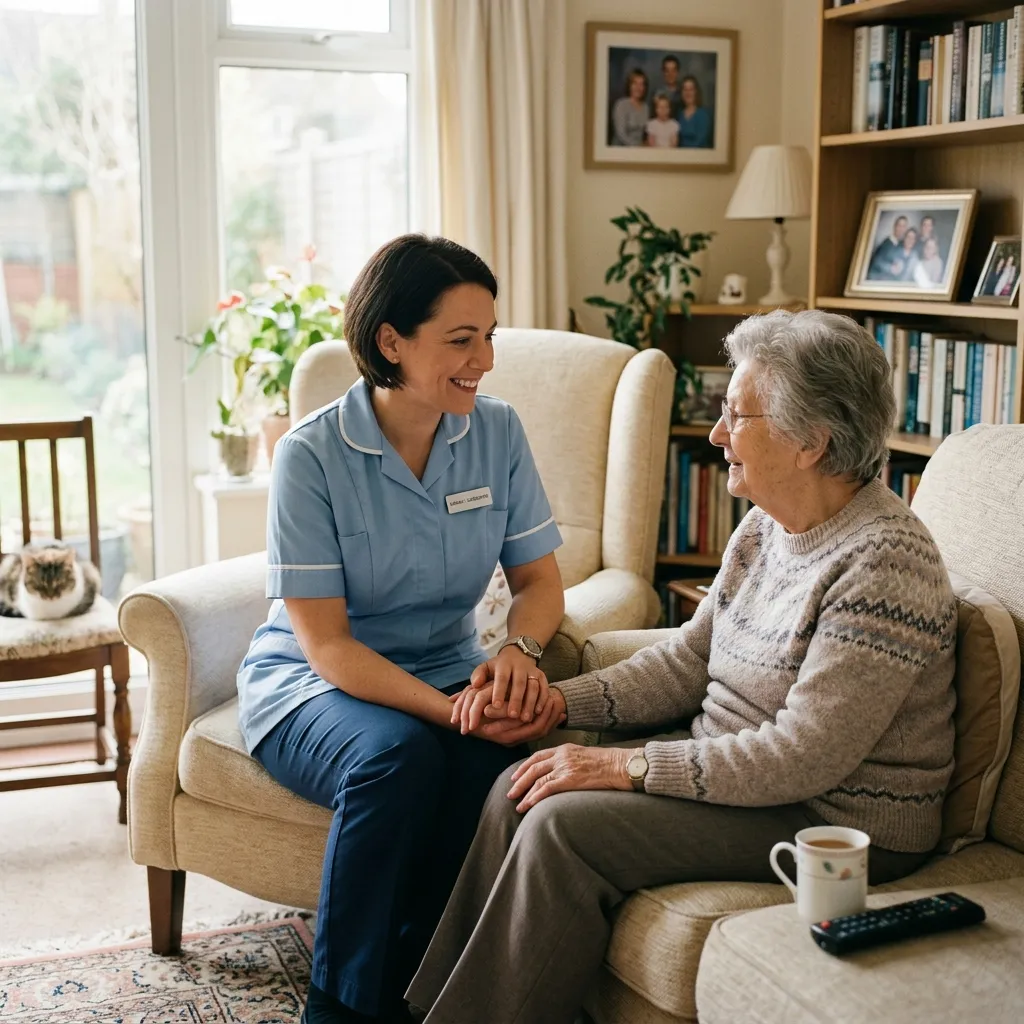

The funeral is when everyone shows up. The casseroles arrive, relatives fly in and the house is full. Then it empties. The weeks that follow—when visits drop away and everyone else returns to routine—are when a surviving parent may need the closest attention.
You may notice it in the fridge first: food from the funeral still untouched under foil, a single yogurt past its date and very little else. The pill organizer is still full from Tuesday. The car has not moved because the spouse who died always drove. The bed feels too large, so your parent sleeps in the armchair.
Or it may be your father, after your mother cooked every meal and managed every appointment for decades. He is living on toast and coffee, missing the Thursday gathering he never used to skip and letting the mail pile up.
A parent can sound composed during a short phone call while food, medication, sleep and routines quietly unravel. This guide explains the evidence behind the widowhood effect, what families should watch during the first 90 days and how to add support without treating grief like an illness.
Need care for your parent?
Get a professional care assessment at no cost.
The widowhood effect is real—and the first three months stand out
People have long talked about someone dying of a broken heart after losing a spouse. The phrase sounds like folklore, but population research has measured a short-term increase in mortality after bereavement.
A longitudinal U.S. study followed 12,316 married adults aged 50 and older through 2008. During the first three months after widowhood, the fully adjusted odds of mortality were 66% higher than among people who remained married. The confidence interval was wide, and the result describes a population association—not what will happen to any individual person. The elevated estimate fell sharply after the first three months, and the researchers did not find a meaningful difference between women and men in that short-term association.
Canadian families encounter this transition often. Using 2021 Census data, the Vanier Institute reported that one in five Canadians aged 65 and older was widowed. Among people aged 80 to 84, 47.1% of women and 16.6% of men were widowed.
The practical point is not to frighten families. It is to treat the first 90 days as a time for deliberate follow-up rather than assuming the difficult part ended with the funeral.
Why losing a spouse can destabilize health and daily life
Researchers cannot reduce the widowhood effect to one cause. Several pressures can arrive at once.
Grief affects the body. Acute grief can disturb sleep, appetite and stress regulation. In an older adult already living with heart disease, diabetes, frailty or another condition, missed meals and poor sleep may matter quickly.
The surviving spouse may already be depleted. Many people spend months or years caring for a partner before the death, postponing their own appointments and running on interrupted sleep. The funeral may come at the end of a long period of exhaustion, not at the beginning of the problem.
Half the household's knowledge can disappear overnight. Long-term couples often divide tasks. One cooks and drives; the other manages money, medications or appointments. When one spouse dies, the survivor inherits unfamiliar work while grieving.
Routines and observation disappear. Meals happened because two people sat down. Someone noticed a missed tablet, an unsteady step or a cough that was getting worse. Without that daily witness, small changes can go unseen.
Loneliness can become immediate. A spouse may have been the person's main companion and only daily conversation. Read more about loneliness as a health risk.
Grief itself is not a failure or a diagnosis. The danger is grief combined with isolation, disrupted routines and nobody noticing what is slipping.
Want more deep knowledge like this?
Join our private Facebook group to connect with experts, get exclusive resources, and find support from families navigating the same journey.
What did the other parent do every day—and who is doing it now?
Every couple divides life differently, and gender stereotypes do not describe every family. Still, many adult children discover that one parent depended heavily on the other for particular tasks.
A widowed father may suddenly be responsible for cooking, social plans, medical appointments and maintaining family contact. Meals can shrink to whatever requires no effort, the calendar empties and friendships fade. Some men are reluctant to say they are struggling, making the decline harder to hear over the phone.
A widowed mother may lose the person who handled driving, finances, household maintenance or winter work. She may be unable to reach the grocery store or appointments and may face bills, insurance and repairs she has never managed alone. If she was also a long-term caregiver, she may be more physically depleted than the family realizes.
The most useful question is not whether Mom or Dad is coping in general. Ask: What did the spouse who died handle each day, week and month, and who owns each task now?
Warning signs families can miss during ordinary grief
Many warning signs resemble ordinary bereavement, which is why they are easy to dismiss. Look for patterns, rapid change and loss of basic function rather than expecting grief to follow a tidy schedule.
During the first three months, notice:
- Ongoing weight loss, an empty fridge or meals repeatedly left untouched
- Pill organizers staying full, doubled doses or prescriptions not being refilled
- Missed medical appointments, especially ones the late spouse used to book or drive to
- Unopened mail, overdue bills or confusion about banking and insurance
- Remaining in sleepwear all day, not bathing or rarely leaving the house
- Sleeping far more or less than usual, or moving from the bed to a chair
- A fall, new dizziness, breathlessness or sudden confusion
- Hopeless statements such as "There is no point" or "I want to be with them"
One missed meal or difficult day is not proof of dangerous decline. Several changes together—or a clear worsening over days—deserve action. If low mood, withdrawal or memory change is difficult to interpret, read Is my dad depressed or is this dementia? and arrange a clinical assessment rather than guessing at home.
When to seek urgent help
Grief and depression can overlap, but they are not the same. Persistent hopelessness, not eating or drinking, inability to manage basic safety, or saying they do not want to live are reasons to contact a healthcare professional promptly.
If your parent is thinking about suicide—or you are worried they may be—call or text 9-8-8 in Canada at any time. You can also contact 9-8-8 when you are worried about someone else. If there is immediate danger, a suicide attempt, severe chest pain, serious breathlessness or sudden confusion, call 9-1-1 or go to the nearest emergency department.
Do not dismiss new physical symptoms as "just grief." Sudden confusion can have a treatable medical cause, and chest pain or breathing difficulty needs urgent assessment.
What actually helps during the first 90 days
1. Show up after the funeral, not only at it. Weeks three through twelve are when many visitors have returned to normal life. Put calls and visits in the calendar, and rotate them across relatives or trusted friends so one person does not carry everything.
2. Map what the spouse used to do. List driving, meals, banking, medications, appointments, home maintenance, snow clearing, pet care and social plans. Give each gap an owner and a next date. The paperwork you need before you need it can help identify legal and administrative gaps.
3. Protect food, medication and sleep. Make meals easy and social. Check prescriptions and the organizer with permission. If appetite, sleep or medication adherence has changed, tell the family doctor or pharmacist.
4. Avoid forcing permanent decisions during the first weeks. Selling the house or moving into a residence can feel urgent when everyone is anxious. Unless the home is immediately unsafe, temporary in-home support can create time to grieve and make a calmer decision.
5. Arrange a health check. Ask the family doctor or nurse practitioner for an appointment during the first couple of months, or sooner if something is changing. Mention the bereavement and bring observations about weight, mood, sleep, medication and function.
6. Plan for firsts. The first birthday, anniversary and holiday without a spouse can intensify grief. Decide in advance who will be present and what the surviving parent wants. If you are visiting during the holidays, use our 10-point holiday visit checklist.
7. Offer specific help. "Can I bring dinner Tuesday and drive you to Thursday's appointment?" is easier to answer than "Let me know if you need anything." If help is refused, read why aging parents refuse help.
How Corelia Health can support a grieving parent at home
Home care does not replace grief counselling, medical care or family. It can stabilize the daily routines that bereavement has disrupted and give the family another consistent set of eyes.
"She is not eating, and she will not cook for one." Elderly care can include groceries, meal preparation and company at the table.
"Dad always did the driving and appointments." Companion care supports errands, appointments, outings and regular human connection.
"She cared for him for years and neglected her own health." Chronic condition support can reinforce established routines and help the family notice changes to raise with clinicians. Care plans are overseen by our Clinical Director, a Registered Nurse.
"He is struggling with bathing and dressing now that she is gone." Personal care assistance provides respectful help with hygiene, grooming, dressing, toileting and mobility.
"The nights are the hardest, and we are worried about falls or confusion." 24/7 senior home care can provide scheduled overnight or round-the-clock presence when assessed needs require it.
"Our family cared for Mom through the end, and now everyone is exhausted." In-home respite care gives adult children protected time to rest and grieve too.
Support may be short-term during the first months or continue as needs change. Corelia offers flexible schedules without long-term contracts. Caregivers are bonded, WSIB/WCB insured and cleared through vulnerable-sector police checks.
The first three months matter. You do not have to cover them alone.
If a parent has recently lost a spouse, a free, no-obligation assessment can identify practical gaps in meals, medication routines, mobility, personal care and companionship. It can take place while relatives are still in town or after they return home.
, take the two-minute care-needs quiz, or call 1-844-826-7354.Official and research sources
- Short- and long-term associations between widowhood and mortality in the United States: longitudinal analyses — Journal of Public Health / PubMed Central
- Marital status, age group and gender: 2021 Census table 98-10-0125-01 — Statistics Canada
- The percentage of older adults who are widowed has declined — Vanier Institute of the Family
- Preventing suicide: when and how to help — Government of Canada
Sources were checked on October 22, 2026. Population-level associations do not predict an individual person's outcome.
Frequently Asked Questions
Some earlier studies found a larger effect among men, but the longitudinal study cited here found that the short-term association during the first three months did not differ meaningfully by sex. Individual risk depends on health, isolation, caregiving exhaustion and how much the survivor relied on their spouse for daily tasks.
Avoid arguing about whether they are coping. Look together at specific tasks: meals, medications, transportation, bills and appointments. Offer one concrete form of help, preserve choices wherever possible and arrange a health assessment if function, mood or safety is changing.
Sometimes that is the right long-term choice, but it usually does not need to be decided in the first weeks unless the current home is unsafe. Temporary family or professional support at home can create time to understand what your parent wants and what level of help is actually needed.
In the cited U.S. study, the mortality association was strongest during the first three months and then tapered sharply. Grief has no fixed deadline, so keep checking food, medication, mood, function and connection throughout the first year, especially around meaningful dates.
Corelia Premium Guide
Use this guide to compare care options, prepare family questions, and understand what to check before starting in-home support.
Professional Care Services
Local Home Care Support
Why Corelia Health?
-
Customized care plans tailored to your unique needs and preferences.
-
Screened caregivers matched to the care plan, schedule, and level of help required.
-
Ongoing monitoring and regular family updates for peace of mind.
-
Locally owned and operated, providing a personalized community touch.
"We help at home, wherever home is for you."
Find The Right CareSpeak to our Clinical Care Coordinator
We are here to walk this journey with you. Our coordinators provide expert guidance on care options, funding, and next steps.