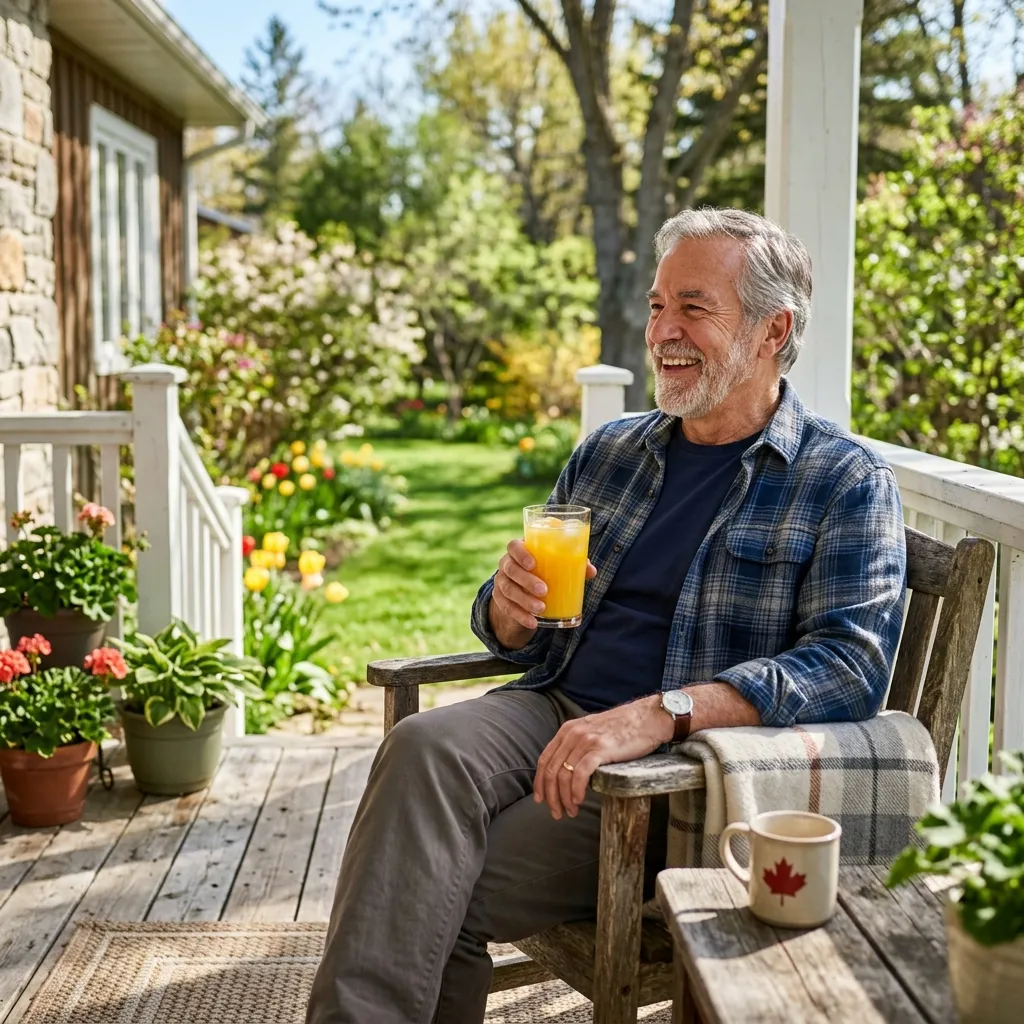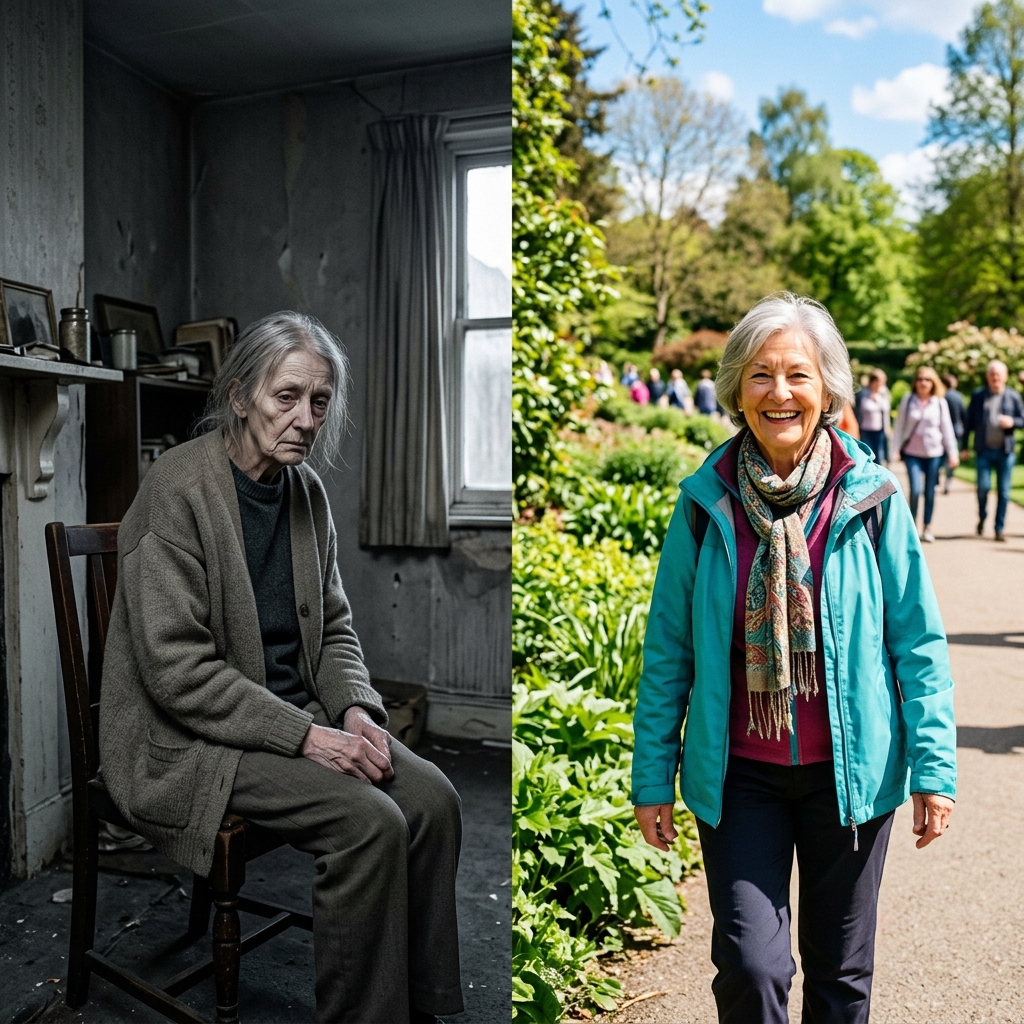

Walter Sinclair kept his annual physical the way some men keep a promise — without fail, every spring, for the better part of thirty years. Blood pressure. Cholesterol. Blood sugar. Every number checked, charted, and discussed in careful detail. In all those years, no one ever asked him how many real conversations he'd had that week.
His daughter, Rebecca, noticed what the chart never would, long before any doctor did. Since her mother passed two years earlier, Walter's world had gone quiet in a way that never once showed up on a lab result. He kept every appointment. He took every pill exactly as prescribed. By every clinical measure, Walter was a model patient. In his own kitchen most evenings, he was a man who sometimes went three or four days without saying more than a few words out loud.
It turns out the thing nobody measured at Walter's check-ups may matter more than nearly everything they did measure. Here is the research behind why doctors are finally starting to pay attention — and what Rebecca did once she understood it.
Need care for your parent?
Get a professional care assessment at no cost.
Why Doctors Are Calling Loneliness a Hidden Health Risk
The comparison sounds almost too dramatic to be real: chronic loneliness carries a health risk on par with smoking up to 15 cigarettes a day.
It isn't a slogan, and it isn't exaggeration for effect. It traces back to a landmark 2010 meta-analysis by psychologist Dr. Julianne Holt-Lunstad, which pooled data from 148 studies and more than 300,000 people to compare the mortality risks tied to different lifestyle factors. The finding: weak social connection was associated with a risk of early death comparable to smoking — and greater than the risks linked to obesity or physical inactivity.
A 2015 follow-up put exact numbers behind it. Compared with people who had strong social ties, the research found:
● Chronic loneliness was linked to a 26% higher risk of premature death
● Social isolation was linked to a 29% higher risk
● Living alone was linked to a 32% higher risk
In 2023, the U.S. Surgeon General formally declared loneliness a public health epidemic, citing this same body of research and warning that its toll on health rivals smoking and exceeds obesity.
For a risk factor with that much evidence behind it, it is remarkable how rarely it comes up in a routine ten-minute appointment.
Why This Risk Stays Hidden at the Doctor's Office
Walter's doctor could recite his cholesterol to the decimal point. There is no equivalent test for loneliness — no blood panel, no scan, nothing that shows up on a chart the way a blood pressure cuff does.
That is part of why it is called a hidden risk. It rarely announces itself in one dramatic symptom. Instead, it tends to surface as:
● Cardiovascular strain. Research links social isolation to a 29% increased risk of heart disease and a 32% increased risk of stroke.
● Cognitive decline. Multiple studies tie chronic loneliness to a faster rate of cognitive decline in older adults, with some research linking it to a meaningfully elevated risk of dementia.
● A weakened immune response and slower recovery from illness or surgery.
● Depression and anxiety, which often deepen the physical effects rather than stay separate from them.
Each of these can be diagnosed and treated as its own isolated problem — high blood pressure here, a memory concern there — without anyone ever connecting the pattern back to the quiet thread running beneath all of it.
--- ### Concerned about a parent, spouse, or yourself? Get a professional care assessment at no cost — a real conversation about connection, not just a checklist. 1-844-826-7354Want more deep knowledge like this?
Join our private Facebook group to connect with experts, get exclusive resources, and find support from families navigating the same journey.
Who Carries This Risk Most — and Why Seniors Carry It Disproportionately
Older adults face a particular convergence of circumstances that compounds this risk. Retirement removes the built-in social structure of a workplace. Mobility changes make it harder to simply get out the door. Friends and spouses pass away, sometimes in close succession, quietly shrinking a social circle that took decades to build. For many seniors, like Walter, losing a spouse is the single biggest turning point — not only emotionally, but statistically: living alone was independently linked to a 32% increase in mortality risk in Holt-Lunstad's research.
Rebecca noticed the pattern in small ways, the kind easy to miss from a distance. Her father skipped his usual Thursday coffee with a neighbour one too many times. He told her the same story twice in one phone call. He stopped asking about her kids — not from disinterest, she realized eventually, but because there was less happening in his own week to prompt the question.
None of it looked like an emergency. That is exactly the trouble with a hidden risk. It rarely does — until it has quietly compounded for months, sometimes years.
Signs the Risk Is Building, Not Just "Getting Older"
It is easy to explain away some of these signs as ordinary aging. Worth watching for instead:
● Withdrawing from routines that used to happen automatically — a weekly call, a regular outing, a standing coffee date
● Repeating stories or questions more than usual, which can sometimes reflect a shrinking pool of new daily experiences to draw from
● Talking less about other people — less mention of friends, less curiosity about family life, fewer questions asked back
● A home that's technically fine but quiet — meals eaten alone consistently, a phone that mostly doesn't ring, days with no one else in the room
Walter matched several of these by the time Rebecca finally sat down and had an honest conversation with him about it.
What Actually Helps: What the Research Points To
The more hopeful half of this research is that the risk is not fixed. Studies on loneliness interventions consistently point to one approach outperforming every other: real, regular, human contact — not a single visit, but a relationship someone can actually count on.
For Rebecca, that meant setting aside the guilt of "I should call more" in favour of something more sustainable. She arranged for a companion caregiver to visit her father twice a week — not for medical tasks, simply to be present. Coffee. Cards. A walk when the Edmonton weather cooperated. Someone who arrived on a schedule Walter could set his week by, whether or not Rebecca's own week left room for a long phone call.
Within a couple of months, their calls sounded different. Walter had things to report again — not just numbers from his last appointment, but actual stories.
How Corelia Health Helps Reduce This Risk
This is precisely the gap Corelia Health's companion care exists to close.
Our caregivers provide consistent, scheduled in-home visits built around genuine connection — conversation, shared activities, and a familiar presence a senior can rely on, not a service that appears once and disappears. For adult children like Rebecca, it means knowing a parent has real company between visits home, not just a wellness check on a form. For spouses managing a partner's changing needs, and for seniors determined to keep living independently, it means the isolation risk gets addressed directly, not simply monitored from a distance.
Every Corelia caregiver is vetted, licensed, and background-checked, and each care plan is shaped around what actually helps a specific person feel less alone — never a generic package. Because if the research is clear on one thing above all, it's this: the antidote to a hidden risk is never a single check-up. It's a relationship someone can count on.
Frequently Asked Questions
Is loneliness really as dangerous as smoking?
What are the specific health risks linked to loneliness in seniors?
Why don't doctors screen for loneliness during regular check-ups?
What actually helps reduce the health risks of loneliness?
Serving Mississauga · Milton · Oakville · Burlington · Guelph · Brampton · Caledon · Halton Hills · North Bay · Edmonton · and surrounding communities across Ontario & Alberta
Rebecca and Walter are illustrative composite examples based on common experiences shared by families we work with, not individual case histories. Research findings referenced are drawn from published, peer-reviewed studies; individual results and circumstances vary.
Corelia Premium Guide
Use this guide to compare care options, prepare family questions, and understand what to check before starting in-home support.
Professional Care Services
Local Home Care Support
Why Corelia Health?
-
Customized care plans tailored to your unique needs and preferences.
-
Screened caregivers matched to the care plan, schedule, and level of help required.
-
Ongoing monitoring and regular family updates for peace of mind.
-
Locally owned and operated, providing a personalized community touch.
"We help at home, wherever home is for you."
Find The Right CareSpeak to our Clinical Care Coordinator
We are here to walk this journey with you. Our coordinators provide expert guidance on care options, funding, and next steps.