
There's a window for signing these documents, and it closes quietly. Almost every family that misses it finds out the same way — standing at a bank counter, being told no.
The hospital part goes better than you expected. Your mother's stroke is serious, she can't make decisions for herself, and the medical team talks to you — asks your opinion, explains the options, gets your agreement. Nobody asks for paperwork. You come away thinking, with some relief, that the system works.
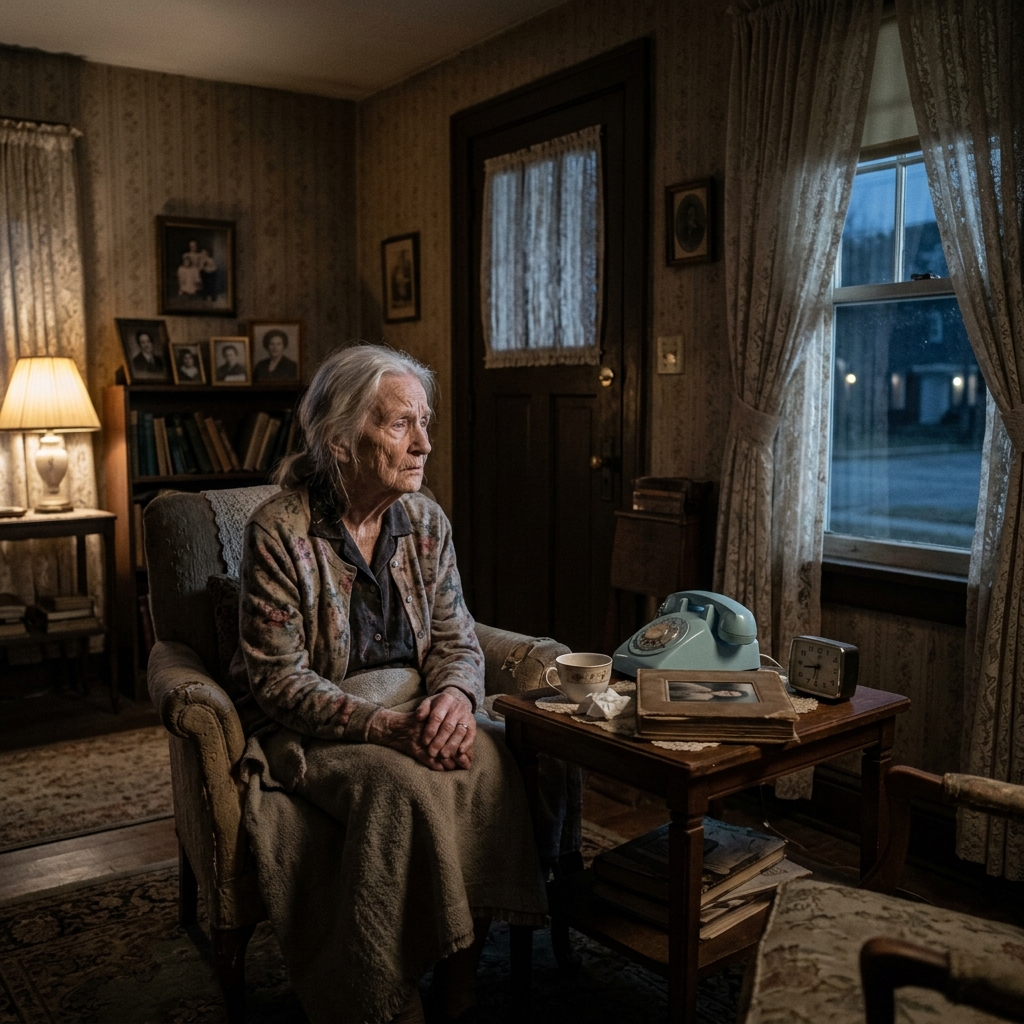
Six weeks later you're at her bank, trying to pay her property tax and hydro bill out of her own account, and the answer is no. Not unkind. Just no. They cannot let you, and no amount of explaining that you're her daughter changes it.
That's the moment most Canadian families discover what they actually needed, and by then it's too late to sign anything.
Need care for your parent?
Get a professional care assessment at no cost.
Why the hospital said yes and the bank says no
This asymmetry catches almost everyone, and it is worth understanding because it gives families false confidence.
For health and personal care decisions in Ontario, the Health Care Consent Act sets out a ranked list of substitute decision-makers that applies automatically. If there is no power of attorney for personal care, the list continues through spouse or partner, then children or parents, then siblings, then other relatives. Someone is always the decision-maker, whether or not anyone signed anything — and if nobody qualifies, the Public Guardian and Trustee steps in.
So the medical crisis gets handled. Which is exactly why families relax.
For money and property, there is no equivalent automatic list. Nobody inherits authority over a bank account by being next of kin. Without a valid document signed in advance, the only route is a court or statutory process — and that takes months and costs money while the bills keep arriving.
You will get through the hospital. It is the bank that stops you.
What families think they have
She has a will, so we are covered. A will does nothing while your parent is alive. It gives an executor authority over an estate after death and not one day before.
I am her son — obviously I can act for her. For financial matters, no. Next of kin has no inherent authority over another adult's money, property or contracts.
We put my name on her chequing account. A joint account may solve one narrow problem and create others. It does not cover a house, investments, taxes or pension, and joint ownership can affect estate division and exposure to a joint holder's creditors. It is not a substitute for a power of attorney; get advice before relying on it.
She signed a power of attorney years ago. Check which kind. An ordinary power of attorney ends when the person loses capacity — which defeats the purpose. The document needs to be the enduring or continuing type.
There is a living will in the drawer. Living will is not a legal instrument in Ontario or Alberta. Wishes about treatment belong inside the appropriate personal care document, where someone has the authority to act on them.
Want more deep knowledge like this?
Join our private Facebook group to connect with experts, get exclusive resources, and find support from families navigating the same journey.
What you actually need, province by province
Two separate documents do two separate jobs. The names differ across the border and the concepts line up closely.
Money and property
Ontario: Continuing Power of Attorney for Property, under the Substitute Decisions Act, 1992.
Alberta: Enduring Power of Attorney, under the Powers of Attorney Act.
Health and personal care
Ontario: Power of Attorney for Personal Care, under the Substitute Decisions Act, 1992.
Alberta: Personal Directive, under the Personal Directives Act; the appointed person is called an agent.
If nothing was signed
Ontario: health decisions fall to the ranked list in the Health Care Consent Act. For property, a guardianship application through the court or the Public Guardian and Trustee may be needed.
Alberta: an application to court under the Adult Guardianship and Trusteeship Act for guardianship, trusteeship, or both may be needed.
After death
In Ontario and Alberta, a will and the executor named in it apply after death.
This is a general overview as we understand it in 2026. Requirements and terminology change; confirm the position with a lawyer in the relevant province.
The one word to check on an existing document
Ontario says continuing. Alberta says enduring. Both mean the same thing: the authority survives the loss of mental capacity.
A plain power of attorney without that word ends exactly when it is needed. If your parent signed something in 1998 for a house sale, it may be the wrong kind. Read the first page.
The window, and how it closes
A person must have capacity at the moment they sign.
You cannot give someone authority over your affairs once they no longer understand what they are giving away. The documents must exist before the crisis, not after it. When capacity is gone, the options collapse from signing a form at a lawyer's office to applying to a court.
Families do not miss this through carelessness. Nobody announces the closing. There is no letter, appointment, or day when someone says the window shuts on Thursday. It just narrows quietly across months of small changes that everyone is busy explaining away.
If there is already a dementia diagnosis
Do not assume it is too late. Capacity is not all-or-nothing — it is specific to the decision and the moment. Someone in the earlier stages may retain the capacity to grant a power of attorney, and a lawyer assesses that directly rather than relying only on a diagnosis in a chart. What matters is speed. This is the appointment to make this month, not next year.
Choosing who
The choice matters more than families expect, and picking the eldest by default is rarely the right method.
The two roles may need different people. The child who is calm under pressure in a hospital corridor is not always organised with money. It is acceptable to split the roles.
Geography is practical, not sentimental. Someone who can attend an appointment or a bank on short notice has a real advantage.
Name a backup. The first choice may be unwell, abroad, or have died first. A document without a substitute can fail at the worst possible moment.
Discuss joint or several authority. Requiring two people to agree on everything can safeguard against misuse and can also create a significant practical obstacle. Discuss that trade-off with a lawyer rather than accepting a template default.
Tell the siblings. Ideally, do it with the parent in the room saying it themselves. Many family ruptures start when one sibling discovers a decision made without them.
What to do, in order
Find out what already exists. Ask your parent whether they have these documents, where they are, and who is named. Many people signed something decades ago and have forgotten the details.
Check the word. Continuing in Ontario, enduring in Alberta. If it is not there, treat the document as insufficient until a lawyer says otherwise.
See a lawyer promptly. Kits exist, but with any complexity — a business, blended family, property in more than one province, or early cognitive change — the cost of doing this properly is small beside the cost of a guardianship application.
Do both documents at once. Financial and personal care. Families often do one and discover the gap later.
Put wishes in writing inside the personal care document. Treatment preferences, resuscitation, where the person wants to live, and what matters to them can spare a future decision-maker.
Keep them findable. A power of attorney locked in a safety deposit box that only the incapacitated person can open is avoidable. The named person should have a copy, the lawyer should hold the original, and a phone photo can be useful.
Notify the bank while your parent is still capable. Financial institutions may have their own forms and processes. Doing this in advance can remove weeks of delay later.
Review every few years, and after a death, divorce, move, or major change.
Where Corelia Health fits
We will be straightforward: this is not our department. We are a home care provider, not a law firm, and nobody should take legal direction from a care company.
What we do have is a view of when this becomes urgent, because we are often in the house in the months when it quietly stops being possible.
We have not got round to any of this — the assessment conversation. Our free care assessment covers who makes decisions and who we would contact in an emergency. For many families, that is the first time anyone notices the gap while there is still time to address it.
I cannot tell whether she still understands what she is agreeing to — observation between appointments. We do not assess capacity; that is for clinicians and lawyers. A caregiver present several times a week can see fluctuations and changes that a short appointment misses, helping a family judge how urgently to move. Care plans are overseen by our Clinical Director, a Registered Nurse.
He is being discharged Friday and nobody knows who is signing what — hospital discharge support. Discharge is where missing paperwork hurts most. Decisions about care, placement and money can land in the same week. We support the transition home and make sure practical arrangements are clear.
We are drowning and this is one more thing — respite care. Paperwork gets postponed by families with no spare hours. Sometimes the fastest route to completing it is having someone else cover Tuesday.
Free assessments, no long-term contracts, and most families start with two or three visits a week. We serve Mississauga, Brampton, Caledon, Oakville, Burlington, Milton, Halton Hills, Guelph, North Bay, Edmonton and Red Deer.
Book the lawyer this month. Then let's talk about the care.
Genuinely, the appointment with a lawyer is the more urgent of the two. When you are ready to talk about support at home, a free, no-obligation conversation with a care coordinator is here, and our care needs quiz takes about two minutes.
or call 1-844-826-7354.Frequently Asked Questions
Kits exist and are used. Whether that is wise depends on the situation — signing and witnessing requirements are strict, and a document that fails on a technicality fails at precisely the moment nobody can fix it. Where there is a business, a blended family, property in more than one province, or any question about capacity, a lawyer is the sensible route.
It is often recognised, but not always smoothly, and institutions can be difficult about it. If your parent has moved between Ontario and Alberta, or owns property in both, raise it specifically with a lawyer.
Yes. While they have capacity, they can revoke or replace these documents whenever they wish. That is worth saying to a parent who fears they are signing away control — they are not, and they remain in charge for as long as they are able.
That is common. It can help to do it together rather than to him — both of you updating your own documents, framed as something every adult should have rather than a comment on his decline. It can also help to be explicit that the document changes nothing while he is capable.
Corelia Premium Guide
Use this guide to compare care options, prepare family questions, and understand what to check before starting in-home support.
Professional Care Services
Local Home Care Support
Why Corelia Health?
-
Customized care plans tailored to your unique needs and preferences.
-
Screened caregivers matched to the care plan, schedule, and level of help required.
-
Ongoing monitoring and regular family updates for peace of mind.
-
Locally owned and operated, providing a personalized community touch.
"We help at home, wherever home is for you."
Find The Right CareSpeak to our Clinical Care Coordinator
We are here to walk this journey with you. Our coordinators provide expert guidance on care options, funding, and next steps.