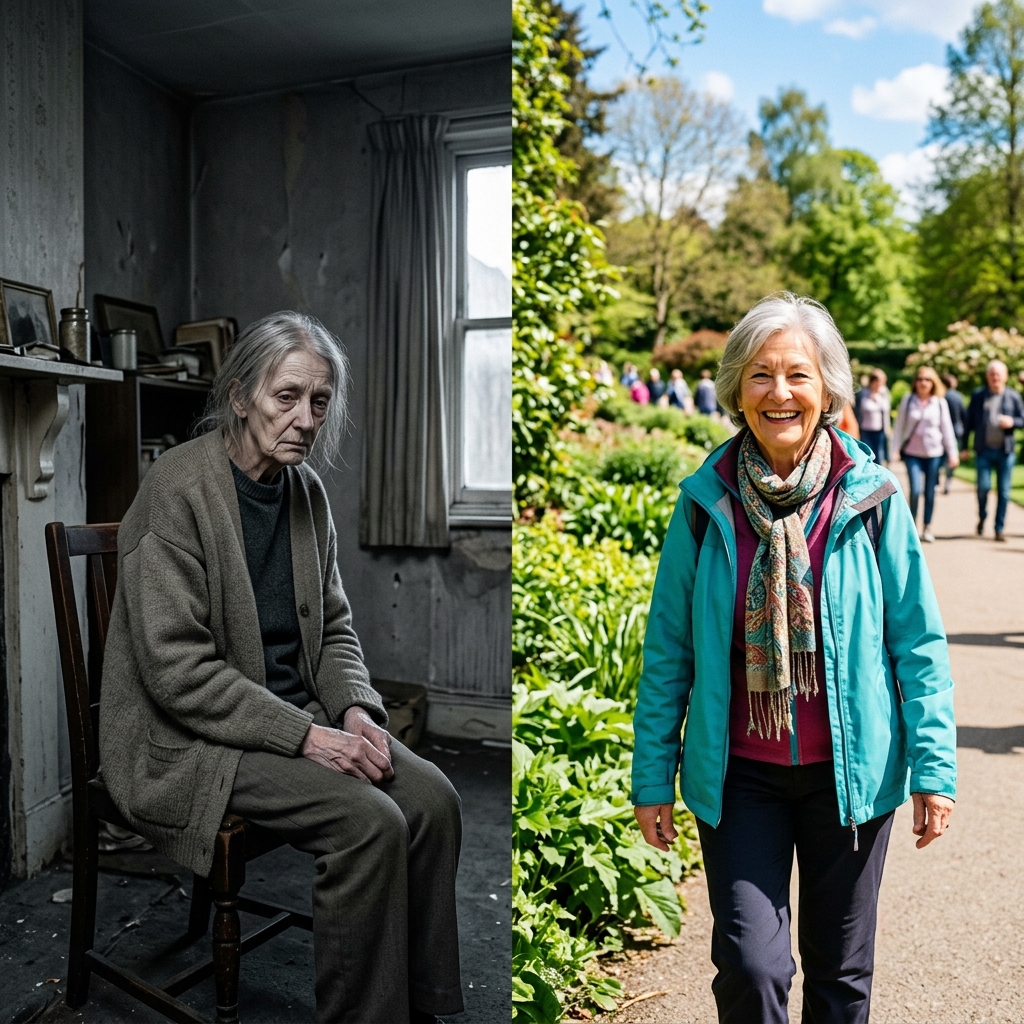

We added decades to the average life and redesigned very little to go with them. The result is a country full of people living longer than the systems around them were built to support, and families quietly filling the gap.
Your mother retired at 65. Everyone at the party assumed she had ten good years ahead, maybe fifteen. She is now 89. She has outlived her retirement plan, her family doctor, two of her three closest friends and the house's original furnace. She has not outlived her wish to stay in that house.
Nobody planned for this. Not her, not you, and not most of the systems she depends on.
That is not a failure of medicine. It is a success of medicine that the rest of society has not caught up with. National Seniors Day in Canada and the International Day of Older Persons are a good moment to ask an uncomfortable question: if living to ninety is increasingly ordinary, why does so much of the world still behave as though it is a surprise?
Need care for your parent?
Get a professional care assessment at no cost.
A life course built for a shorter life
Most of the structures we rely on were designed around a three-stage life: school, work, then a fairly short retirement. When Canada introduced Old Age Security in 1952, eligibility began at age 70. Hospitals were built for acute episodes with a clear beginning and end. Suburban houses were designed for young families who could climb stairs, shovel driveways and drive everywhere.
None of that was wrong at the time. It simply assumed a shorter ending than many people now get.
Statistics Canada estimated that 8,108,467 Canadians — 19.5% of the population — were 65 or older on July 1, 2025. The bigger shift is still ahead. Canada had 951,833 people aged 85 and over in 2025, and that group is projected to reach between 3.3 million and 4.2 million by 2075. Its fastest growth is expected between 2031 and 2050 as the baby-boom generation enters advanced age.
The 85-plus group matters for care planning. It is an age when more people move from managing entirely on their own to needing some daily help. Canada is preparing to support far more people in that stage of life, often for longer than any previous generation spent there.
Five systems that have not caught up
The pressure shows up in different places, but the pattern is the same: systems built for short, occasional needs are meeting long, continuous ones.
Health care built for episodes, not decades. Our health system can respond brilliantly to a heart attack, but it is less naturally organized around ten years of heart failure, arthritis, diabetes and mild memory loss happening together. Long lives are mostly managed day by day at home, not in fifteen-minute appointments.
Hospitals that become waiting rooms. When an older patient no longer needs acute hospital treatment but cannot safely go home, they may be designated Alternate Level of Care. CIHI reports that 8% of patients admitted through emergency departments in 2024–2025 were designated ALC; their median hospital stay was 24 days. Limited access to home care and long-term care can prolong these stays, while the patient risks losing strength and routine.
Homes designed for 35-year-olds. Most older Canadians want to remain at home, but stairs to the only bathroom, a tub instead of a walk-in shower, a long driveway in winter and no nearby transit can turn a familiar house into an obstacle course.
Family caregiving as invisible infrastructure. Statistics Canada found that unpaid caregivers for care-dependent adults spent a median of eight hours a week on care in 2022. Women reported a median of ten hours. More than half of unpaid caregivers felt tired, and 44% felt worried or anxious. Longer lives can mean caregiving that lasts years rather than months, often alongside work and children.
Money planned for a shorter retirement. A plan that comfortably funds fifteen years can become tight over thirty, especially when the most expensive years arrive last. Care costs tend to rise precisely when savings are lowest.
There is a sixth thread running through all five: isolation. Long lives can outlast a spouse, nearby children and a familiar circle of friends. Companionship does not replace family, but it can protect routine and connection.
Want more deep knowledge like this?
Join our private Facebook group to connect with experts, get exclusive resources, and find support from families navigating the same journey.
The honest caveat: lifespan is not healthspan
A longer life is not automatically a healthier one. Researchers distinguish between lifespan, how long you live, and healthspan, how long you live in good health. The gap between them is where many care needs sit, and it can last for years.
Longevity gains are also uneven. Income, geography, housing, access to primary care and the presence of family nearby all shape how those extra years go. Averages hide a great deal.
Exercise, connection and good sleep matter, and our guide to why we age and what science says you can do explains why. But personal effort cannot substitute for a care system, an accessible home or practical support when someone needs it.
What rethinking looks like at the kitchen table
Policy will take years to catch up. Families cannot wait for it, and they do not have to. The same shift governments need to make works at household scale: stop planning around a birthday and start planning around function, time and the life the person wants.
Plan for the long middle, not only the end. Most families plan for two conditions: fine and crisis. The age of longevity is mostly lived somewhere between them, when a person is still independent but needs help with a few tasks. That stretch can last a decade. Our article on why 70 is the crossroads of aging explains why earlier planning preserves more choice.
Put the paperwork in place while it is easy. Powers of attorney for property and personal care, an up-to-date will and a clear record of wishes are easier to arrange at 75 than at 90 in a hospital bed. Start with the paperwork you need before you need it.
Adapt the home before the fall. Grab bars, stronger lighting, a main-floor sleeping plan and winter support cost less than a preventable injury. Winter is often when independence is lost, so arrange help before the first storm.
Build a care team, not a single caregiver. Spread responsibility across willing relatives, friends, public programs and paid support. A plan carried by one person lasts only as long as that person can keep carrying it.
Protect the person doing the caring. Over a long journey, the caregiver's health becomes part of the care plan. Regular breaks make year five possible. If you are supporting a parent while raising children, read Sorry, I Can't Talk Right Now — I'm Sandwiched.
A longevity check for your family
Use these questions before there is a crisis:
- Are powers of attorney for property and personal care signed and easy to find?
- Could your parent live mainly on the ground floor if stairs became unsafe?
- If the primary family caregiver became ill tomorrow, who would step in?
- Do you know which public home-care services your parent may qualify for?
- Is there a plan for the first 72 hours after a hospital discharge?
- Is the home ready for winter, medication routines and changing mobility?
- When did your parent last have a meaningful conversation that was not about their health?
- Have you discussed what a good day looks like to them — and which routines they most want to protect?
How Corelia Health fills the practical gaps
We cannot redesign the health system. We can help families fill the gaps it leaves in the place most older adults want to remain: home.
A few things are starting to slip. Elderly care and personal care assistance can help with bathing, dressing, meals, medication reminders, mobility and household routines. A few planned visits may stabilize the long middle.
Hospital says he is ready to leave, but home does not feel ready. Hospital discharge support and after-surgery care provide practical help during the high-risk first days home.
Several chronic conditions now overlap. Chronic condition management can support daily routines, while skilled nursing is available when clinical tasks are required. Care plans are overseen by our Clinical Director, a Registered Nurse.
The family caregiver needs a real break. In-home respite care provides predictable relief from a few hours to longer stretches.
Memory is changing and evenings are becoming harder. Dementia and Alzheimer's care uses calmer routines, clear communication and a safer home environment.
It is no longer safe to be alone. 24/7 senior home care supports people around the clock, including families waiting for a long-term care bed. Read what Ontario's Wait at Home program means for families.
The wish is to spend the last months at home. End-of-life palliative home care focuses on comfort and supports the person and family together.
Care plans can change as needs change. There are no long-term contracts, and many families begin with two or three visits a week. Corelia Health serves communities in Ontario and Alberta, including Mississauga, Brampton, Caledon, Oakville, Burlington, Milton, Halton Hills, Guelph, North Bay, Edmonton and Red Deer.
Paying the cost of longer lives in Canada
Public and private support can work together. In Ontario, publicly funded home and community care is coordinated through Ontario Health atHome. In Alberta, publicly funded home and community care is accessed through the province's continuing care system, based on a professional assessment of unmet care needs.
Depending on eligibility, additional programs may help:
- Ontario residents age 70 or older may qualify for the Ontario Seniors Care at Home Tax Credit.
- Eligible veterans may receive support through the Veterans Independence Program.
- Some attendant-care expenses may qualify as medical expenses under Canada Revenue Agency rules. Requirements differ, so keep detailed receipts and confirm eligibility with the relevant program or a qualified tax professional.
To turn a broad concern into a starting budget, use our care cost estimator and free funding guide.
Longer lives deserve a better plan
You cannot redesign the system on your own. You can make sure your family is not caught by its gaps. A free, no-obligation assessment with a care coordinator can map what support is needed now, what may be needed next and which choices protect the older adult's independence.
, take the two-minute care needs quiz, or call 1-844-826-7354.Sources and further reading
- Canada's population estimates: age and gender, July 1, 2025 — Statistics Canada
- Population Projections for Canada, 2025 to 2075 — Statistics Canada
- Availability of long-term care beds and community supports — Canadian Institute for Health Information
- Caregiving in Canada, 2022 — Statistics Canada
- Old Age Security program overview — Government of Canada
Frequently Asked Questions
It describes a period when living into the late eighties and nineties is increasingly common. The challenge is that pensions, hospitals, housing and family life were largely designed when those lifespans were less common, so support in later years does not always exist by default.
It is an ideal time. Planning while someone is healthy lets them lead decisions about where and how they want to live, instead of having choices made in a hurry after a fall or hospital stay.
For many people, yes, with the right home adaptations, health care and practical support. It depends on health, cognition, the home itself and how much reliable help is available. Care can scale from a few visits a week to around-the-clock support.
Public home care is valuable and worth applying for, but the amount and type of service depend on an assessment, eligibility and local availability. Some families use publicly funded care as a foundation and add private support for remaining evenings, weekends or overnight needs.
Corelia Premium Guide
Use this guide to compare care options, prepare family questions, and understand what to check before starting in-home support.
Professional Care Services
Local Home Care Support
Why Corelia Health?
-
Customized care plans tailored to your unique needs and preferences.
-
Screened caregivers matched to the care plan, schedule, and level of help required.
-
Ongoing monitoring and regular family updates for peace of mind.
-
Locally owned and operated, providing a personalized community touch.
"We help at home, wherever home is for you."
Find The Right CareSpeak to our Clinical Care Coordinator
We are here to walk this journey with you. Our coordinators provide expert guidance on care options, funding, and next steps.