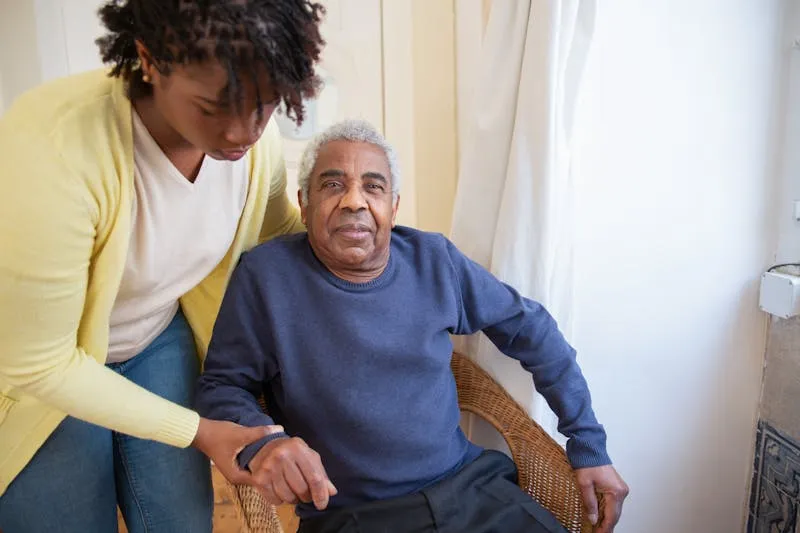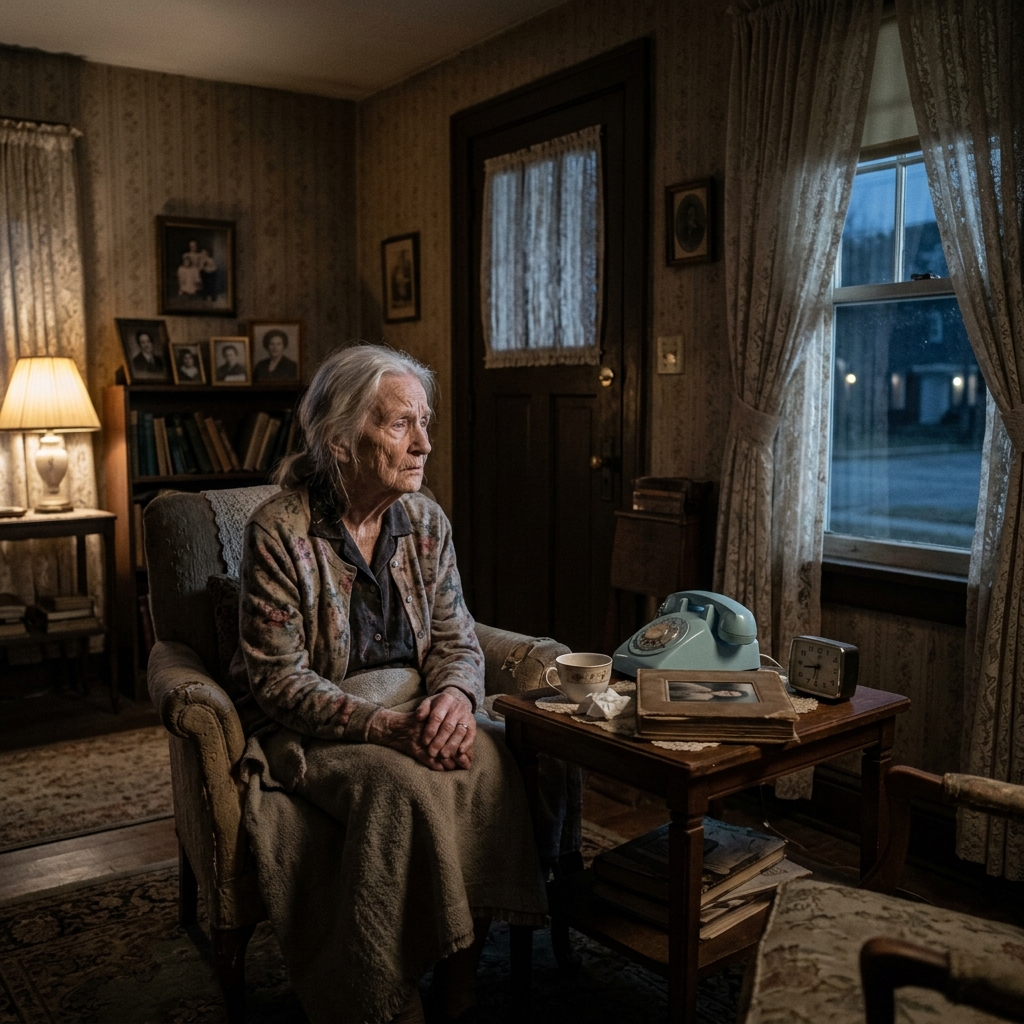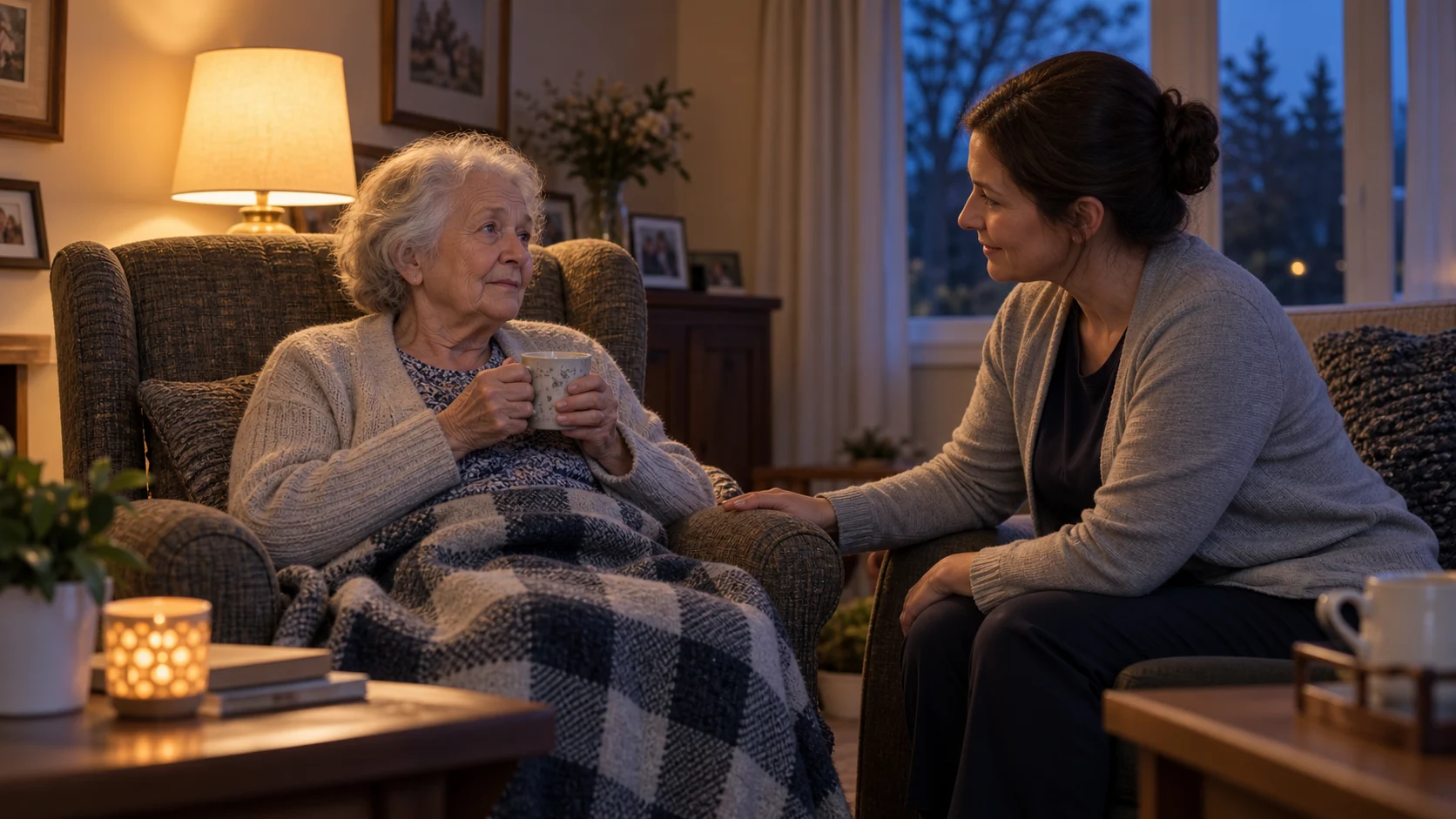

Not a fall. Not a diagnosis. For a great many Canadian families, what finally ends a parent's independent life is five months between November and March — and by the time anyone notices, the damage is done and the decisions are being made.
You saw your mother in October and she was fine. Slower, certainly, but managing: making her own meals, getting to the shops, going to her Thursday group.
You see her again at Easter and something has changed. She is thinner. She is unsteady on the back step in a way she was not before. She has not been to the group since before Christmas and cannot quite say why. The house is colder than you would keep it. She seems smaller somehow, and vaguer, and when you drive home you find yourself thinking for the first time that she may not be able to stay here.
Nothing happened. There was no fall, hospital admission, or diagnosis. There was just winter.
Need care for your parent?
Get a professional care assessment at no cost.
The season that nobody plans for
Families plan for crises. A fall, stroke, or diagnosis — everyone understands those and everyone reacts to them.
Almost nobody plans for November through March, and in this country that period can do quiet damage. It is not one event. It is a slow contraction of a person's world over five months, where each week looks unremarkable and the cumulative total is enormous.
Families often make permanent decisions in March: a move, listing the house, or a conversation about a retirement residence. Those decisions can be made at the bottom of a seasonal trough, on the basis of decline that may have been substantially preventable and sometimes partly reversible.
What winter actually does
It puts your father in an ambulance with a shovel in his hand. Snow shovelling is demanding cardiovascular work. It can require more than 75% of maximum heart rate, particularly with heavy wet snow. It is done in cold air, which raises blood pressure and constricts arteries, often by someone who has done almost nothing physical for weeks and often first thing in the morning.
A Quebec study covering more than 128,000 heart-attack hospital admissions and 68,000 deaths between 1981 and 2014 found that roughly a third of heart attacks occurred the day after a snowfall. After a 20-centimetre snowfall, men were about 16% more likely to be admitted for a heart attack and about 34% more likely to die the following day, compared with a day with no snow. The effect appeared in men and not women, which the researchers attributed to who does the shovelling.
The danger is not only the storm. It is the morning after, when your father decides the driveway needs doing and does not want to bother anyone.
It makes going outside a genuine risk. Ice is not a minor hazard for an eighty-year-old. A fall that leaves a fifty-year-old embarrassed can leave an older adult with a fractured hip or wrist. A hip fracture in later life can mark the end of independent living, regardless of how well surgery goes. Staying inside may be a sensible response, but it starts the second, slower problem.
It shrinks the world to one room. Between November and March, walks, weekly groups, church, grandchildren's visits, shops, appointments, and neighbours can disappear. What remains can be a house, a television, and the phone for five months. Winter can turn isolation from a risk into a daily reality.
It takes away the light. By late December, much of Ontario and Alberta gets dark before half past four. Less daylight affects mood, sleep, and daily rhythm, and vitamin D levels fall across a Canadian winter. For someone with dementia, fading light may mean difficult hours arrive in mid-afternoon.
It makes the house cold. Older adults lose body heat faster and may sense cold less acutely. Some turn the thermostat down to manage heating costs without mentioning it. Check the thermostat yourself rather than relying only on reassurance.
It takes strength away, slowly. Strength and balance are maintained through use. Five months of walking only from the chair to the kitchen rather than to the shops, around the block, and up front steps can produce a measurable loss. Less strength means less confidence, then less movement, which costs more strength. The person who emerges in April may genuinely be weaker and unsteadier than the one who went in.
Want more deep knowledge like this?
Join our private Facebook group to connect with experts, get exclusive resources, and find support from families navigating the same journey.
How the season runs
November: the first ice. Outdoor walking stops. Someone mentions the driveway. Most families notice nothing.
December: family visits mask the picture. The house is full, meals happen, and everyone is out. It is the month that reassures everybody.
January: often the hardest month. Everyone goes home, the weather closes in, and the old routine has been gone long enough to become difficult to restart. Eating becomes simpler and less nutritious. Sleep drifts.
February: strength and confidence can have dropped. Appointments may be missed. Mood can be low and mistaken for something more permanent.
March: adult children visit, see accumulated change, and start asking whether home is still workable. This is when permanent decisions often get made.
The March mistake
If you are looking at a parent in early spring and concluding they can no longer live at home, ask one question first: how much of what you are seeing is the person, and how much is the season they have just come through?
Deconditioning, low mood, and confidence lost after months indoors are not fixed states. With activity, company, and proper meals, many people regain meaningful ground by midsummer. Not everyone, and not always — but often enough that a March decision made in panic is worth pausing on.
What to put in place before the snow
Almost all of this is easier and cheaper to arrange in October than to fix in March.
Settle snow removal now. Book and pay for the service before the season, rather than relying on a promise that your father will call someone. Take it off the table so there is nothing to argue about after a storm.
Sort outside surfaces. Install handrails on both sides of steps, keep salt or grit within reach, use a good outdoor sensor light, and replace worn cane or walker tips.
Get proper footwear. Winter boots with real tread and ice grippers that fit over them are small purchases that can prevent serious harm.
Protect one outing a week. It might be a group, coffee, or the library. Plan how it will happen in bad weather, because that is the week it gets dropped and may never resume.
Plan indoor movement. Hallway walks, a seated exercise routine, or safe stairs — something daily is the direct counter to winter deconditioning.
Check heating and the thermostat. Service the furnace, test the carbon-monoxide detector, and make sure the thermostat has not quietly been lowered.
Deal with food. Winter cooking can slide into tea and toast. Keep a stocked freezer, arrange regular groceries, and ensure someone sees what is being eaten.
Arrange flu and other seasonal vaccinations early. Do it before the middle of a cold snap.
Agree a check-in rhythm. Daily contact during storms and cold snaps, plus a neighbour who has your number, is practical backup.
How Corelia Health helps through the winter
Our care plans in Ontario and Alberta are built around winter deliberately, because a plan that ignores five months of the year is not a plan.
He is seventy-nine and still shovels the driveway himself — companion care and errands. Help with outside tasks and the daily running of the house, including groceries, prescriptions, and appointments when the weather makes them hard.
She has not left the house since before Christmas — regular scheduled visits. A standing few visits each week can give the week a shape when everything external has stopped: company, conversation, and a reason to be up and dressed.
I am frightened she will fall and I will not know for hours — safety-focused care planning. Assessments cover the entry, steps, footwear, lighting, and indoor hazards. Plans are overseen by our Clinical Director, a Registered Nurse. Regular presence can also mean a fall is found in minutes rather than the following morning.
She is living on tea and toast and losing weight — personal care and meal support. Meal preparation, support eating well, and someone who notices what is in the fridge. Winter weight loss can be quiet and consequential.
He got weaker over winter and now he has fallen — hospital discharge and recovery support. Support through the return home and rebuilding afterwards, when the risk of a second admission can be highest.
We are two hours away and the highway is closed half the winter — local caregivers and wellness check-ins. Someone nearby when you cannot get there. We serve Mississauga, Brampton, Caledon, Oakville, Burlington, Milton, Halton Hills, Guelph, North Bay, Edmonton and Red Deer.
Most families start with two or three visits a week. Assessments are free, there are no long-term contracts, and if a caregiver is not the right fit we will change them at no additional cost. Caregivers are bonded, WSIB and WCB insured, and cleared through vulnerable-sector police checks.
Set it up before the first snowfall, not after
A free, no-obligation conversation with a care coordinator can help you see what your parent's winter is likely to look like and what would hold it together. October arrangements are easier to make, easier for a parent to accept, and considerably cheaper than a March crisis. Our care needs quiz takes about two minutes if you would rather start there.
or call 1-844-826-7354.Frequently Asked Questions
Take the decision out of the moment. Book and pay for the service before the season starts, so that when snow falls the job is already handled rather than something he has to accept help with. Framing it as convenience for you — that you have sorted it — often lands better than framing it as a limitation.
Some seasonal dip is normal for everyone. Weight loss, a marked low mood that does not lift, confusion, or a clear loss of strength and steadiness are not things to write off as the time of year. Raise those changes with a doctor.
It is never too late. January and February are often when families realise they need support. Earlier is easier, but recovery of strength and routine can start whenever help arrives.
Severe weather affects everyone, so ask any provider directly what happens on a storm day, who calls whom, and whether a backup caregiver is closer by. Have that conversation at the assessment, not in February.
Corelia Premium Guide
Use this guide to compare care options, prepare family questions, and understand what to check before starting in-home support.
Professional Care Services
Local Home Care Support
Why Corelia Health?
-
Customized care plans tailored to your unique needs and preferences.
-
Screened caregivers matched to the care plan, schedule, and level of help required.
-
Ongoing monitoring and regular family updates for peace of mind.
-
Locally owned and operated, providing a personalized community touch.
"We help at home, wherever home is for you."
Find The Right CareSpeak to our Clinical Care Coordinator
We are here to walk this journey with you. Our coordinators provide expert guidance on care options, funding, and next steps.