
Practical home-care guidance based on Corelia Health service experience with families in Ontario and Alberta.
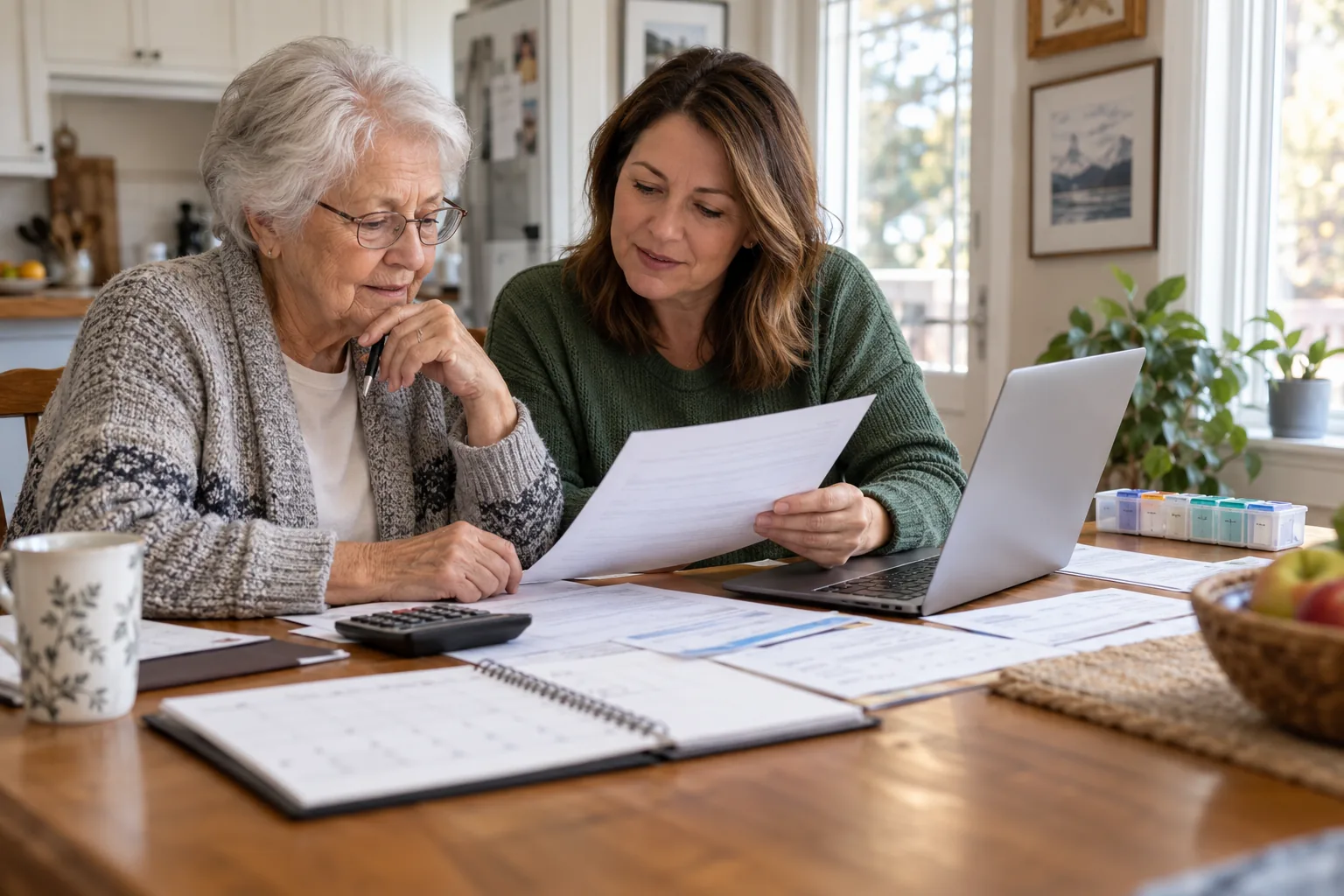
When Karen Fitzpatrick's mother, Irene, turned 79 and started living alone in her Burlington bungalow full-time, Karen did what a lot of adult children do from a distance: she ordered her mother a smart speaker. An Amazon Echo Dot, set up over a weekend visit, programmed with reminders, the weather, a few playlists of Irene's old favourites. Karen went home feeling like she'd done something. A small piece of connection, sitting on the kitchen counter, always listening.
Three months later, Irene still used it to check the time. She had not used it to feel less alone.
It turns out Karen wasn't imagining that gap — researchers have actually studied it directly. And what they found has real implications for how we think about caring for the people we love who live on their own.
Need care for your parent?
Get a professional care assessment at no cost.
The Study: Can a Smart Speaker Actually Ease Loneliness?
A recent U.S. pilot study set out to test something a lot of families quietly assume: that giving an isolated older adult a voice assistant might help. Researchers worked with older adults living alone across several senior centres, all of whom met a specific bar — 60 or older, living alone, self-reporting isolation, and without any prior experience using a voice assistant.
Each participant received an Amazon Echo Dot, a smart light, and a small incentive for taking part, then used the device for eight weeks while researchers checked in regularly.
The honest result: most participants said the device had not meaningfully reduced their loneliness. More than half had been skeptical of the technology from the start, and for many, that skepticism held. A speaker on the counter could answer questions and play music. It could not do the thing that was actually missing.
It's worth saying plainly: this was a small pilot study, not a definitive verdict on smart home technology for seniors. But it echoes something researchers have been circling for years — and it's worth sitting with, because the instinct behind Karen's gift is one almost every caregiving family has had.
Why "Just Get Them an Alexa" Doesn't Solve the Real Problem
To understand why the Echo Dot study landed the way it did, it helps to understand a distinction researchers care about a lot, and most families don't think about at all: living alone and being lonely are not the same thing.
Statistics Canada has found that when you look at living alone and loneliness separately, only loneliness — the felt experience, not the fact of an empty house — consistently predicts poorer mental health. Someone can live entirely alone and feel completely connected. Someone else can live with family and feel invisible. The device Karen bought addressed the first condition — the empty house — and did nothing for the second, which was the one that mattered.
This isn't a small academic point. It's the reason so many well-meaning gifts, checklists, and gadgets miss the mark. A reminder app doesn't know you. A voice assistant doesn't ask how you're really doing and wait for the real answer.
Want more deep knowledge like this?
Join our private Facebook group to connect with experts, get exclusive resources, and find support from families navigating the same journey.
What the Research Says Loneliness Actually Costs
The stakes here are higher than "feeling a bit down." A major systematic review and meta-analysis, pulling together 86 studies on older adults, found that loneliness, social isolation, and living alone were each independently associated with a higher risk of death — social isolation alone raised mortality risk by roughly a third. Other research has compared the health toll of chronic loneliness to smoking a pack of cigarettes a day.
In Canada specifically, Statistics Canada has found that seniors who report barriers to social participation are nearly three times more likely to experience loneliness than those who don't — and that loneliness runs higher among Canadians 85 and older, and consistently higher among senior women than senior men.
This is the backdrop Irene, and millions of seniors like her, are living against. Not a minor inconvenience to be automated away, but a genuine and measurable health risk.
What Actually Helped Irene
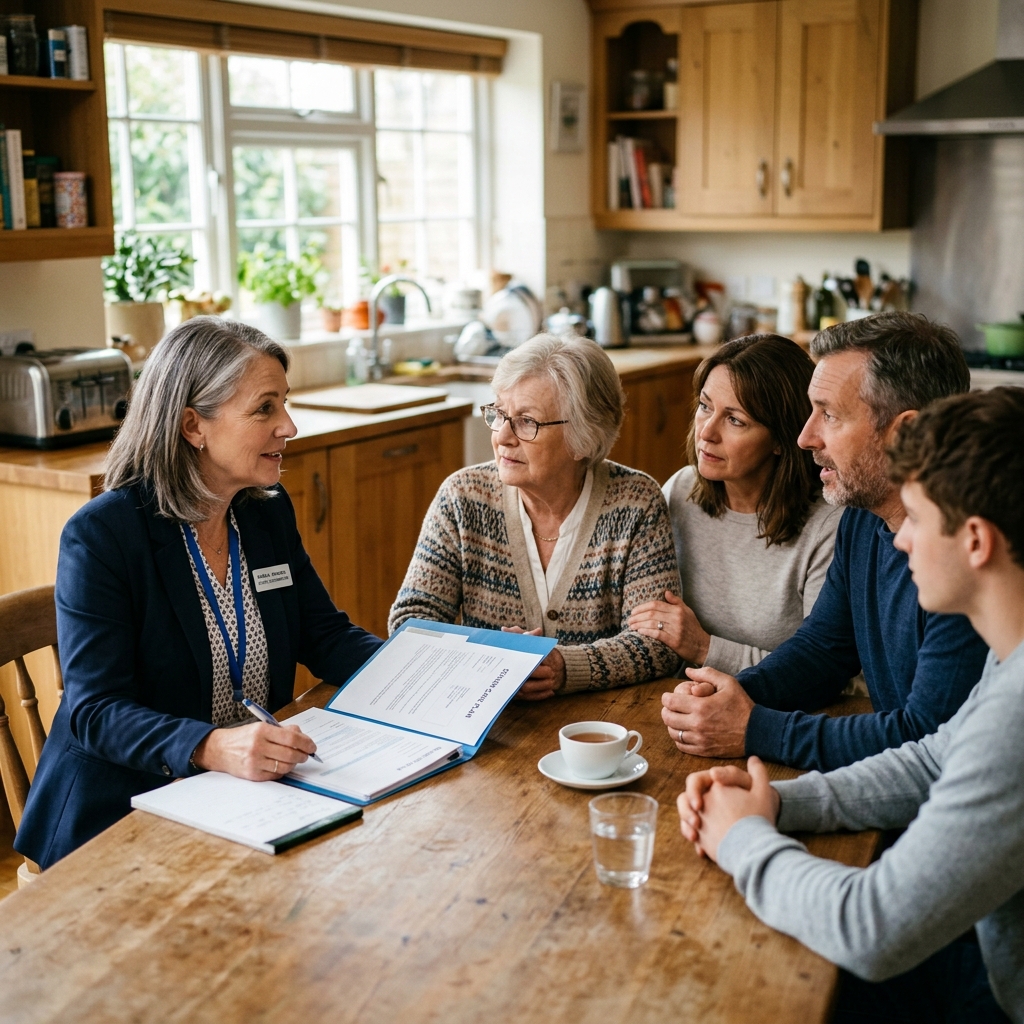
After the Echo Dot sat mostly unused for a few months, Karen tried something different: she arranged for a companion caregiver to visit twice a week, not for medical needs, but simply to be present. Tea. A crossword. A walk around the block when the weather allowed. Someone who remembered that Irene's late husband used to call her "Renie," and who asked about him without Karen having to prompt it.
Within weeks, Karen noticed the difference in their phone calls. Irene had stories again — not just updates, but things that had actually happened to her that week.
The research backs up what Karen felt intuitively. Reviews of loneliness interventions consistently find that the approaches with real staying power involve genuine social engagement — a person, a group, a regular relationship — not passive tools. Technology can support connection. It has a much harder time creating it from nothing.
Signs the "Just Check In by Phone" Approach Isn't Enough
If you're an adult child, a spouse, or a senior reading this for yourself, here are signs it may be time for more than a gadget or a weekly phone call:
• The conversations have gotten shorter. Not because there's nothing to say, but because there's been less happening to say anything about. • A missed call or a bad day could go unnoticed for days. No one nearby would necessarily know. • Errands and small tasks have quietly stopped happening. Groceries, walks, hobbies once enjoyed regularly.None of this means anyone has failed. It usually just means the kind of connection needed has changed, and it's worth naming that honestly instead of hoping a gadget will quietly close the gap.
How Corelia Health Supports Seniors Living Alone
This is exactly where Corelia Health's companion care comes in — not to replace independence, but to add real, human presence to it.
Our caregivers provide regular in-home visits built around genuine company: conversation, shared activities, a second set of eyes for safety, and — just as importantly — someone who notices if something feels different from one visit to the next. For families like Karen's, it means peace of mind that doesn't depend on a device staying charged. For seniors living independently, like Irene, it means the parts of daily life that are hard to automate: being known, being asked about, being looked forward to.
Every Corelia caregiver is vetted, licensed, and background-checked, and visit schedules can flex from a couple of hours a week to daily support, depending on what actually helps — not a fixed package.
Irene still has her Echo Dot. It still tells her the weather. But twice a week now, someone knocks on her door instead.
Frequently Asked Questions
How many hours does Wait at Home provide in Ontario?
Who can receive Wait at Home support?
What happens when the hours aren't enough anymore?
Is Wait at Home the same as a long-term care placement?
Karen and Irene are illustrative composite examples based on common experiences shared by families we work with, not individual case histories. Study findings referenced are drawn from published research; individual results and circumstances vary.
Corelia Premium Guide
Use this guide to compare care options, prepare family questions, and understand what to check before starting in-home support.
Professional Care Services
Local Home Care Support
Why Corelia Health?
-
Customized care plans tailored to your unique needs and preferences.
-
Screened caregivers matched to the care plan, schedule, and level of help required.
-
Ongoing monitoring and regular family updates for peace of mind.
-
Locally owned and operated, providing a personalized community touch.
"We help at home, wherever home is for you."
Find The Right CareSpeak to our Clinical Care Coordinator
We are here to walk this journey with you. Our coordinators provide expert guidance on care options, funding, and next steps.