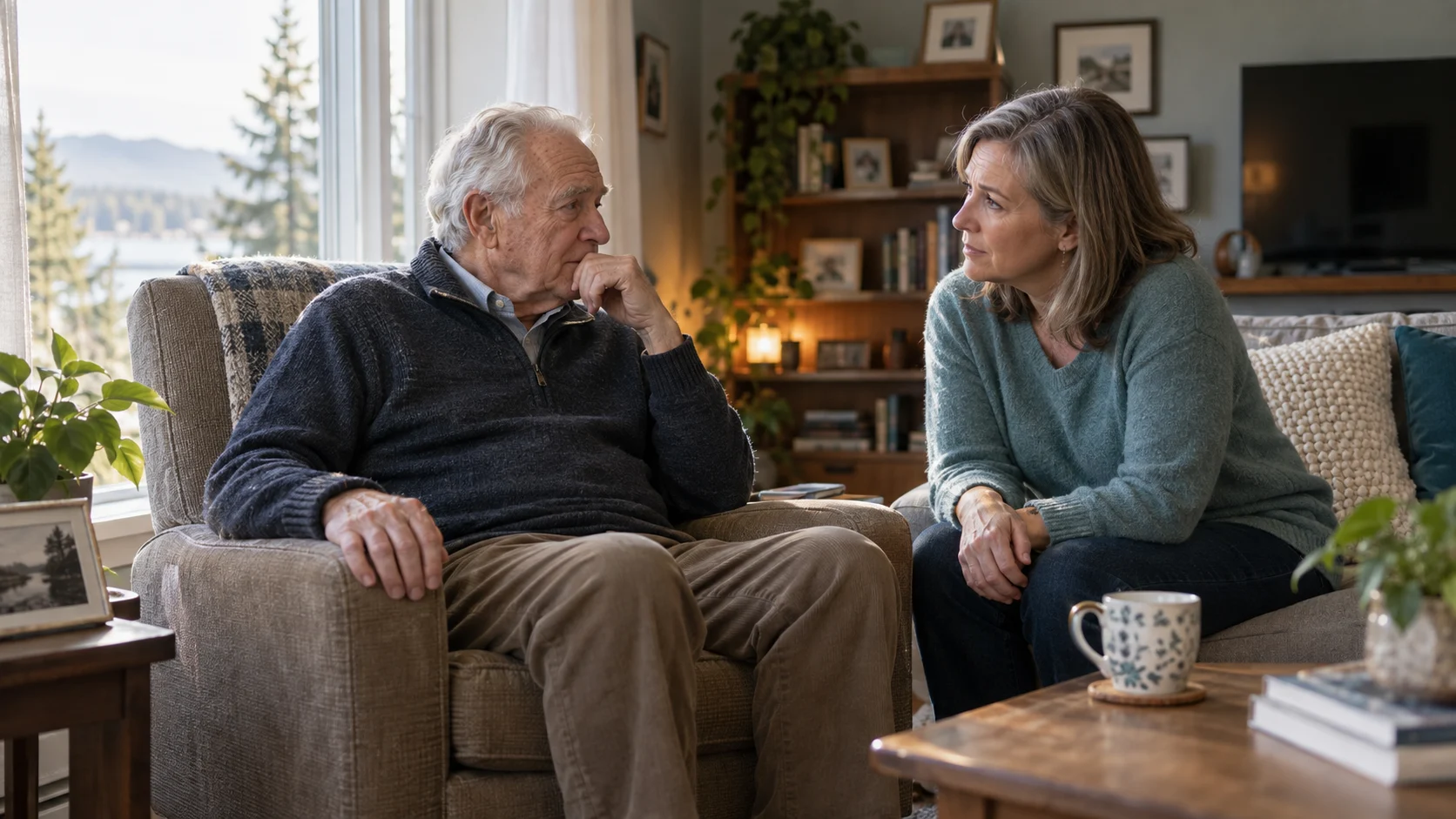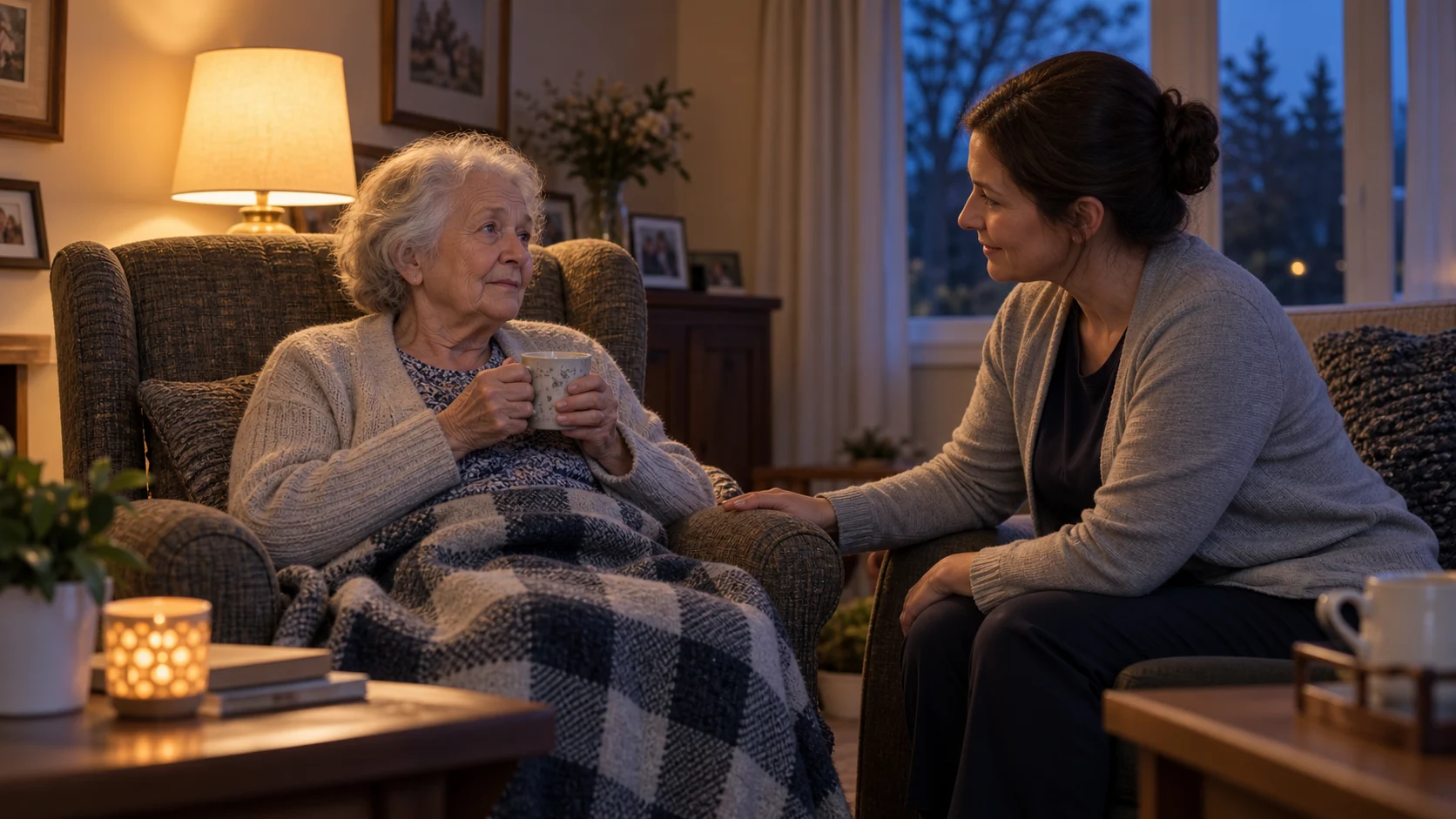

The best gift for a parent, grandparent or neighbour on National Seniors Day is rarely a thing. It is an afternoon, a good question, and the patience to hear the whole answer.
There is a recipe card in your mother's kitchen drawer, soft at the corners, written in her mother's handwriting. There is a story your grandfather tells about the winter he arrived in Canada that you have heard a dozen times and still do not quite know the ending to. There is a neighbour three doors down who has watched your street change for forty years and knows the name of every tree on it.
Most of the time we walk past these things. We are busy, and they will always be there.
National Seniors Day is a gentle reminder that they will not always be — and an invitation to stop, sit down, and pay attention to the people who have spent their lives paying attention to us.
Need care for your parent?
Get a professional care assessment at no cost.
What October 1 is about
Every year on October 1, Canada marks National Seniors Day, on the same date the United Nations observes the International Day of Older Persons. Canada's first National Seniors Day was observed in 2011. Both observances recognise what older adults contribute to their families, workplaces and communities, and ask whether people can grow older with dignity, security and a real place in the life around them.
The United Nations theme for 2026 is The Age of Longevity: Rethinking Systems for Longer Lives. It asks how health care, long-term care, social support and community life should adapt as people live longer.
That is a policy-sized question, but it has a kitchen-table version too: Mum and Dad may be with us for a long time yet. How do we make sure those years are good ones? Longer lives are a gift. What we do with the extra time — together — is the part we get to choose.
Why National Seniors Day matters
Because the world agreed it mattered. The United Nations designated October 1 as the International Day of Older Persons in 1990, and the first observance followed in 1991. Canada honours seniors on the same day.
Because longer lives change what families and communities need. The United Nations says the global population aged 60 and older is projected to grow from about 1.2 billion in 2025 to 2.1 billion by 2050. The goal cannot be longer life alone; those years should also be healthy, connected and secure.
Because older adults are too easily overlooked. People can be asked for their opinions less often as they age and spoken about as a list of needs instead of whole people with histories, humour and hard-won wisdom. This day is a deliberate pause to see them clearly again.
Because dignity should not have an age limit. Everyone deserves to grow older with respect, purpose, security and a place in family and community life — including when a little more help makes that possible.
Because thank you is overdue. Today's seniors built neighbourhoods, raised families, carried traditions across oceans and generations, and continue to contribute as grandparents, mentors, caregivers and volunteers. They deserve to hear that it has been noticed.
Want more deep knowledge like this?
Join our private Facebook group to connect with experts, get exclusive resources, and find support from families navigating the same journey.
Simple ways to honour an older adult
None of these ideas costs much. Each can be done on October 1 and continued afterwards.
Ask a question only they can answer. What was your first job? What did your street smell like when you were a child? What do you wish someone had told you at thirty? Being asked — and genuinely listened to — is a powerful form of respect.
Sit down instead of dropping by. A ten-minute visit with your coat on says, "I am checking on you." An hour at the table with tea says, "I am here to be with you." The difference is felt.
Cook something together. Pull out the recipe card and let them lead, even if it takes twice as long. Food carries memory, and family recipes are worth capturing while the person who knows them is beside you.
Bring the grandchildren — or the phone. Time across generations helps everyone at the table. If family lives far away, arrange a video call and stay long enough for it to feel like a visit rather than an update.
Let them do what they can. Honouring someone includes honouring their independence. Resist taking over small tasks they can still manage, even slowly. Being capable and needed matter at every age.
Take care of the thing they would never request. Replace the hallway bulb, sort the smoke-alarm battery, offer a ride to an appointment or look at the pile of mail together. Practical kindness is still kindness.
Say thank you out loud. Thank them for the lunches packed, rides given and sacrifices you understood only later. Many parents and grandparents have never heard it said plainly.
Knock on one more door. Think of an older neighbour, a friend's widowed father or a former colleague living alone. A card, call or short visit may be the only conversation in someone's day.
If your loved one is living with dementia
They can still be honoured and still feel it, even if the day itself does not stay with them. Emotions can outlast specific memories. Keep things calm and familiar: music from their younger years, old photographs, a favourite food, a gentle hand massage or a slow walk.
Meet them where they are rather than correcting or quizzing them. The warmth of the afternoon matters more than whether they remember it tomorrow. Our guide to why the evenings can be harder may help you choose a comfortable time for a visit.
Sometimes honouring them means noticing more
Spending real time with an older parent can reveal things a quick phone call misses. That can feel unsettling, but noticing is one of the most loving things a visit can do.
Needing help with some tasks is not the end of independence. Often, the right support at the right time is what helps a person remain at home, on their own terms, for longer.
Gentle signs that more support may help:
- Unopened mail, unpaid bills or reminder notices piling up
- An empty fridge, spoiled food or meals becoming very limited
- Medications missed, doubled or muddled
- Noticeable weight loss or less attention to bathing and clothing
- A home that is less tidy than usual or tasks left unfinished
- Unexplained bruises or mention of a "little fall"
- Withdrawing from friends, faith communities, clubs or favourite activities
One sign alone is not necessarily a crisis. A pattern deserves a kind conversation and a medical check-up, because hearing loss, depression, infection and medication side effects can look like larger cognitive changes. Read Is my dad depressed or is this dementia? and Hearing loss is one of the largest preventable causes of dementia.
How to start the conversation
Lead with what you noticed and how you feel, not with a plan. "I noticed the stairs seemed harder today, and I worry about you" opens a door that "We need to talk about getting you help" may close.
Ask what matters most to them. Staying at home? Keeping the garden? Driving to see friends? Good support is built around their priorities, not a list of deficits.
Offer choices, not decisions. People of every age accept help more readily when they help shape it.
Do not solve everything in one visit. This is usually a series of conversations. Planting the seed on National Seniors Day is enough for one day.
A word for family caregivers
If you are the daughter who manages the pill organiser, the son who drives across the city every Saturday, or the spouse who has not slept a full night in months, this day is partly for you too.
Caring for someone you love is an act of devotion. It can also be exhausting, isolating and quietly overwhelming. Accepting help is not stepping back from your role. It can protect your health so you can remain present for the long term.
How Corelia Health can help
Our work begins with a simple belief: older adults should be treated as full people with histories, preferences, humour and opinions — not as a list of tasks.
"Mum is on her own most days and has gone very quiet." Companion care offers familiar visits built around conversation, shared interests, outings and appointments.
"He wants to stay home, but everyday tasks are getting harder." Personal care assistance provides respectful help with bathing, dressing, grooming, meals and medication reminders while protecting dignity and independence.
"Her memory is changing and we do not know how to help." Dementia and Alzheimer's care focuses on routine, calm communication and meaningful activity. Care plans are overseen by our Clinical Director, a Registered Nurse.
"I am doing everything myself and running out of road." Even a few hours of support each week can give a family caregiver time to rest, work and be a son, daughter or spouse again.
Assessments are free, there are no long-term contracts, and many families begin with two or three visits each week. We serve Mississauga, Brampton, Caledon, Oakville, Burlington, Milton, Halton Hills, Guelph, North Bay, Edmonton and Red Deer.
Celebrate them on October 1. Support them every day.
If National Seniors Day leaves you wondering whether someone you love could use more help at home, we are here to talk it through gently and without obligation. Our care needs quiz takes about two minutes and is a good place to start.
or call 1-844-826-7354.Sources
National Seniors Day date and Canadian history: Government of Canada — National Seniors Day and the National Seniors Day guide.
International observance, 2026 theme and population figures: United Nations — International Day of Older Persons and the United Nations Secretary-General's 2026 message.
Frequently Asked Questions
National Seniors Day is observed every year on October 1, the same date as the United Nations International Day of Older Persons.
The day recognises what older adults contribute to families and communities and encourages reflection on how people can age with dignity, purpose, security and connection.
The United Nations theme is The Age of Longevity: Rethinking Systems for Longer Lives. It focuses attention on adapting care, social support and communities for longer lives.
Schedule a relaxed video call, send a handwritten letter or printed photo book, arrange a favourite meal, or ask a trusted local person to visit. If you are worried about day-to-day safety, an in-home assessment can provide information that is hard to obtain by phone.
Start small and focus on what they want to keep doing. Offer choices and frame support as a way to protect independence, not take it away. A single companionship visit each week may be an easier first step.
Time and attention come first. Practical and personal ideas include a family photo calendar, a rechargeable reading light, a favourite treat, a recorded message from grandchildren or an outing to a meaningful place.
Corelia Premium Guide
Use this guide to compare care options, prepare family questions, and understand what to check before starting in-home support.
Professional Care Services
Local Home Care Support
Why Corelia Health?
-
Customized care plans tailored to your unique needs and preferences.
-
Screened caregivers matched to the care plan, schedule, and level of help required.
-
Ongoing monitoring and regular family updates for peace of mind.
-
Locally owned and operated, providing a personalized community touch.
"We help at home, wherever home is for you."
Find The Right CareSpeak to our Clinical Care Coordinator
We are here to walk this journey with you. Our coordinators provide expert guidance on care options, funding, and next steps.