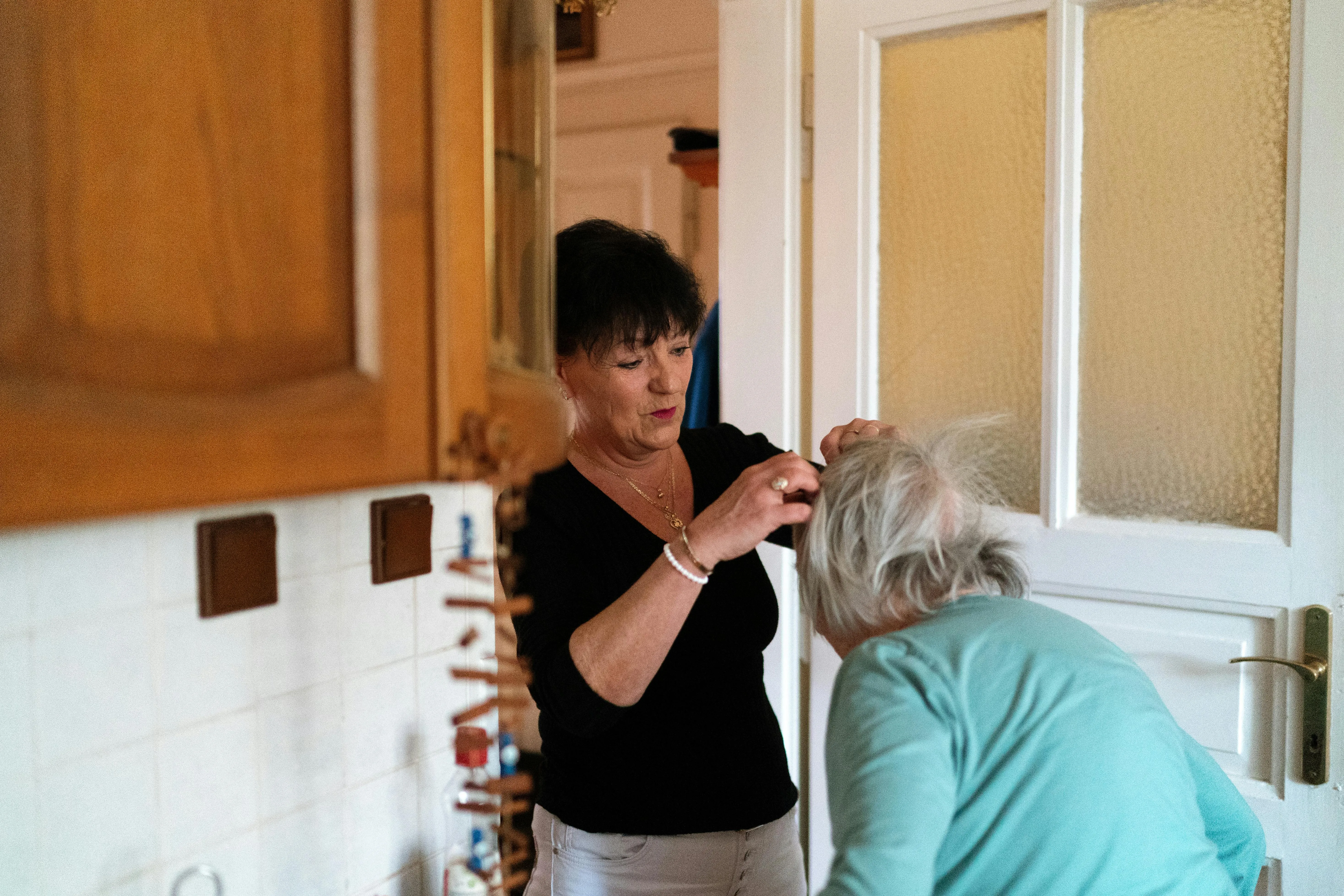

You send the update to the sibling group chat on Sunday night. Mom's blood pressure was high at the appointment. The doctor wants to change her medication. She seemed more confused this week, and the fridge was nearly empty again.
Two blue ticks. Then a thumbs-up.
That is it. A thumbs-up from the brother who lives forty minutes away and has not visited in months, and the sister in Calgary who calls Mom every Sunday and then tells you she sounds fine.
You put the phone down and feel something you are slightly ashamed of. It is not sadness. It is rage.
Hold onto that feeling for a moment, because it is not a character flaw. It is information. This guide will help you turn it into a fairer, safer care plan.
Need care for your parent?
Get a professional care assessment at no cost.
You are not imagining it: care is rarely shared equally
Most adult children who care for a parent are not doing it as part of a balanced team. They are often the person who arrived first and was never relieved.
Statistics Canada's 2022 Canadian Social Survey found that 53% of people providing unpaid care to a care-dependent adult were caring for a parent. Among caregivers aged 45 to 54, that rose to 70%. The load was uneven in both time and impact: women providing adult care gave a median of 10 hours a week compared with 6 for men, while 62% of women caregivers reported feeling tired compared with 48% of men.
These are population patterns, not a description of every family. But they explain why the default caregiver's exhaustion is so common—and why it should be addressed as a care-plan problem, not a personal failure.
How one sibling becomes the default caregiver
It almost never starts with a decision. It starts with a phone call on a Tuesday and whoever picks up.
Proximity. Whoever lives closest gets called first. Soon they are the only person who knows where the medication list is, which makes them the only person everyone calls.
The responsible-one role. Families assign roles early: the organized one, the busy one, the one with the important job, the one who is not good with this stuff. Those childhood labels can quietly decide who does the adult work.
Gender and cultural expectations. Daughters and daughters-in-law are frequently expected to provide hands-on care. In some families, other cultural or generational expectations shape who is considered responsible. Treat these as patterns to discuss, not rules anyone must accept.
Invisible work. Siblings see the visit. They may not see forty minutes on hold with the pharmacy, the insurance form, the night-time worry or the mental list the primary caregiver carries everywhere.
Parent dynamics. A parent may accept help from one child, resist it from another or downplay needs to the children who visit less. Why aging parents refuse help explains how to introduce support without turning every conversation into a contest.
Your siblings may not understand what help means until the work is made specific. That is not an excuse. It is a lever.
Want more deep knowledge like this?
Join our private Facebook group to connect with experts, get exclusive resources, and find support from families navigating the same journey.
What does not work, even when it feels justified
Hinting. Sighing on the phone. Sending a long message about how exhausted you are. Keeping score silently for two years and then exploding at a holiday dinner. Waiting for someone to notice and volunteer.
These reactions are understandable, but they ask your siblings to work out what you need, decide what they can do and commit to it without a concrete request. Even caring people often do not respond.
The reset begins when the conversation moves from who has failed to what Mom needs, who can own each task and when it will happen.
A five-step reset that can change the arrangement
1. Make the invisible work visible. Write down everything your parent needs in a typical month: groceries, meals, medication checks, appointments, driving, bills, house maintenance, government forms, laundry, bathing, emotional check-ins and night-time calls. Add a realistic time estimate.
2. Call a proper family meeting. Schedule a call or visit, share an agenda in advance and set one goal: agree on a plan for the next three months. Include your parent when they can participate. Begin with needs, not the history of who did what.
3. Divide by strengths, not perfect equality. Fair does not mean identical. A distant sibling can manage bills, research public programs, book appointments, chase test results, arrange pharmacy refills, make scheduled calls, fund paid support or visit for a planned relief week.
4. Put names and dates in writing. 'I will help more' is not a plan. 'I will take Mom to Thursday appointments in November and cover the first weekend each month' is. Review the plan in three months or sooner if health changes. Clarify who holds powers of attorney too; start with the paperwork you need before you need it.
5. Bring in a neutral voice. A care coordinator, social worker, family doctor or family mediator can describe needs without the message sounding like an accusation. An objective assessment often resolves an argument because everyone receives the same information from outside the family.
When they still will not help
Some siblings will not step up, no matter how clearly you ask. Distance, health, finances, unresolved family history or unwillingness may be involved. You cannot force a workable relationship.
You can stop making your health the price of their absence. Plan around the help that is actually available: publicly funded home care, community programs, trusted friends, paid support and a direct request for a financial contribution from siblings who cannot provide time. Ontario Health atHome assesses eligibility for publicly funded services, while Alberta's continuing-care system provides home and community-care assessment through provincial services. Availability and approved hours depend on assessed need.
If the arrangement is draining your sleep, mood or health, speak with your healthcare professional and arrange relief now. Respite before a crisis is part of a sustainable plan, not a reward for reaching breaking point.
The thing that ends many sibling standoffs
Often the argument is not really about who visits Mom on Tuesday. It is about the fact that she needs more support than the family can safely provide, and nobody wants to say it.
Once paid support covers the hours no sibling can reliably cover, the conversation can change. Siblings stop bargaining over every shift and share a manageable list. A distant sibling may contribute money, the nearby sibling gets protected time off, and family visits can feel like family again.
If your parent is eligible, public respite or home-care hours may cover part of the plan. Private care can then fill gaps in timing, visit length or service type. Ask for a written schedule, rates and cancellation terms before anyone commits.
How Corelia Health helps families share the load
'I have not had a weekend off in two years.' In-home respite care creates scheduled breaks, from a few hours to longer coverage.
'I am the only person doing bathing and nobody else will.' Personal care assistance provides professional help with bathing, dressing, hygiene, toileting and mobility.
'My sister lives out of province and hears only my version.' Agreed family updates help everyone work from the same picture.
'Dad is lonely and I cannot be there every day.' Companion care covers conversation, errands, meals and outings.
'She needs someone overnight now.' 24/7 senior home care provides rotating coverage when the family cannot safely keep taking turns.
Corelia Health offers flexible schedules without long-term contracts. Caregivers are bonded, WSIB/WCB insured and cleared through vulnerable-sector police checks. We serve Mississauga, Brampton, Caledon, Oakville, Burlington, Milton, Halton Hills, Guelph, North Bay, Edmonton and Red Deer.
Bring your siblings to the table with a real plan
Book a free, no-obligation assessment and invite your siblings to join the call. Everyone hears the same assessment from someone who is not taking sides.
, try the care cost estimator, take the two-minute care-needs quiz, or call 1-844-826-7354.Official sources
Caregiving statistics and public-program information were checked against these official sources on October 2, 2026:
- More than half of women provide care to children and care-dependent adults in Canada, 2022 — Statistics Canada
- Respite care — Government of Ontario
- About continuing care — Government of Alberta
Program eligibility, availability and approved hours can change. Confirm current options through the provincial service responsible for your area.
Frequently Asked Questions
Yes. Time and money are both real contributions. Agree on an amount that reflects each person's circumstances, identify what it will pay for and keep invoices or receipts visible to everyone involved.
Some families agree to this when one sibling has reduced paid work to provide care. Discuss it openly, confirm that the parent has capacity and agrees, document the arrangement and obtain legal and tax advice before money changes hands—especially when powers of attorney or inheritance are involved.
Introduce help gradually, start with less personal tasks and frame support as something that protects your relationship and health. Give your parent choices about timing and caregiver fit, while being clear about what you can sustainably continue doing.
Resentment is common when one person carries an unsustainable load. Treat it as a signal to make the work visible, set limits and arrange relief. If stress is affecting your sleep, mood or health, speak with your healthcare professional.
Corelia Premium Guide
Use this guide to compare care options, prepare family questions, and understand what to check before starting in-home support.
Professional Care Services
Local Home Care Support
Why Corelia Health?
-
Customized care plans tailored to your unique needs and preferences.
-
Screened caregivers matched to the care plan, schedule, and level of help required.
-
Ongoing monitoring and regular family updates for peace of mind.
-
Locally owned and operated, providing a personalized community touch.
"We help at home, wherever home is for you."
Find The Right CareSpeak to our Clinical Care Coordinator
We are here to walk this journey with you. Our coordinators provide expert guidance on care options, funding, and next steps.