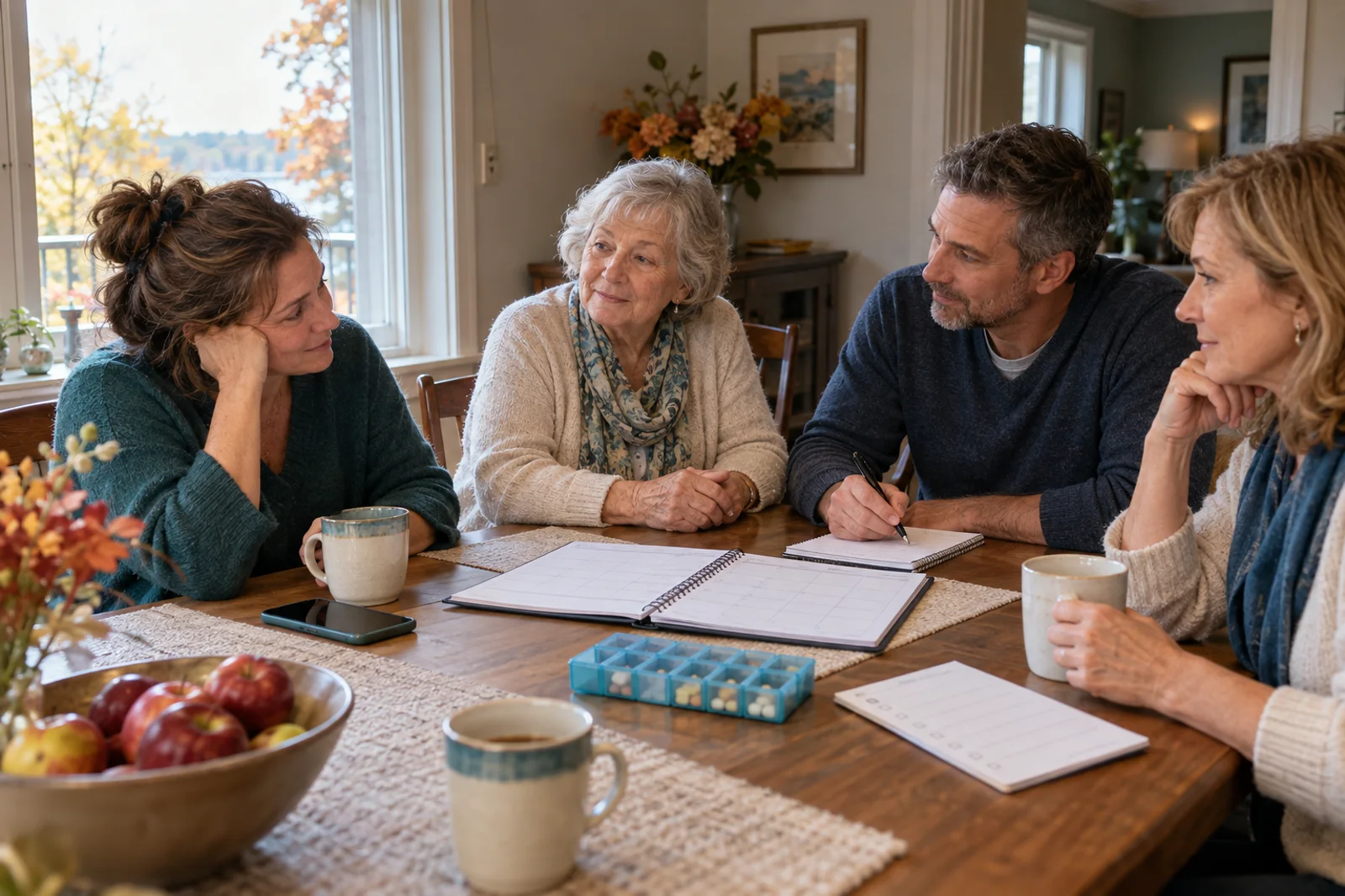

When Frank Halloran was told his illness had moved from manageable to limited time, his daughter Claire did what a lot of people do in that moment: she started researching. Not treatments — those conversations belonged to Frank's doctors. She was looking for something closer to a map. How do people actually get through this well? What do families wish they had known?
That is how she found out that the psychiatrist behind The 80-Year-Old Wall — the book that had already reshaped how her family thought about her dad's last few years — had just published something new. Not about walls this time. About regret.
It is a harder book to sit with. It is also, in its way, one of the more useful things Claire read that year.
Need care for your parent?
Get a professional care assessment at no cost.
Dr. Wada's Newest Book: What Only a Doctor Sees
The book is titled, roughly translated, Deathbed Regrets Only a Doctor Knows, published in Japan in November 2025. It comes from Dr. Hideki Wada's more than three decades as a psychiatrist specializing in geriatric care, much of it spent at a hospital dedicated to elderly patients, where he personally attended more than 100 autopsies a year and sat with thousands of patients as they neared the end of their lives.
The book gathers the regrets he heard most often — not as individual anecdotes, but as patterns that repeated across thousands of very different people. And one finding sits underneath almost all of it: the regrets that stayed with people longest were almost never about something they did. They were about something they did not.
The Five Regrets That Show Up Again and Again
Dr. Wada organizes what he heard into five broad categories:
None of these are really about extravagance or recklessness. They are about the small, repeated choice to defer — the trip next year, the honest conversation eventually, the dessert some other time — made by people who, it turned out, did not have as much eventually as they assumed.
--- ### Want to make sure your family's time together is not quietly slipping away? Get a professional care assessment at no cost — built around what actually matters most to your family right now.Want more deep knowledge like this?
Join our private Facebook group to connect with experts, get exclusive resources, and find support from families navigating the same journey.
The Patient Who Changed How He Practiced Medicine
Dr. Wada has written about one particular turning point in his own career: a former corporate executive, a patient of his, who carried his old professional status into the hospital like armor — proud, guarded, difficult with staff. No one came to visit him. Not once, the whole time he was there.
Watching that unfold reportedly changed something in how Dr. Wada thought about his own life, not just his patients. He has since described shifting away from chasing prestige within medicine and toward the work and pursuits that actually mattered to him personally — including filmmaking alongside his medical practice.
It is the kind of story that lands differently depending on which side of it you are standing on — as the patient, or as the family who did not come.
What This Means for Your Family Right Now
For the Hallorans, the shift was practical, not philosophical. Claire's mother had spent two years gently rationing Frank's favourite foods on his doctor's advice. That week, she stopped rationing the dessert. Claire's uncle, who had not spoken to Frank in nine years over an old disagreement neither fully remembered anymore, got a phone call — awkward, short, and very much worth making.
And the family finally booked the trip to the cottage they had been planning to get to eventually for three summers running — which meant arranging real support at home so getting there did not fall entirely on whoever could take the most time off work.
None of this required ignoring medical advice. It required asking, honestly, which restrictions were still serving Frank's actual quality of life — a question worth asking with a doctor, not instead of one.
How Corelia Health Helps Families Avoid These Regrets
This is precisely where the right in-home support changes what is possible, not just what is comfortable.
Our End-of-Life Palliative Care and Companion Care services are built to give families back the time and energy that logistics usually consume — coordinating daily care so a family can take that trip, arranging respite so an adult child can sit and actually talk instead of just managing medications, and providing steady in-home presence so no one has to choose between being there and keeping everything else running.
We also work alongside a family's own physicians to help make space for the small pleasures — a favourite meal, a preferred routine — that matter enormously to quality of life, within a plan the doctor has actually approved.
Every Corelia caregiver is vetted, licensed, and background-checked. And every care plan starts from the same place this whole book does: asking what would actually make the time that is left feel well spent — not just safely managed.
Let's Make the Time That Is Left Count
If your family is navigating a serious diagnosis or the later stages of life, the right support can open up time and space you did not know you had. Book a free, no-obligation assessment with a Corelia Health care coordinator.
1-844-826-7354Serving Mississauga · Milton · Oakville · Burlington · Guelph · Brampton · Caledon · Halton Hills · North Bay · Edmonton · and surrounding communities across Ontario & Alberta.
Claire and Frank Halloran are illustrative composite examples, not an individual case history. This article summarizes themes from a book published in Japanese, based on secondary reporting and publisher descriptions rather than an official English translation; specific phrasing reflects our own paraphrase, not direct quotation. If this topic brings up grief or loss for you personally, please know that support is available — we are glad to help point you toward it.
Key Takeaways
Do not defer what matters
The recurring pattern is not reckless choices. It is meaningful experiences, conversations, and pleasures postponed until time runs out.
Say the important thing
Old rifts, unspoken preferences, and avoided conversations often become heavier near the end than families expect.
Revisit restrictions with a doctor
Medical guidance still matters. The question is whether each restriction is still serving quality of life in the situation your family is actually facing now.
Use support to create time
The right care plan can move family energy away from logistics and back toward presence, conversation, and connection.
The goal is not only to keep someone safe. It is to help the time they have left feel well spent.
Frequently Asked Questions
Published in Japan in November 2025, the book gathers the regrets Dr. Wada heard most often from patients nearing the end of life across more than three decades of geriatric psychiatric practice, organized into patterns around experience, relationships, health choices, money, and work-life balance.
The book's central finding is that most lasting regrets are about things people did not do — trips not taken, conversations not had, pleasures postponed — rather than mistakes they made.
By having honest conversations about what actually matters to a loved one now, revisiting medical restrictions with their doctor to see what still serves quality of life, and arranging enough support at home that meaningful time together does not get lost to logistics.
Corelia Health's End-of-Life Palliative Care, Companion Care, and respite services free up family time and energy so it can go toward presence and connection, while coordinating with a family's own physicians to safely honour a person's preferences.
Corelia Premium Guide
Use this guide to compare care options, prepare family questions, and understand what to check before starting in-home support.
Professional Care Services
Local Home Care Support
Why Corelia Health?
-
Customized care plans tailored to your unique needs and preferences.
-
Screened caregivers matched to the care plan, schedule, and level of help required.
-
Ongoing monitoring and regular family updates for peace of mind.
-
Locally owned and operated, providing a personalized community touch.
"We help at home, wherever home is for you."
Find The Right CareSpeak to our Clinical Care Coordinator
We are here to walk this journey with you. Our coordinators provide expert guidance on care options, funding, and next steps.