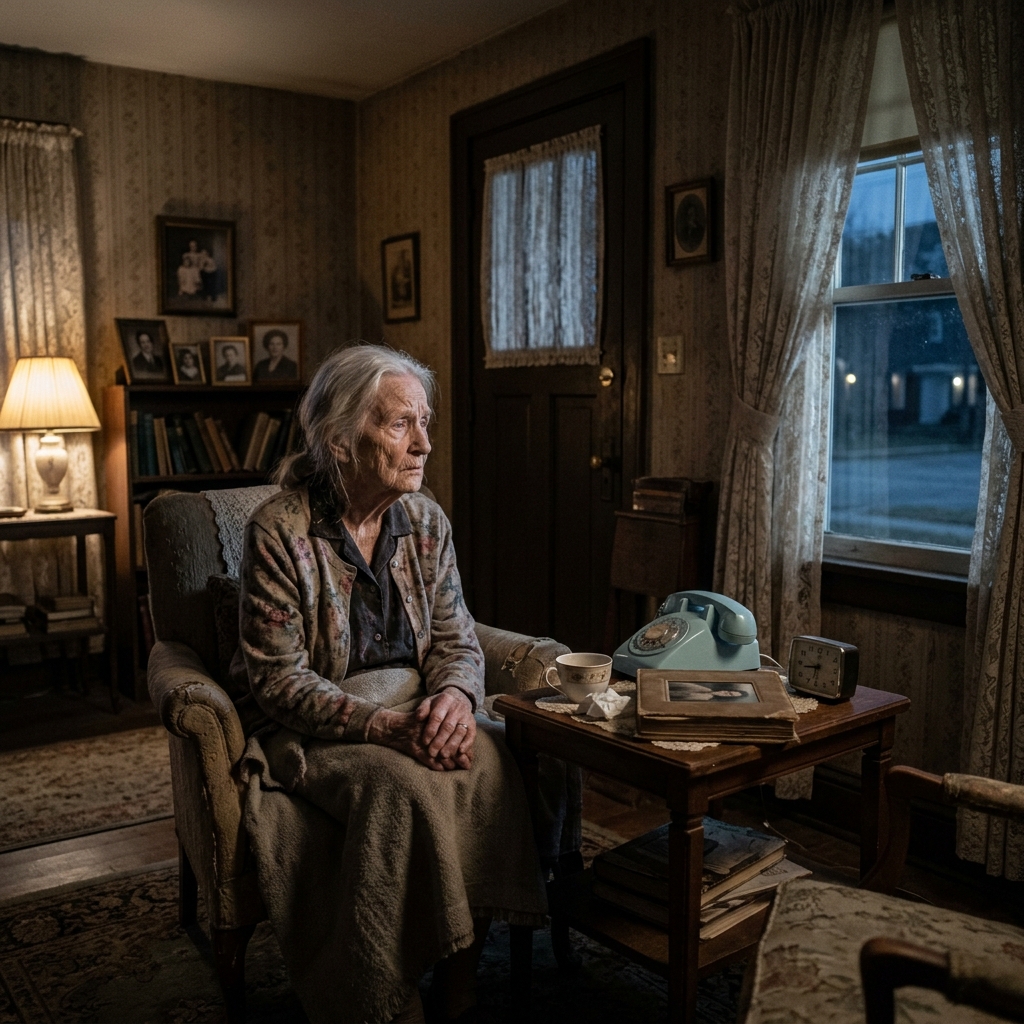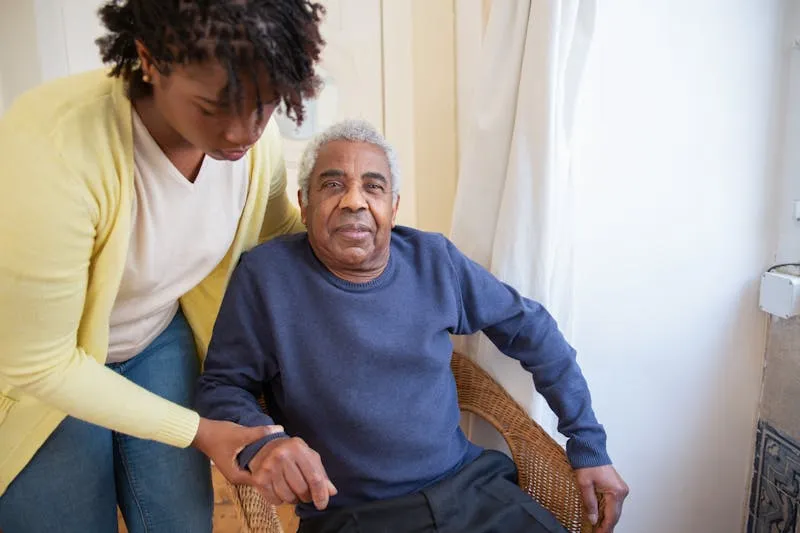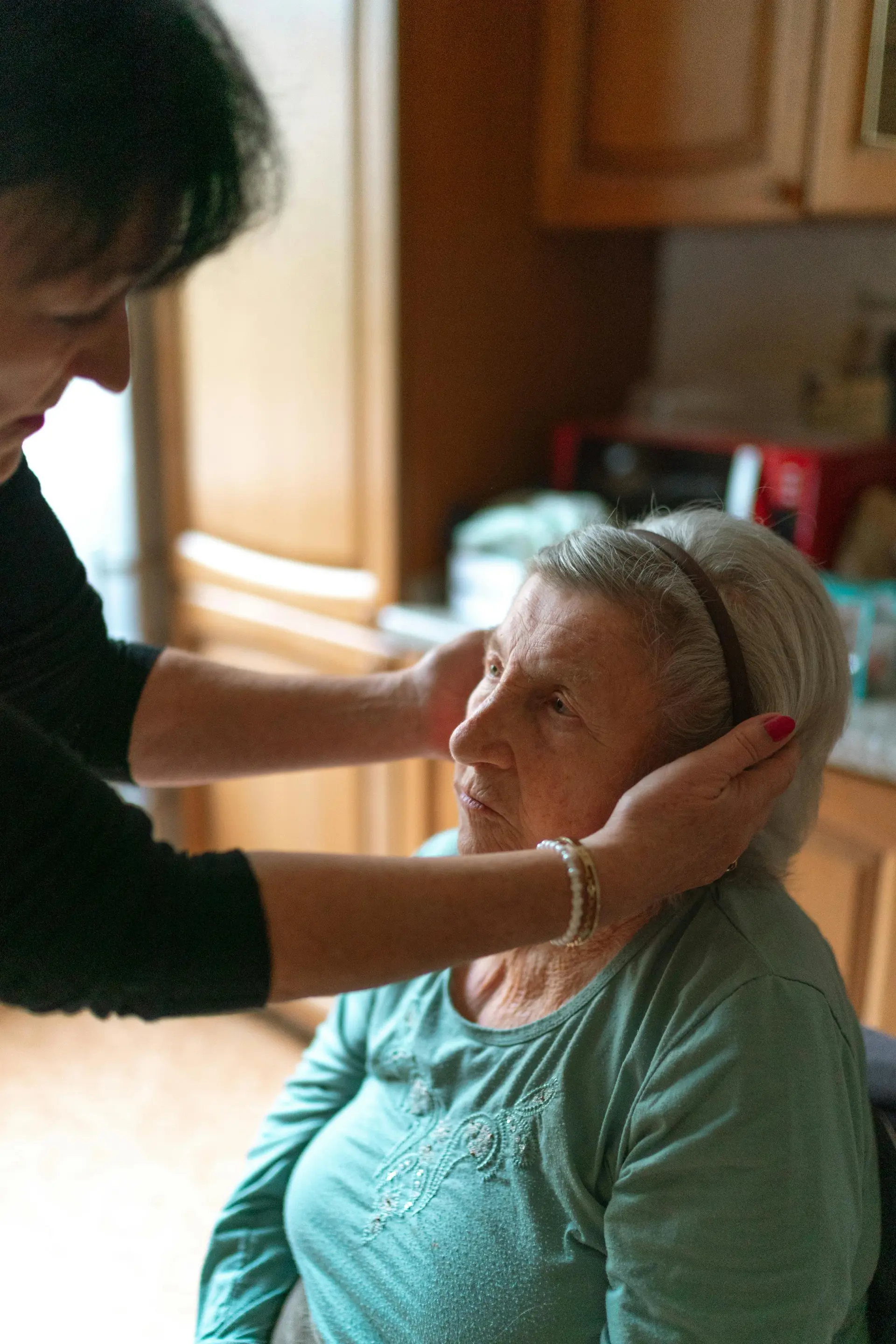

You've offered gently. You've offered firmly. You've tried bargaining, and once, badly, you tried insisting. She still says no — and you're starting to wonder whether it's you.
Bathing refusal is almost never stubbornness, and it is almost never about being clean. It is usually fear of falling, changed temperature perception, pain, embarrassment, or the need to keep control of something — and in dementia, sometimes a genuine inability to perceive that washing is needed at all.
And there is one more reason that families rarely name out loud: a great many parents will accept this help from a professional and refuse it from their own child. That is not a failure on your part. It is the predictable result of forty or seventy years of being the parent in the room.
Bathing is the flashpoint. Ask home care coordinators in Ontario or Alberta which task causes the most conflict between adult children and their parents, and it is not medication, not driving, not money. It is the shower.
It is also the task families put off addressing longest, because raising it feels intrusive in a way that offering to do the shopping never does. So it gets left, and left, until someone notices a smell in the hallway or a mark on a chair, and then it becomes urgent and everybody handles it badly.
Understanding what is actually driving the refusal changes the approach entirely. Here are the seven reasons that come up most.
Need care for your parent?
Get a professional care assessment at no cost.
Seven real reasons an elderly parent refuses help bathing
They are frightened of falling
This is the most common and the most rational. A wet tiled floor, a tub ledge to step over, nothing steady to hold, and a body that no longer recovers from a stumble. Your mother may not be able to explain this to you, but she has almost certainly done the arithmetic on what a broken hip would mean for her independence. Refusing the shower can be a way of managing a risk she has correctly identified.
The water genuinely does not feel the way it feels to you
Temperature perception changes with age and changes further with dementia. Water you would call pleasantly warm can register as scalding or as freezing. Then there is the moment of stepping out — cold air on wet skin — which for some people triggers a real panic response. When someone says the water is too hot and you have just tested it yourself, they are not necessarily wrong about their own experience.
It hurts
Arthritic shoulders that cannot reach overhead. Hips that will not manage the step. Fragile, itchy skin that stings under a spray. Standing for eight minutes when standing for two is difficult. Pain is chronically under-reported by older adults, particularly by those who grew up believing complaint was poor form.
Refusing is one of the few things still entirely theirs
Consider how much has already been decided for her. When she eats, who visits, whether she still drives, which appointments are booked. Saying no to a shower may be one of the last decisions she can make and enforce without anyone's permission. Seen that way, resistance is not irrational — it is a person defending the last patch of ground.
A bad experience taught her to dread it
One cold, rushed, or frightening bath is enough to build a lasting association. If someone once hurried her, or she slipped, or she was left shivering and exposed, the body remembers even where the details do not. The refusal you are meeting today may be about something that happened months ago that nobody thought to mention.
In dementia, she may not perceive that she needs to
There is a neurological term for this — anosognosia — where a person genuinely cannot perceive their own condition. She is not lying when she says she showered this morning; in her experience she did. Dementia also disrupts sequencing, so the ordered steps of undressing, washing, rinsing and drying can become a bewildering series of demands rather than one familiar routine. What looks like refusal is sometimes an inability to begin.
It's you
The one nobody wants to say. Being undressed in front of your own child inverts a hierarchy that has stood since the day you were born. She has spent your whole life being the capable one, the one who bathed you. Letting you see her body now, aged and unwell, is not the same order of exposure as letting a nurse see it. For many parents it is unbearable in a way they will never be able to articulate — so it comes out as "I'm fine" and "leave it," over and over.
She isn't refusing to be clean. She's refusing to be seen by you.
What to stop doing
Most families arrive at these instinctively and they all make it worse.
Four things that reliably backfire
1. Reasoning with her about hygiene. If the barrier is fear or shame, a logical argument about bacteria has nothing to attach to. You cannot reason someone out of a position they did not reason themselves into.
2. Announcing it in advance. "We're doing your shower after lunch" creates hours of dread and a decision to be resisted. Approaching it as part of the flow of the day gives her far less to brace against.
3. Making it about how it looks. Any version of "people will notice" adds humiliation to a situation already saturated with it.
4. Turning it into a daily event. Most older adults who are not incontinent do not need a full shower every day, and over-washing dries fragile skin. Insisting on daily manufactures a daily conflict where two or three times a week would do.
Want more deep knowledge like this?
Join our private Facebook group to connect with experts, get exclusive resources, and find support from families navigating the same journey.
What actually helps
None of these are magic. They remove specific barriers, which is different and more useful.
Make the room warm first. Heat the bathroom, warm the towels, have a robe ready. A great deal of resistance is simply about being cold and exposed.
Fix the fear before the hygiene. Grab bars, a non-slip mat, a shower chair, a handheld shower head. A seated wash with something solid to hold changes the whole proposition. Many people who "refuse to shower" will accept sitting down for one.
Let her keep something on. A towel over the shoulders or a light robe that comes off in stages preserves modesty and costs you nothing.
Offer choices, not the decision. Not "do you want a shower" — the answer is no. Rather: before or after breakfast, this towel or that one, hair today or tomorrow. Control returned in small pieces reduces the need to defend the big one.
Lower the bar. A wash at the sink, a no-rinse product, hair washed separately over the basin. Clean does not require a shower, and partial is enormously better than nothing.
Watch for pain and treat it first. If she winces getting in, that is a medical conversation, not a behavioural one.
Stop and try again later. Forcing it once can cost you months of cooperation. Almost nothing about a missed wash is an emergency.
When to stop troubleshooting and call the doctor
A sudden, sustained change in hygiene in someone who was always particular about their appearance is worth taking seriously. It can point to depression, pain, a urinary tract infection, or cognitive change — all of which are treatable or manageable, and none of which respond to persuasion.
The same goes for new fear or aggression around bathing where there was none before. That is a signal, not a personality change.
Why a caregiver often succeeds where you cannot
This is the part that families find hardest to hear and are most relieved by once they do.
A professional caregiver walks into that bathroom carrying no history. They were not a child your mother raised. They did not sit at her table at Christmas for thirty years. They will never see her at a wedding, or need to be looked in the eye afterwards over a cup of tea. That absence of history is precisely what makes the exposure survivable.
There is a competence factor too — trained caregivers know how to manage transfers safely, how to keep someone warm and covered, how to move at the right pace without making it feel clinical. But the deeper thing is simply that it is easier to be helped by someone whose regard you do not have to live with afterwards.
If your mother accepts a caregiver's help within a fortnight after refusing yours for a year, that is not a comment on you. It is the most ordinary thing in this work.
Not ready to arrange anything yet? Our care needs quiz takes about two minutes and gives you a clearer picture of what would actually help at home — no phone call required. Or take the free senior care guide and read it in your own time.
How Corelia Health helps with this
Personal care is the service families most often call us about and most often delay calling us about. Here is what that support actually looks like across our Ontario and Alberta service areas.
"She won't let me anywhere near the bathroom."
Personal care assistance Trained caregivers manage bathing, showering, grooming, dressing and toileting with the pacing and modesty protections that make it tolerable. Where it helps, we can match a caregiver of the same gender as your parent.
"She doesn't think she needs a wash. She's sure she had one."
Dementia and Alzheimer's care Caregivers trained for cognitive change work with routine, familiar cues and step-by-step guidance rather than argument — the approach that works when memory and perception are the barrier.
"I'm frightened she'll fall in there and I won't be around."
Safety-led care planning Assessments look at the bathroom specifically — transfers, grab bars, seating, what is realistic for her balance today — and the plan is built around that rather than around a generic schedule. Plans are overseen by our Clinical Director, a Registered Nurse.
"She only trusts a couple of people. A rotating cast would be a disaster."
Consistent caregiver matching With intimate care, continuity is not a nicety — it is the whole thing. We match deliberately for it, and if the fit is wrong we will change the caregiver at no additional cost.
"She'd never agree to a full schedule."
Start small Most families begin with two or three visits a week. There are no long-term contracts and no minimum you have to build up to. Assessments are free.
We serve families in Mississauga, Brampton, Caledon, Oakville, Burlington, Milton, Halton Hills, Guelph, North Bay, Edmonton and Red Deer. Caregivers are bonded, WSIB and WCB insured, and cleared through vulnerable sector police checks.
Talk it through with someone who has solved this before
A free, no-obligation call with a care coordinator. Tell us what's happening at home and we'll tell you honestly what tends to work — including whether you need us at all. Coordinators have had this exact conversation with a great many families.
Book a free assessment Or call 1-844-826-7354
Frequently Asked Questions
For an older adult who is not incontinent and not especially active, two or three washes a week is generally enough, with daily attention to face, hands and the areas that matter most. Over-bathing dries and damages ageing skin. This means a refusal today does not have to become a fight today.
No. Forcing intimate care damages trust badly and often costs months of cooperation, and it can escalate into genuine distress or aggression. Back off, work out which barrier you are actually facing, and change the conditions rather than the pressure.
Often, yes, particularly for the first weeks and particularly where modesty is the main barrier. It is a reasonable thing to ask any provider for.
Refusal that spans everything usually has a different root — fear about what accepting help sets in motion. We wrote about that here: <a href="https://www.coreliahealth.com/blogs/why-aging-parent-refuses-help" class="text-teal-600 font-bold hover:underline">why your aging parent refuses help</a>.
Corelia Premium Guide
Use this guide to compare care options, prepare family questions, and understand what to check before starting in-home support.
Professional Care Services
Local Home Care Support
Why Corelia Health?
-
Customized care plans tailored to your unique needs and preferences.
-
Screened caregivers matched to the care plan, schedule, and level of help required.
-
Ongoing monitoring and regular family updates for peace of mind.
-
Locally owned and operated, providing a personalized community touch.
"We help at home, wherever home is for you."
Find The Right CareSpeak to our Clinical Care Coordinator
We are here to walk this journey with you. Our coordinators provide expert guidance on care options, funding, and next steps.