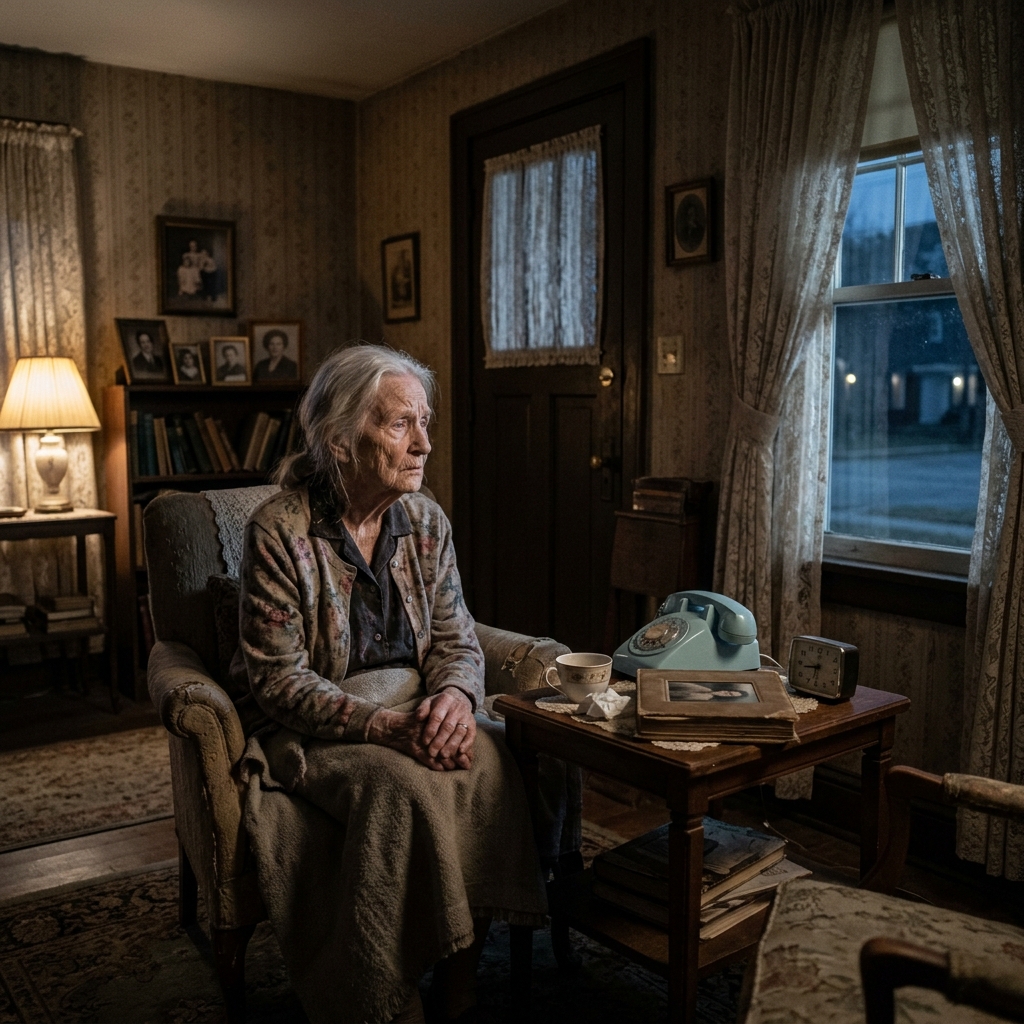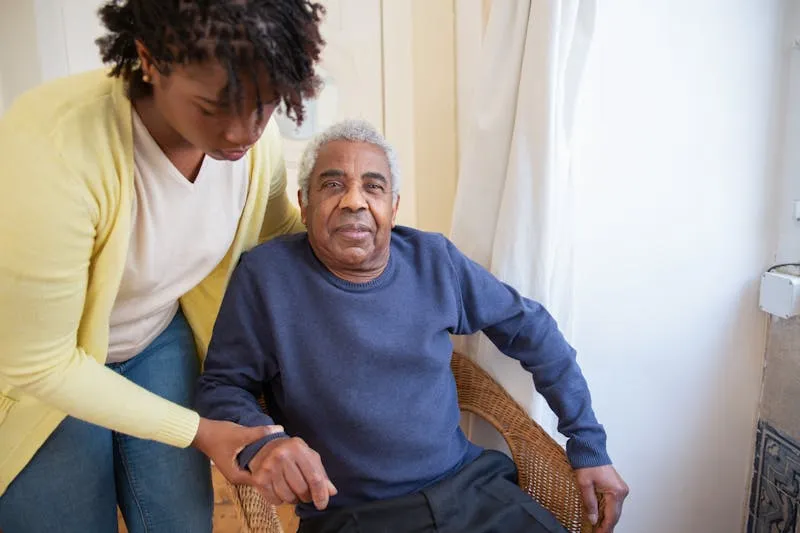

Families put this off longer than almost any other decision, and it is not because they haven't noticed. It's because they know exactly what the keys mean — and they know who will be blamed.
The short answer
Not at any particular age. Eighty-eight-year-olds drive perfectly well and seventy-two-year-olds sometimes should not be on the road. The trigger is function: unexplained damage to the car, getting lost on familiar routes, drifting across lanes, confusing the pedals, freezing at intersections, or a diagnosis that affects cognition, vision or reaction time.
The plainest test we know: if someone who loves them is frightened in the passenger seat, that is enough to act on.
And one thing worth knowing before you read further — in Ontario and Alberta, this does not have to be your decision to carry. There is a system designed to take it off you, and most families never use it.
Ask adult children which conversation with their parent they dread most and it is not money, not moving house, not even personal care. It is the car.
Part of that is guilt. Most of it is that everyone involved understands, without saying so, that this is not really about driving.
Need care for your parent?
Get a professional care assessment at no cost.
Why this is harder than every other care conversation
Losing the keys is not losing a hobby. It is losing the ability to leave.
A car is what makes a person a participant rather than a recipient. It's how your father gets to the hardware shop without asking anyone, how your mother goes to church, sees a friend, buys her own groceries, leaves the house at four in the afternoon for no particular reason. Every one of those things becomes a request the moment the keys go — a favour that has to be scheduled around someone else's working day.
So when your parent digs in and says they are perfectly fine, they may well be wrong about their driving. They are not wrong about what is at stake. They are defending their status as an adult, and they are right that it is under threat.
They aren't fighting you about driving. They're fighting you about whether they still get to leave the house on their own terms.
This matters practically, not just emotionally. Families who treat this as a safety argument almost always lose, because they are answering a question their parent is not asking. Families who treat it as a mobility problem to be solved together do considerably better.
The signs that actually matter
Age tells you very little. These are the observable things that do.
New dents, scrapes or scuffs nobody can account for. Check the bumpers, wing mirrors and the garage door frame. Marks that appear without a story are the single most reliable early sign.
Getting lost on routes they have driven for decades. Not a wrong turn in an unfamiliar suburb — the drive home from their own shops.
Drifting between lanes, or straddling them. Often noticed by a passenger long before anything happens.
Confusing the accelerator and brake, even once. This is not a small thing and it does not tend to be a one-off.
Slow or absent reaction to the unexpected. A cyclist appearing, a car braking hard ahead, a pedestrian stepping out. Steady driving in predictable conditions can mask this entirely.
Other drivers honking more than they used to. Your parent will describe this as everyone else being impatient. Sometimes it is. Often it is information.
Trouble with left turns, merging, or busy intersections. These need fast judgement of gaps and speeds, which is one of the first things to go.
They have quietly shrunk their own driving. No motorways, no night driving, no rain, only the two familiar routes. Self-restriction is often good judgement — and it is also a signal that they have noticed something.
A new diagnosis or medication. Dementia, Parkinson's, significant vision loss, stroke, uncontrolled diabetes, sleep apnoea, or medications that cause drowsiness or slowed reaction.
Family members have stopped letting the grandchildren ride with them. If that has happened informally, without anyone naming it, the family has already reached a verdict.
Want more deep knowledge like this?
Join our private Facebook group to connect with experts, get exclusive resources, and find support from families navigating the same journey.
How urgent is it?
Watch and gather
Self-restriction, occasional slow reactions, one confusing turn, a single minor scrape with an explanation. Start taking notes with dates. Ride as a passenger, more than once, at different times of day and in different conditions. You will need specifics later, and "I've got a bad feeling" does not survive a conversation with a proud parent.
Act within weeks
Repeated unexplained damage, getting lost, lane drifting, honking from other drivers, difficulty at intersections. Book the medical appointment. Ask about an independent driving assessment. Do not wait for the next renewal to come around.
Stop now, today
Pedal confusion, a collision or near miss, driving the wrong way, becoming lost and needing to be found, or a dementia diagnosis with any driving concern attached. In these cases driving should stop while the assessment happens, not after it.
What Ontario and Alberta actually require
This is the part most families do not know, and it changes the whole approach.
Ontario — age 80+
Renewal every two years instead of five. Since February 2025 the education component is a short video watched beforehand at ontario.ca/seniordriver, followed by a single appointment at a ServiceOntario centre covering vision screening, a cognitive screening exercise and a driving-record review. A road test is required only if something is flagged. Notice arrives roughly 90 days before expiry; the fee is $36.
Alberta — age 75, 80, then every two years
A medical examination is required at 75, again at 80, and every two years after that. A road test may follow if the medical report or vision assessment raises concerns.
Requirements as we understand them in September 2026. Ontario changed its process in February 2025, so older guides describing a 45-minute in-person group session are out of date — confirm current requirements at ontario.ca/seniordriver or with an Alberta registry agent.
One detail worth knowing: in Ontario, drivers 70 and over who have been involved in a collision can be sent a renewal notice with required testing before they turn 80. If your parent has had a collision recently, the review may come sooner than you expect.
The more important fact is this: Ontario physicians have a legal duty to report patients whose medical condition may make driving unsafe. The doctor reports; the Ministry of Transportation decides. Not the doctor, and certainly not you.
This is the way out of being the villain
Almost every family assumes the keys are theirs to take, and then spends months dreading a confrontation they are not equipped to win. It doesn't have to work that way.
Write to your parent's family doctor before the appointment — a short letter with your specific observations and dates. Doctors take this seriously and are often looking for exactly this information, which they cannot get from a fifteen-minute consultation with someone who is on their best behaviour.
If a licence is then suspended, the decision came from the province. Your parent may still be furious, and they may still suspect you. But you are no longer the person who took something from them, and that difference tends to matter enormously for the relationship over the following year.
Independent driving assessments
Where the picture is genuinely unclear, an occupational therapist driving assessment gives you an objective answer instead of a family argument. It typically combines an in-clinic evaluation of vision, cognition and reaction with an on-road test using a trained assessor. These are usually paid privately in both provinces and can be arranged through rehabilitation providers or on referral from a physician.
They are worth knowing about for a second reason: sometimes the assessment says the person is fine. That outcome ends a family dispute far better than any conversation could, and a parent who has passed an objective test may accept restrictions — daytime only, no motorways — that they would never accept from a son or daughter.
Having the conversation
A few things reliably help.
One person, in private, not after dinner. A family delegation feels like an ambush and produces the response an ambush produces. Whoever has the most credit in the relationship should do it, alone.
Specifics, not conclusions. "There's a new scrape on the passenger side and last Tuesday you turned onto Elm going the wrong way" is a conversation. "You're not safe to drive anymore" is a verdict, and it will be argued with.
Ask, don't tell, first. "Has driving felt different lately?" Many parents have privately noticed and have nobody to say it to. Some of the smoothest versions of this begin with a parent admitting they've been worried too.
Offer the middle ground. Daytime only. Familiar routes only. No motorways, no rush hour. Partial retirement from driving is real, dignified, and often what an assessment recommends anyway.
Lead with the replacement, not the loss. More on this below, because it's the part that determines whether this works.
Expect to need several conversations. Unless it's a stop-now situation, this is usually a process over months. Planting the idea and returning to it works far better than winning it in one sitting.
What not to do
Don't hide the keys or disable the car secretly. It's tempting and it is occasionally necessary in a crisis, but as a strategy it produces confusion, distress and sometimes a genuine emergency — a person who cannot find their keys and does not understand why can react badly. It also destroys the trust you need for everything else that's coming.
Don't raise it at a family gathering. Being outnumbered in front of grandchildren adds humiliation to a loss.
Don't make it about age. The moment you say "at your age," you have handed them a reason to dismiss the whole thing.
Don't take the keys and stop there. This is the most common failure. A parent stranded at home without a plan will often start driving again, and you will have spent your credibility for nothing.
The part that determines whether this works
Every family focuses on the removal. Almost none plan the replacement, and the replacement is the whole thing.
Research on older adults who stop driving is fairly consistent and fairly bleak: it is associated with sharp drops in activity outside the home and increased risk of depression and isolation. That is not the car being missed. It is a person's world contracting to the size of their living room.
Which means the honest version of this conversation is not "you need to stop driving." It's "here is how you will still get to your Thursday group, your appointments, the shops, and your sister's place." If you can answer that concretely before you raise the keys, you are having a completely different conversation — one about logistics rather than about surrender.
Put the alternatives in place first. Not after. Arrange them, test them, let your parent use them once or twice while they are still driving. The keys become much easier to give up when their function has already been replaced.
Not sure what your parent needs yet? Our care needs quiz takes about two minutes and gives you a clearer picture — no phone call required. Or take the free senior care guide and read it in your own time.
How Corelia Health helps
This is precisely the gap our companion caregivers fill for families across Ontario and Alberta — not replacing the car with nothing, but replacing it with someone.
"How will she get to her appointments and her shopping?"
Companion care. Support with errands, groceries and prescriptions, accompaniment to medical appointments, and company for the social activities that keep a person connected. Transport arrangements vary by location and situation, so ask us what's possible in your parent's area — the aim is that she still goes out, with company rather than alone.
"If she can't drive, she'll just sit in that house all day."
Regular scheduled visits. Predictable days and times matter more than hours. A standing Tuesday and Friday gives someone a week with shape to it, which is the specific thing that goes missing when driving stops.
"He's been diagnosed with dementia and he's still getting in the car."
Dementia and Alzheimer's care. Caregivers trained for cognitive change, and care planning overseen by our Clinical Director, a Registered Nurse, who can help you document what you are seeing for the conversation with his doctor.
"I've been driving across the city three times a week to cover this."
Respite care. When a parent stops driving, the driving usually transfers to an adult child. This is the point at which many families quietly hit the wall. Respite exists for exactly that.
"He'd never agree to anyone coming in."
Start small. Most families begin with two or three visits a week. Free assessment, no long-term contracts, and if the caregiver isn't the right fit we'll change them at no additional cost.
We serve families in Mississauga, Brampton, Caledon, Oakville, Burlington, Milton, Halton Hills, Guelph, North Bay, Edmonton and Red Deer. Caregivers are bonded, WSIB and WCB insured, and cleared through vulnerable sector police checks.
Have the mobility plan ready before you have the conversation
A free, no-obligation call with a care coordinator to work out what would actually cover your parent's week — appointments, shopping, the social things that matter to them. Solve that first and the keys get very much easier.
Or call 1-844-826-7354Frequently Asked Questions
Concerns can be raised with the Ministry of Transportation in Ontario or with Alberta's registry system, and a physician's report is the more usual and more effective route. Complete anonymity cannot be guaranteed in every circumstance, so it is worth asking the relevant office directly about how your report would be handled before you file it.
A dementia diagnosis does not automatically end driving, particularly in the earliest stages, but it does mean driving needs formal assessment and regular review. If their doctor is aware of the diagnosis, the reporting obligation applies. If you are not confident the doctor knows what you are seeing at home, tell them.
This happens, especially where memory is affected, and it is a genuine safety and liability problem — insurance will not cover an unlicensed driver. At that point practical measures become reasonable: the car sold or moved elsewhere, keys kept off site. Raise it with their doctor as a medical matter rather than a discipline one.
Liability depends on circumstances and this is not legal advice, but the practical answer is that documented action — a letter to the doctor, an assessment arranged — protects everyone, your parent most of all. If you're worried about your exposure, speak to a lawyer.
Almost every family does, and it doesn't mean you're doing the wrong thing. You are taking something real from someone you love in order to prevent something worse. Both of those facts are true at once.
Corelia Premium Guide
Use this guide to compare care options, prepare family questions, and understand what to check before starting in-home support.
Professional Care Services
Local Home Care Support
Why Corelia Health?
-
Customized care plans tailored to your unique needs and preferences.
-
Screened caregivers matched to the care plan, schedule, and level of help required.
-
Ongoing monitoring and regular family updates for peace of mind.
-
Locally owned and operated, providing a personalized community touch.
"We help at home, wherever home is for you."
Find The Right CareSpeak to our Clinical Care Coordinator
We are here to walk this journey with you. Our coordinators provide expert guidance on care options, funding, and next steps.