Written by our clinical care coordinators — the team that sees the Blue Zone principles at work in the homes of seniors across Ontario and Alberta, every single day.
Picture a 98-year-old Sardinian shepherd. He has walked five miles a day through mountain terrain for his entire working life — not as exercise, just as the shape of his days. He finishes the afternoon with a glass of local red wine and an hour of loud, laughing conversation with neighbours he has known for 60 years. He has never been to a gym. He has never counted a calorie. He does not have a longevity plan.
He is just living. But the way he is living — the daily movements, the meals, the friendships, the unhurried relationship with time — happens to be, the science tells us, almost precisely what produces a century of healthy, joyful life.
Now picture a 94-year-old woman in Okinawa, Japan. She rises early, tends her vegetable garden, eats a breakfast of sweet potato, tofu, and miso broth. Before every meal she says aloud the old Confucian phrase her grandmother taught her — hara hachi bu — a reminder to eat until she is 80% full. In the afternoon she meets with her moai: five women she has shared her life with since childhood. They drink green tea. They talk about their grandchildren. They have been meeting like this, every week, for over seventy years.
These are not invented portraits. They are composites of the real people that explorer and journalist Dan Buettner met when he spent years asking the most important question in health research: where in the world do people live the longest — and why?
Need care for your parent?
Get a professional care assessment at no cost.
The Man Who Set Out to Reverse-Engineer Longevity
Dan Buettner is not a doctor or a scientist. He is a National Geographic Fellow and a journalist — which, as it turned out, made him exactly the right person for this investigation. He could go where scientists rarely go: into people’s kitchens, their gardens, their village squares, their Sunday services. He could ask questions that no clinical trial could answer: What do you eat for breakfast? Who makes you laugh? What gets you out of bed?
Working with National Geographic and funded by the National Institute on Aging, Buettner assembled a team of demographers, scientists, and anthropologists. They scoured census data from across the world, looking for statistical anomalies — pockets where the numbers simply did not fit. Places where people were reaching 100 at rates that defied the global average. Where middle-age mortality was unusually low. Where the very old were not just surviving but visibly, undeniably thriving.
They found five.
Buettner named them Blue Zones — after the blue pen one of his early research partners used to circle these regions on a map. The book that followed became a New York Times bestseller, inspired a Netflix documentary series, and launched a public health movement that has now reached more than five million Americans. Its lessons are just as relevant — and just as urgent — for the seniors and families of Ontario and Alberta that Corelia Health serves every day.
🔍The one number that changes everything
Five Places Where People Forget to Die
Before the nine habits, you need to meet the communities they came from. Because the Power 9 — as Buettner named the shared principles — only make sense when you see them alive in real places and real people.
🤍Ogliastra province, Sardinia
🤍A coastal village in Okinawa’s south
🤍The Nicoya Peninsula, Costa Rica
🤍Ikaria, a Greek island in the Aegean
🤍Loma Linda, California
The Power 9: Nine Things Every Blue Zone Has in Common
Despite being separated by oceans, languages, climates, and centuries of cultural difference, all five Blue Zones share nine lifestyle habits. Buettner calls them the Power 9. What makes them remarkable is not their complexity — it is their simplicity. And their accessibility.
Not one of them requires a gym membership, a diet supplement, or a medical intervention. But every single one of them can be supported, nurtured, and protected by thoughtful care in the home.
Habit 1: Move Naturally — Not Intensely, Just Consistently
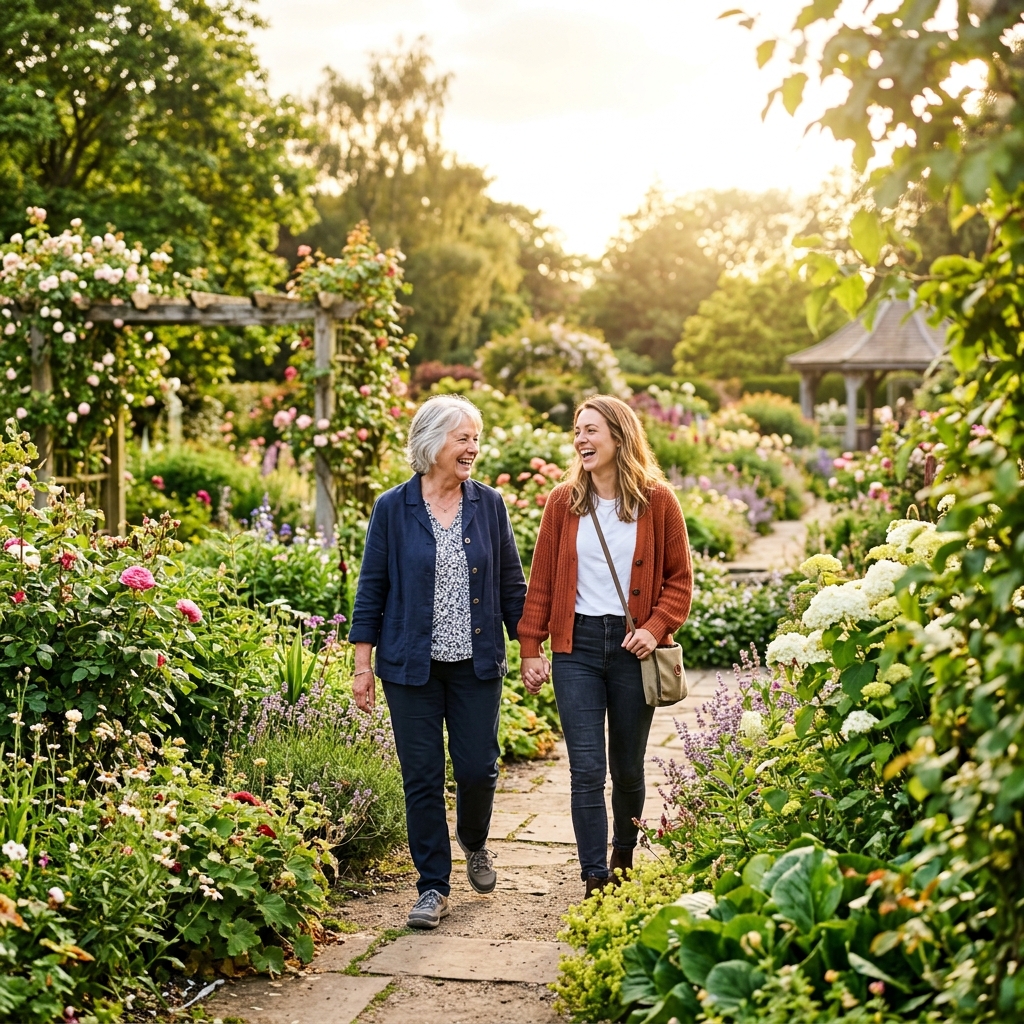
The world’s longest-lived people do not have exercise routines in the Western sense. They have not decided to “be more active.” Movement is simply embedded in the shape of their days — walking to a neighbour’s house, climbing a flight of stairs, tending a garden, kneading dough by hand. A study in the Journal of Population Ageing found that Blue Zone centenarians engaged in manual labour, outdoor activities, and in-home activities — constantly on the move, with activity incorporated into daily life rather than scheduled as exercise. The message is not to exercise more. It is to stop sitting still for so long.
🌿HOW CORELIA BRINGS THIS HOME
Habit 2: Purpose — Know Your Why
The Okinawans call it ikigai. The Nicoyans call it plan de vida. In translation, both phrases describe the same thing: a reason to get out of bed in the morning. Buettner found that having a clear sense of purpose adds an estimated seven years to life expectancy. Seven years — from something that costs nothing. The centenarians Buettner interviewed were not living for abstract reasons. Their purpose was specific: my grandchildren need me. My garden won’t tend itself. My friends are coming on Tuesday. Purpose, at this scale, is extraordinarily powerful.
🌿HOW CORELIA BRINGS THIS HOME
Habit 3: Down Shift — Build Stress Relief into Every Day
Chronic stress is one of the most reliably damaging forces on the aging body, accelerating inflammation, cardiovascular disease, and cognitive decline. What Blue Zone communities figured out is that you do not eliminate stress — you build daily rituals that shed it before it accumulates. Sardinians have daily happy hours with neighbours, Adventists observe a weekly Sabbath rest, Ikarians take afternoon naps, Okinawans pause each day to remember their ancestors. The methods differ. The effect is the same: cortisol falls, the nervous system rests, and the body has time to repair.
🌿HOW CORELIA BRINGS THIS HOME
Habit 4: 80% Rule — Eat Less, More Mindfully
Before every meal, Okinawans recite a 2,500-year-old Confucian phrase: hara hachi bu — eat until you are 80% full. The logic is physiological. There is a 20-minute delay between eating and the brain registering satiety, so stopping before you feel full naturally reduces caloric intake without counting a single number. Okinawans also practise several mindfulness habits at the dinner table, including eating slowly to allow the body to respond to cues and focusing on the food to savour flavours. Blue Zone communities also tend to eat their largest meal at midday and their lightest in the evening — a pattern that modern chrono-nutrition research increasingly confirms.
🌿HOW CORELIA BRINGS THIS HOME
Habit 5: Plant Slant — Eat Mostly Plants, Not Mostly Anything Else
Beans — fava, black, soy, lentil, chickpea — are the single most consistent food across all five Blue Zones. Legumes are eaten daily, providing the primary protein source. Vegetables and leafy greens appear at every meal. Whole grains are eaten daily. Nuts are eaten daily or most days — Loma Linda Adventists who ate nuts five times a week had half the heart disease rate of those who did not. Meat is eaten on average five times a month, in small portions. The diet is not virtuous or rigid. It is simply proportioned differently: plants at the centre, everything else at the edges.
🌿HOW CORELIA BRINGS THIS HOME
Habit 6: Wine at 5 — The Ritual Matters More Than the Wine
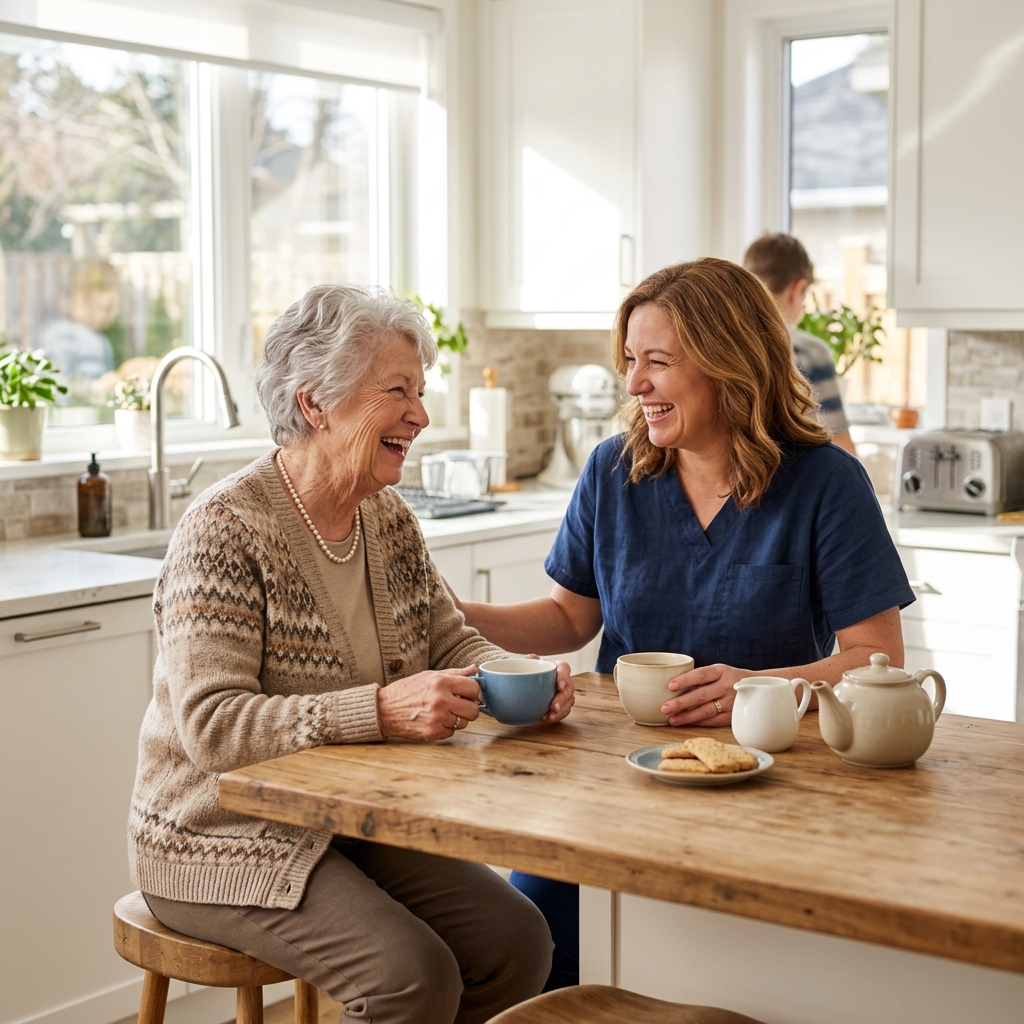
With the exception of the Loma Linda Adventists, all Blue Zone communities drink alcohol in moderation — one to two small glasses of wine per day, with food, in social settings. Sardinia’s Cannonau wine has notably high levels of flavonoids. The key word, though, is moderation. But Buettner is careful to point out that the wine itself may matter less than the ritual surrounding it: the pause in the day, the gathering of friends, the shared laughter, the deliberate slow-down before the evening. It is not a health prescription. It is a social architecture for relaxation — one that any family can recreate with a cup of tea, a shared biscuit, a quiet hour together.
🌿HOW CORELIA BRINGS THIS HOME
Habit 7: Belong — Be Part of Something Larger Than Yourself
Buettner found that individuals of faith who regularly attended a faith-based service lived 4 to 14 years longer than their counterparts who did not. He is careful to note that the research is non-denominational — the benefit does not depend on which tradition, but on belonging, structure, meaning, and the social community that regular spiritual practice provides. Of the 263 centenarians he interviewed across all five Blue Zones, all but five belonged to a faith-based community. The mechanism is not theological. It is social and psychological: a weekly rhythm of gathering that gives time shape, grief a container, joy a place to be witnessed.
🌿HOW CORELIA BRINGS THIS HOME
Habit 8: Loved Ones First — Family Is Not a Burden. It Is a Strategy.
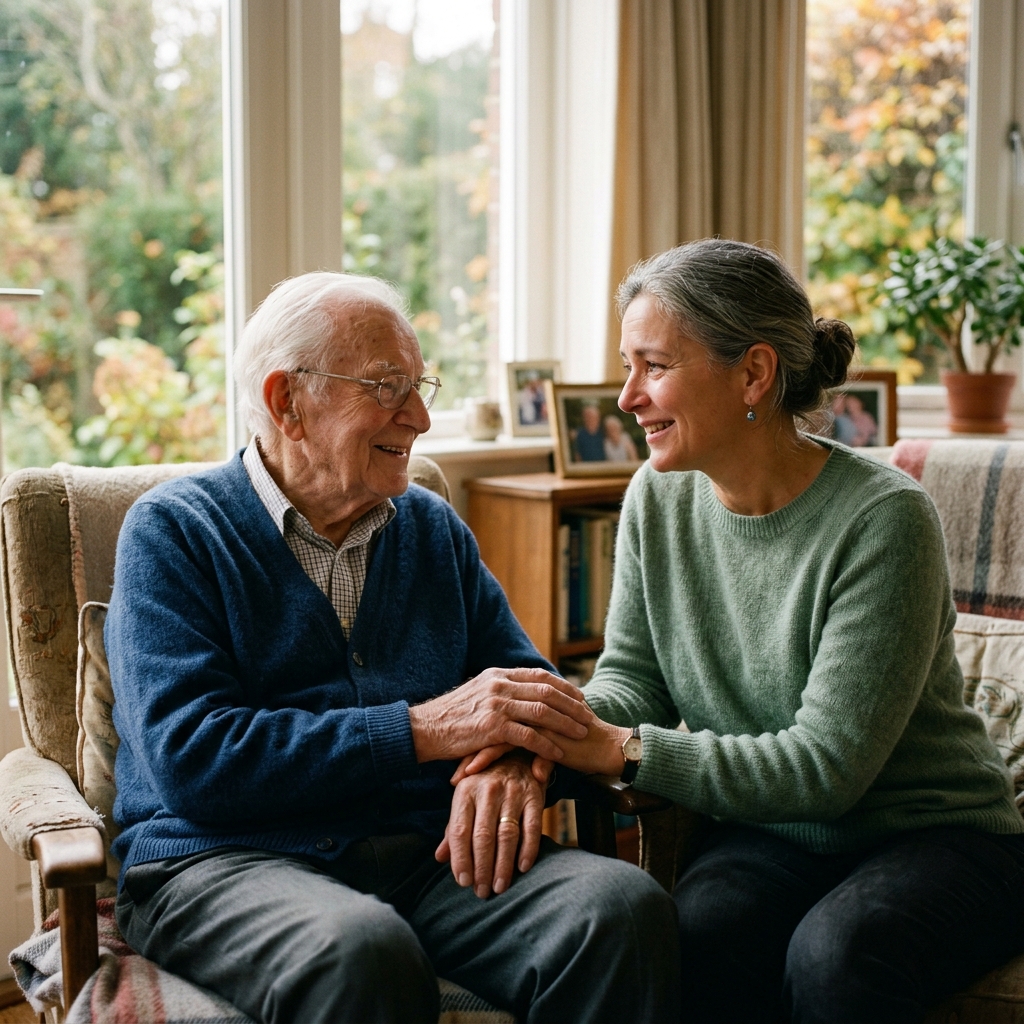
Blue Zone centenarians keep aging parents and grandparents physically close — in the home, or walking distance from it. They invest deeply in their children and grandchildren, understanding intuitively what the research confirms: that this investment returns, with interest, as they age. In Sardinia, an elder’s presence at the dinner table is considered a gift to the family, not a duty borne by it. Their wisdom and stories are the anchoring point of household life. The absence of this kind of valued embeddedness in family — the sense of being a burden rather than a resource — is one of the most potent drivers of cognitive and physical decline in isolated seniors.
🌿HOW CORELIA BRINGS THIS HOME
Habit 9: Right Tribe — You Become the Average of Those Around You
This may be the most important habit of all — and the one most consistently overlooked in conversations about senior health. Research shows that smoking, obesity, happiness, and even loneliness can be socially contagious. Surrounding yourself with healthy, engaged people is one of the most powerful lifestyle choices you can make. The Okinawan moai — a group of five people who commit to each other for life — is the formalised version of this principle. But it operates in every Blue Zone, informally. The people you eat with, walk with, laugh with, and confide in shape your health as powerfully as anything you put in your body. Loneliness, by contrast, is now understood to carry health risks equivalent to smoking 15 cigarettes a day.
🌿HOW CORELIA BRINGS THIS HOME
What the Numbers Actually Say
10 yrs
Extra good life you could gain
Buettner estimates that adopting Blue Zone habits can return an extra decade of healthy, high-quality living to the average person — at any age.
Extra years from faith community
One of the most striking single-factor findings in the entire dataset. Belonging matters at a biological level — it is not spiritual sentiment. It is health data.
7 yrs
Added by a clear sense of purpose
Knowing your reason to wake up in the morning is worth, according to the research, as much as any drug, diet, or clinical intervention.
““In no case did the centenarians we studied reach middle age and decide to pursue longevity through a change in diet or exercise. The longevity occurred because they were in the right environment”
— an environment that fostered a lifestyle of longevity.” — Dan Buettner, The Blue Zones
The Blue Zones and Dr. Wada: Two Cultures. One Truth.
If you have read our piece on Dr. Hideki Wada’s The 80-Year-Old Wall — the Japanese bestseller with 44 principles for aging boldly — you will recognise something as you read through the Power 9. They are the same principles. Keep walking. Find your purpose. Eat well. Cherish your relationships. Keep learning. Stay connected. Rest without guilt. Smile.
Dr. Wada’s wisdom and Buettner’s global research are, at their core, the same message. The difference is that the Blue Zones give it something even more powerful: demographic proof, across five continents, peer-reviewed and replicated. The things Dr. Wada urges Japanese seniors to do are not cultural opinion. They are the observable daily habits of the world’s longest-lived people.
Start today — Corelia Health across Ontario & Alberta
Nine habits. One caregiver. One home. It starts this week.
You have now seen what the world’s longest-lived people actually do. None of it is extraordinary. All of it is environmental. And environment is exactly what Corelia Health builds — in the home your loved one already knows and loves, starting as soon as 48 hours from now.
No contracts. No minimum hours. No waiting lists. Just carefully matched caregivers who ask the right questions, show up reliably, and make a Blue Zone life possible — in Mississauga, Milton, Oakville, Brampton, Burlington, Guelph, Edmonton, and beyond.
Right Tribe & Purpose — the two most powerful longevity factors, in practice every day
Move Naturally — daily support with walking, activity, and the gentle rhythms of a good day
Dignity maintained — the foundation of self-worth that keeps purpose alive
Plant Slant — diet, nutrition, and lifestyle support for conditions the Blue Zones habits directly address
Loved Ones First — so the family commitment is sustainable, not exhausting
Always there — so no senior is ever truly alone through the night
It Is Never Too Late to Start
The most moving thing about the centenarians Buettner met is what they do not say. They do not speak about discipline. They do not mention sacrifice. They do not credit any decision they consciously made.
They talk about the pleasure of their garden. The joy of their grandchildren’s company. The glass of wine shared with a neighbour at sunset. The Tuesday walk they have taken every week for six decades because it is Tuesday and that is what they do. Long life, in the Blue Zones, is not a project. It is the byproduct of a life lived with connection, purpose, and joy.
And that life — the research is unambiguous on this — can be built, sustained, and enriched at any age. The shepherd who walked those Sardinian hills did not start walking at 80 to extend his life. He had been walking all along, and his life extended because of it.
At Corelia Health, we help families give their loved ones the environment that makes this kind of life possible. Not a programme. Not a regimen. A relationship — with a caregiver who knows your loved one, shows up reliably, and helps them live more fully in the home they love.
““If you can optimise your lifestyle, you may gain back an extra decade of good life you would otherwise miss.””
— Dan Buettner, The Blue Zones
Key Takeaways
Move Naturally
Build a daily 20-minute walk into the routine. Consistency matters more than intensity.
Know Your Purpose
Understanding what gets your loved one out of bed in the morning can add up to seven years to their life expectancy.
Plant Slant Diet
Shift the proportions on the plate to include more beans, vegetables, fruits, and nuts.
Create Social Rituals
A weekly shared meal or standing phone call provides reliability and fights the devastating health risks of loneliness.
If you can optimise your lifestyle, you may gain back an extra decade of good life you would otherwise miss.
Frequently Asked Questions
Blue Zones are five regions in the world where people consistently live the longest and healthiest lives, often reaching 100 years of age.
The Danish Twin Study found that only about 20% of how long we live is determined by genes. The other 80% is dictated by lifestyle and environment.
No. The world's longest-lived people don't go to gyms; instead, they incorporate natural movement like walking and gardening into their daily routines.
Corelia provides companion care, encourages natural movement, prepares nutritious plant-slanted meals, and fosters strong social bonds right in the senior's own home.
Professional Care Services
Why Corelia Health?
-
Customized care plans tailored to your unique needs and preferences.
-
Vetted and trained caregivers who are passionate about senior wellness.
-
Ongoing monitoring and regular family updates for peace of mind.
-
Locally owned and operated, providing a personalized community touch.
"We help at home, wherever home is for you."
Find The Right CareSpeak to our Clinical Care Coordinator
We are here to walk this journey with you. Our coordinators provide expert guidance on care options, funding, and next steps.