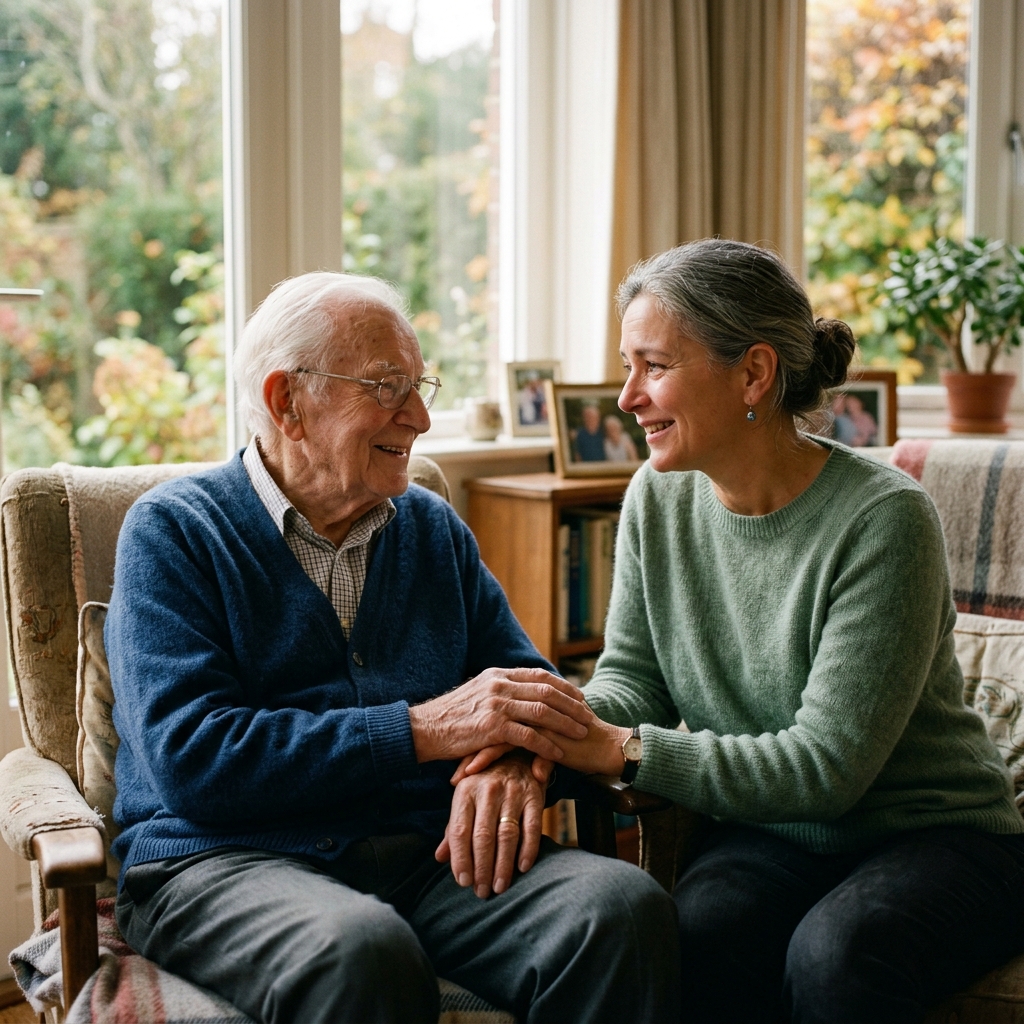
There is a moment that many families recognise. You visit your mum or dad and something feels different. The dishes are piling up. They're eating less. The house — which they've called home for 40 years — feels a little quieter, a little heavier than it used to.
You don't say anything right away. You make the tea. You sit together. But on the drive home, you turn it over in your mind: Is it time? And if it is — what does "time" actually look like?
For many families across Canada, that question leads straight to one of two assumptions: either we manage alone, or we look at a care facility. But there is a third path — one that 90% of seniors say they want, one that research consistently shows leads to better health outcomes, and one that still feels like home.
It is called in-home senior care. And it might be the most important conversation your family has not had yet.
Need care for your parent?
Get a professional care assessment at no cost.
What Exactly Is In-Home Senior Care?
In-home senior care — sometimes called home care, home health care, or aging-in-place support — is professional caregiving delivered in the place where your loved one already lives. Not a facility. Not a waiting room. Their own kitchen, their own garden, their own chair by the window.
It covers a wide spectrum: from a few hours of companionship each week, to help with bathing and dressing each morning, to round-the-clock care for complex health conditions. The right level depends entirely on the person — their needs, their routines, their wishes.
And that, right there, is what makes it different from institutional care. It starts with the person, not a protocol.
““My father had always said he'd never go to a home. We used to roll our eyes a little”
— until the day came and we understood exactly what he meant. He wasn't being difficult. He was telling us who he was. His home was his dignity. Getting care there let him keep both.” — Family caregiver, Mississauga
The Science Is Clear: Home Is Where Seniors Do Best
This is not sentiment. It is evidence. A growing body of research on senior care outcomes consistently finds that older adults who receive professional in-home care fare measurably better across almost every health metric that matters.
Lower hospital readmission rates
Seniors receiving structured home care are significantly less likely to return to hospital within 30 days of discharge.
More likely to report life satisfaction
Studies consistently find higher wellbeing scores among seniors aging at home versus those in institutional care settings.
Reduction in feelings of loneliness
Regular caregiver visits address one of the most significant — and most overlooked — health risks facing Canadian seniors.
The reason makes intuitive sense: familiarity reduces stress. Reduced stress supports healing. And healing happens best when someone feels safe, seen, and at home.
Chronic loneliness carries health risks comparable to smoking 15 cigarettes a day — something the Canadian Medical Association has flagged as one of the most urgent, least-discussed public health issues of our time. A caregiver who shows up consistently is not a luxury. They are, quite literally, medicine.
What does "aging in place" actually mean?
Seven Signs Your Loved One May Need In-Home Support
There is rarely a single moment when it becomes obvious. It is usually quieter than that. Here are the signs worth paying attention to — ones that families often recognise only in hindsight.
““I kept telling myself we were managing. My mum insisted she was fine. It was only when a neighbour called us that we realised she had not eaten properly in four days. We had all been so busy not wanting to upset her that we missed what was right in front of us.””
— Adult daughter, Oakville
What In-Home Senior Care Actually Looks Like, Day to Day
People often imagine in-home care as clinical — someone in a uniform, running through a checklist, in and out in an hour. At its best, it looks nothing like that.
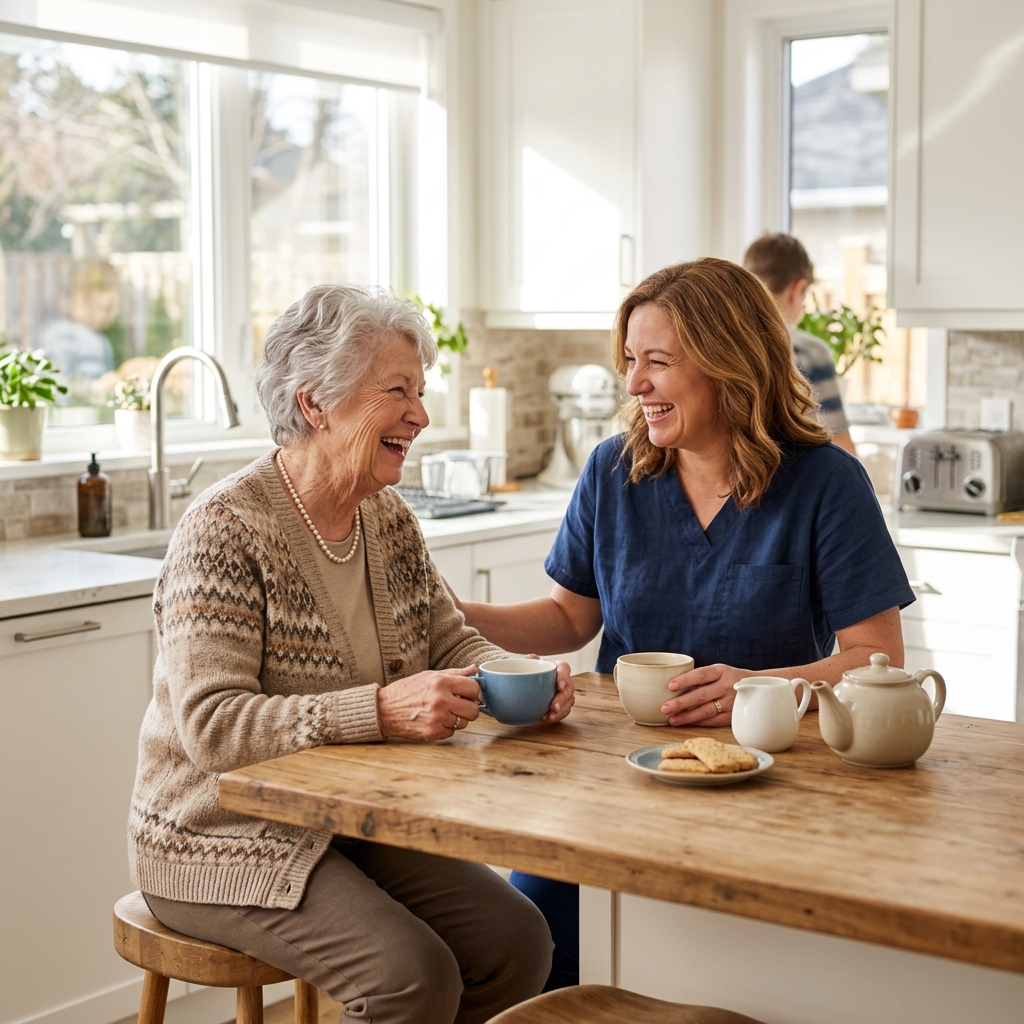
At its best, it looks like a familiar face at the door on Tuesday morning. Someone who knows that your father takes his tea with no sugar but likes a biscuit. Someone who notices he seems quieter than usual and asks — gently — if everything is okay. Someone who helps him to the shower without making it feel like help.
Day-to-day support with the activities that make up a life — meals, light housekeeping, mobility, appointments. When these things feel manageable, everything else does too.
Bathing, dressing, grooming — done with patience, skill, and complete respect for the person's dignity.
Conversation. Shared meals. A walk in the garden. Board games. Remembering things together.
For seniors living with diabetes, heart disease, COPD, arthritis, or dementia, in-home care becomes clinical support — monitoring symptoms, managing medications, and preventing small issues from becoming crises.
When a spouse or adult child is the primary caregiver, respite care steps in to give them the break they need — without guilt, without compromise.
For seniors who need round-the-clock supervision — whether due to dementia, fall risk, or complex medical needs — overnight and live-in care keeps them safe at home.
The first weeks after a hospital stay are the most vulnerable. Professional home support during recovery dramatically reduces readmission rates.
For many families, the most profound gift they can give a loved one at the end of life is to let them stay home. Palliative home care makes that possible with dignity and comfort.
The Corelia Difference: Care that comes from the heart — Dil Se
Corelia comes from the Latin word Cor — meaning heart. It is not a branding choice. It is a promise we make to every family who opens their door to us.
We do not have minimum hour requirements. We do not lock families into contracts. We do not make anyone wait when they need help. We show up — carefully matched to your loved one, consistently, with warmth — and we stay for as long as you need us.
Across 9+ cities in Ontario and Alberta, from Mississauga to Edmonton, that is what Corelia Health delivers every single day.
How Do I Know It Is the Right Time?
Here is the most honest answer we can give: the right time is almost always earlier than you think.
Most families come to us after a crisis — a fall, a hospitalisation, a moment when everything became suddenly, undeniably clear. And most of those families say the same thing afterward: "I wish we had done this sooner."
In-home care is not only for people who cannot manage at all. It is for people who can manage — but are doing so at a cost. The cost of exhaustion. The cost of isolation. The cost of a quietly narrowing life.
““Home care should feel like home. It should come with patience, with warmth, with someone who actually notices”
— and actually stays.” — Corelia Health founding philosophy
How to Choose the Right In-Home Care Provider in Canada
Not all home care is the same. Here is what to look for — and what to ask — when evaluating providers across Ontario or Alberta:
““We interviewed three different agencies. The difference with Corelia was that they asked about my mother”
— who she was, what she loved, what a good day looked like for her. Everyone else asked about her diagnosis. We knew immediately.” — Family caregiver, Burlington
A Word to the Seniors Reading This
If you are the one reading this for yourself — quietly, perhaps not sure yet whether to mention it to your family — we want to say something directly to you.
Asking for help is not giving in. It is not a sign that your independence is over. The research shows that seniors who accept the right support at the right time maintain their independence longer than those who go it alone until a crisis forces the decision.
You have spent a lifetime taking care of other people. Letting someone take care of you — well, graciously, on your terms — is one of the bravest things you can do.
““We started Corelia because we have seen what happens when care is reduced to a checklist”
— when a senior sits alone after a hospital visit, when the system moves on but the person has not. We refused to accept that.” — Corelia Health
Key Takeaways
Home is Best
90% of seniors prefer to age in place, which research consistently shows leads to better health outcomes.
Safety First
Structured in-home care reduces hospital readmission rates by 30% and prevents dangerous falls.
Dignity Protected
In-home care preserves independence and allows seniors to stay in the place they love.
Fight Loneliness
Consistent companionship reduces feelings of isolation by 40%, improving overall wellbeing.
Home care should feel like home. It should come with patience, with warmth, with someone who actually notices — and actually stays.
Frequently Asked Questions
In-home senior care is professional caregiving delivered in the senior's own home, covering everything from companionship to complex medical support.
It leads to lower stress, better healing, 30% lower hospital readmissions, and significantly higher life satisfaction compared to institutional care.
Common signs include unexplained weight loss, poor hygiene, missed medications, falls, social withdrawal, and difficulty maintaining the home.
We focus on genuine human connection, have no minimum hour requirements, no contracts, and can typically start care within 48 hours.
You can book a free 30-minute assessment on our website or by calling us at 1 (844) 826-7354. We serve cities across Ontario and Alberta.
Professional Care Services
Why Corelia Health?
-
Customized care plans tailored to your unique needs and preferences.
-
Vetted and trained caregivers who are passionate about senior wellness.
-
Ongoing monitoring and regular family updates for peace of mind.
-
Locally owned and operated, providing a personalized community touch.
"We help at home, wherever home is for you."
Find The Right CareSpeak to our Clinical Care Coordinator
We are here to walk this journey with you. Our coordinators provide expert guidance on care options, funding, and next steps.