
Dementia caregiving asks something different of a person — vigilance that never fully switches off. Here's what respite care looks like when it's built specifically around a dementia diagnosis, and how to bring someone new into the routine without it feeling like a disruption.
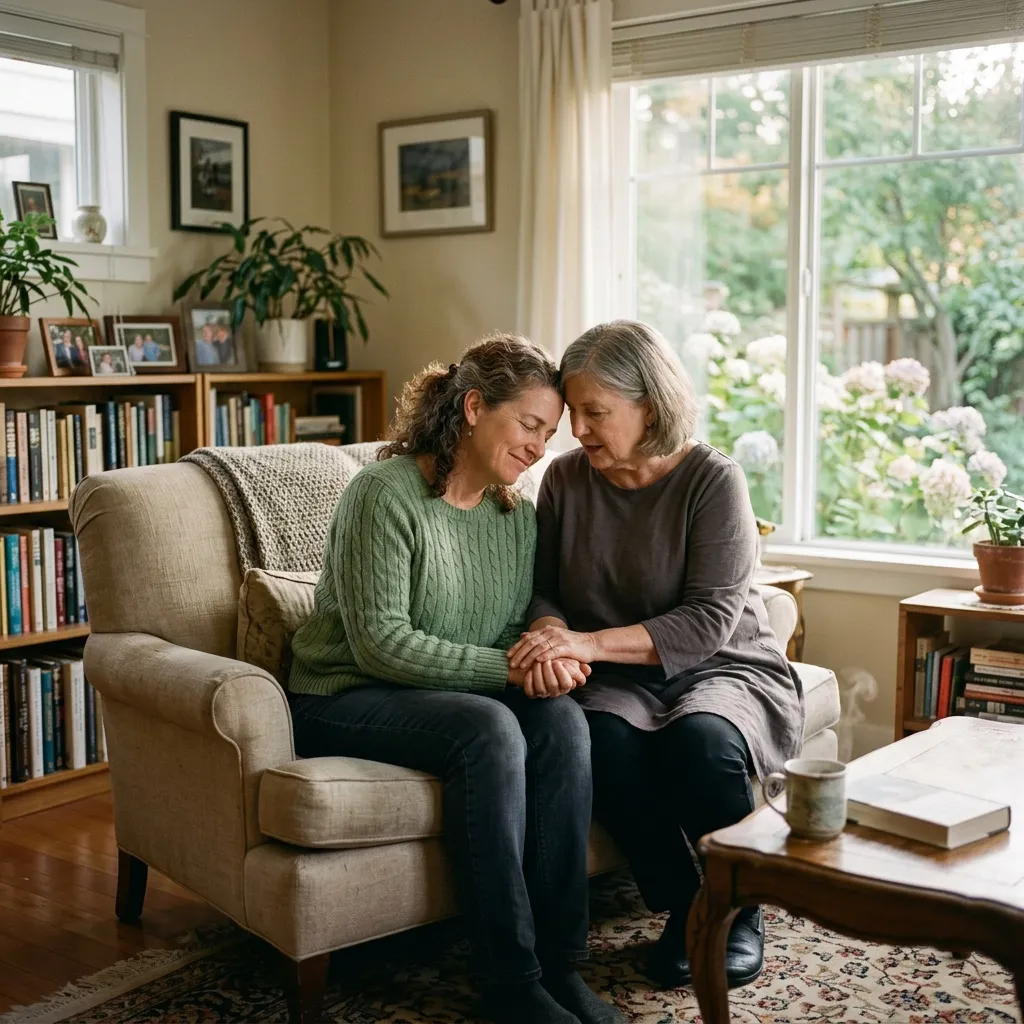
There is a specific exhaustion that comes with loving someone whose memory is disappearing in front of you. It isn't just the physical tasks — the redirecting, the repeated answers, the watching the door at dusk. It's the grief that runs alongside the caregiving, the missing of someone who is still in the room. Families caring for a loved one with dementia often don't recognize their own burnout because there's no finish line to measure it against. The condition doesn't improve. The caregiving doesn't get lighter. It just goes on, and on, and asks a little more each season.
Respite care exists for exactly this kind of caregiving — but dementia respite has to work differently than respite for other conditions. Continuity matters more. Unfamiliar faces and new routines can genuinely distress a person with dementia, not just inconvenience them. This guide covers what that looks like in practice.
Need care for your parent?
Get a professional care assessment at no cost.
Why dementia caregiving wears people down differently
Most caregiving has a rhythm — a recovery period after surgery, a stable stretch after a diagnosis is managed. Dementia caregiving rarely offers that. The person you're caring for may not recognize the effort behind the care, may ask the same question fifteen times in an hour, may become confused, frightened, or even hostile in ways that are symptoms of the disease rather than a reflection of your relationship. It's caregiving without the usual feedback loop, and it's easy to keep absorbing that alone long past the point of exhaustion.
On top of the physical demands — managing medications, preventing wandering, handling incontinence, keeping a consistent routine — there's the emotional weight of a slow, ongoing loss. Many dementia caregivers describe grieving the person twice: once as they change, and again when they're gone. Respite doesn't remove that weight. But it gives you somewhere to set it down for a few hours at a time, regularly enough that it doesn't crush you.
You can love someone completely and still need help caring for them. Those two things have never been in conflict.
What makes dementia-specific respite different
Respite care for a general senior care need can flex easily — a new face, a slightly different routine, and most people adjust within a visit or two. Dementia changes that calculation. A person with dementia often relies heavily on routine and familiar faces to feel safe; an unfamiliar caregiver arriving without preparation, or a change in the daily rhythm, can trigger confusion, agitation, or a spike in anxiety that lasts well beyond the visit itself.
Good dementia respite is built around a few specific things:
- Caregiver consistency — the same one or two respite caregivers over time, rather than a rotating cast, so the person with dementia has a chance to build familiarity.
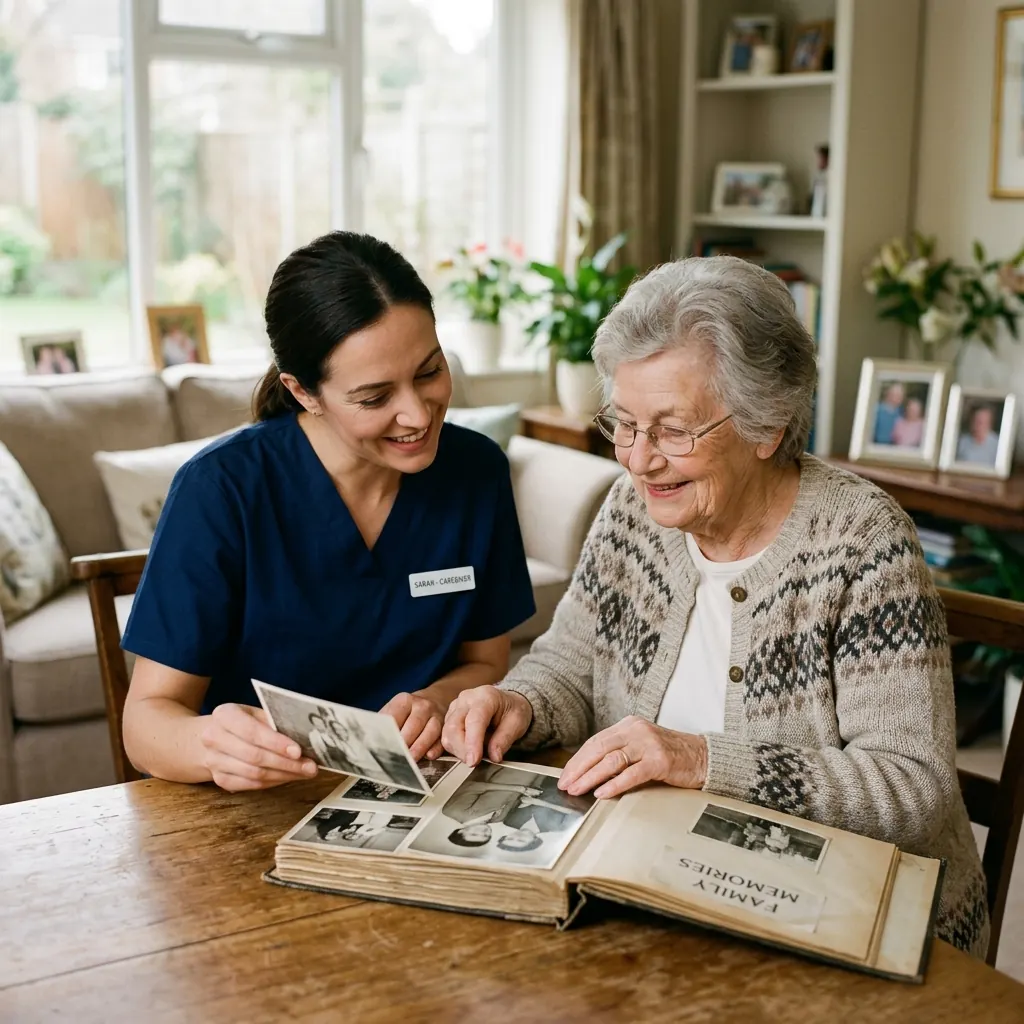
- A gentle introduction period — a short overlap visit where the family caregiver is still present, so the new caregiver can be introduced calmly rather than appearing as a sudden change.
- Training in dementia-specific behaviour — how to redirect without arguing, how to respond to repeated questions without frustration, how to recognize and de-escalate agitation, and how to communicate in ways that don't rely on short-term memory.
- Routine matching, down to detail — the specific order of a morning routine, preferred phrases, comfort objects, and known triggers all matter more here than in general senior care.
- Coverage during known difficult windows — many families need respite specifically around sundowning hours (the late-afternoon-to-evening period when confusion and agitation often peak) rather than during the calmer morning hours.
Want more deep knowledge like this?
Join our private Facebook group to connect with experts, get exclusive resources, and find support from families navigating the same journey.
Who reaches out for dementia respite
The spouse managing sundowning alone
A wife has learned to dread the hours between 4 and 7pm, when her husband becomes disoriented and sometimes tries to "go home" even though he is home. She hasn't had an evening to herself in over a year. Respite coverage during exactly those hours — not just any hours — is what actually gives her a break.
The adult child balancing two households
A son checks on his mother, who has moderate Alzheimer's, every evening after work and every weekend. He's started missing his own kids' events. A few scheduled afternoons a week means someone trained is with his mother at a consistent time, and he gets his weekends back without guilt.
The family preparing for a wandering risk
A father with dementia has started trying doors at night. The family isn't ready for 24/7 care, but they need overnight respite on the nights the primary caregiver truly cannot stay awake, with someone trained specifically to recognize and respond to wandering behaviour.
The caregiver facing their own health event
A daughter providing full-time care for her mother has just been told she needs surgery herself. She needs a caregiver who can step into an already-established dementia routine quickly, with minimal disruption to her mother during an already disorienting time.
Signs it's time to look into dementia respite
Consider respite if:
- You've noticed your patience wearing thin in ways that feel unfamiliar to you, especially around repeated questions or resistance to care.
- Sundowning hours have become something you brace for rather than manage.
- You're skipping your own medical appointments, sleep, or meals because there's no one else who "knows how" to be with your loved one.
- You've started to feel isolated, because dementia caregiving is hard to explain to people who haven't lived it.
- A wandering incident, a fall, or a hospital visit has made you realize you can't be the only line of defence, every hour, indefinitely.
For a broader look at what respite involves and how to know it's time in general, see our Complete Guide to Respite Care. And if a stubborn "I don't need help" is part of what's holding you back, Why Your Aging Parent Refuses Help may be useful before that first conversation.
How to introduce a respite caregiver without confusing your loved one
The transition matters as much as the caregiver's training. A few things tend to help: introduce the new caregiver during a calm part of the day rather than during a difficult moment; describe them in familiar terms your loved one will recognize ("this is Maria, she's going to help us out today") rather than explaining the situation in full; and stay for a short overlap the first time or two, so your loved one associates the new face with your presence before you step away. Consistency after that first visit — the same caregiver, the same rough schedule — does most of the remaining work.
If your family is earlier in the dementia journey and looking for a broader foundation, Dementia Care at Home in Canada: What Families Should Know in 2026 and Compassionate Dementia Care: 7 Groundbreaking Strategies for Families cover home safety, routines, and communication approaches in more depth.
What dementia respite from Corelia Health looks like
The goal isn't just coverage — it's coverage that a person with dementia can actually settle into. That means caregivers who are trained specifically in dementia and Alzheimer's support, matched to your loved one and kept consistent over time, briefed on the exact routine and known triggers before the first visit, and available for the hours that are actually hardest — including evenings and overnight, not just standard daytime blocks.
You shouldn't have to be the only one who knows how
Corelia Health matches families with caregivers trained specifically in dementia and Alzheimer's support — the same familiar face, briefed on your loved one's exact routine, comfort objects, and known triggers, before they ever walk through the door.
- Dementia-trained caregivers, matched for consistency rather than rotated
- Coverage built around your hardest hours — including sundowning and overnight
- A gentle, overlapped introduction so the transition doesn't unsettle your loved one
- Care overseen by our Clinical Director, a Registered Nurse with the College of Nurses of Ontario / College of Registered Nurses of Alberta
- Flexible scheduling — a few hours a week up to full 24/7 coverage, adjustable as needs change
Corelia Premium Guide
Use this guide to compare care options, prepare family questions, and understand what to check before starting in-home support.
Professional Care Services
Local Home Care Support
Why Corelia Health?
-
Customized care plans tailored to your unique needs and preferences.
-
Screened caregivers matched to the care plan, schedule, and level of help required.
-
Ongoing monitoring and regular family updates for peace of mind.
-
Locally owned and operated, providing a personalized community touch.
"We help at home, wherever home is for you."
Find The Right CareSpeak to our Clinical Care Coordinator
We are here to walk this journey with you. Our coordinators provide expert guidance on care options, funding, and next steps.