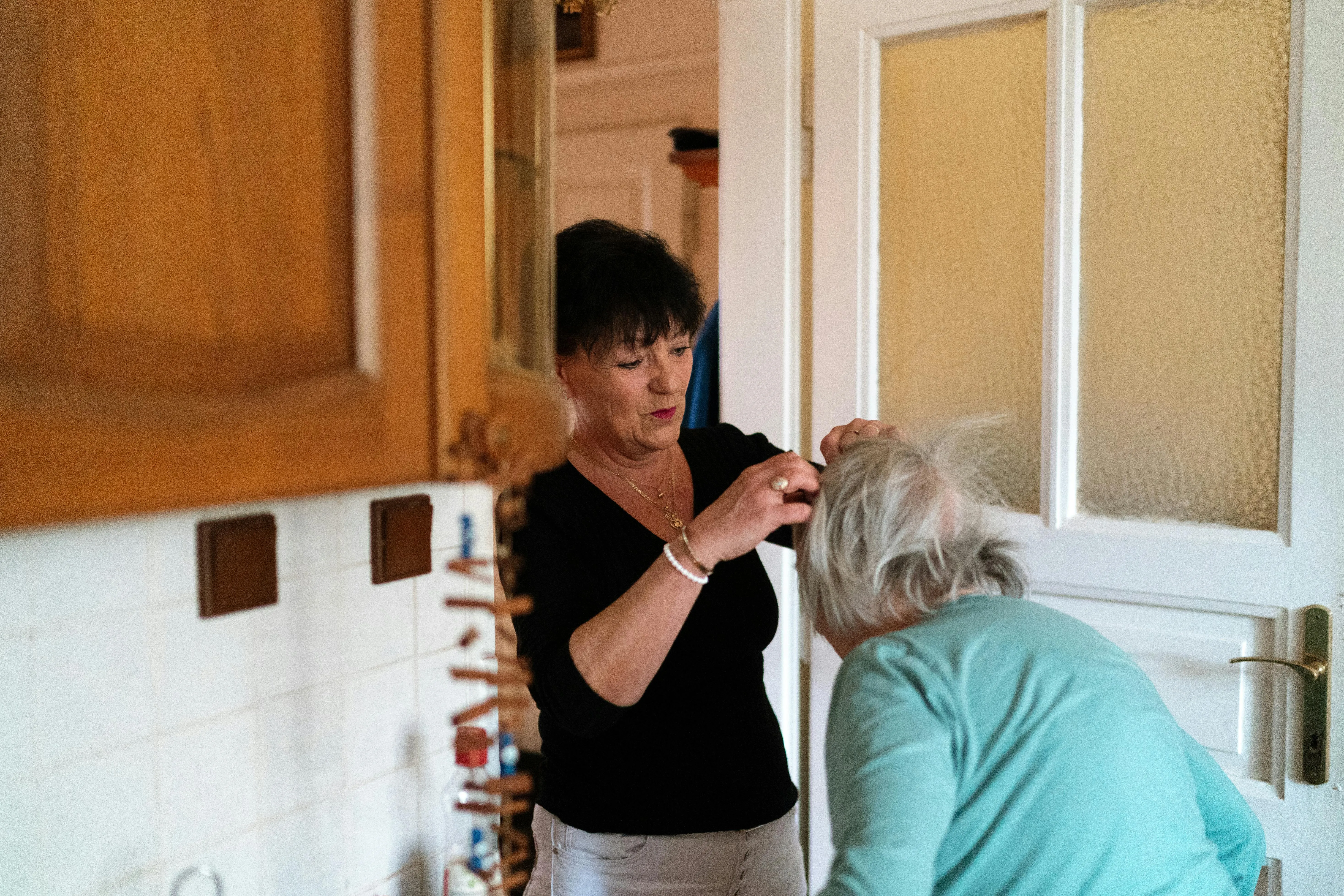

Canada’s senior population is growing faster than at any point in our history. By 2030, more than one in four Canadians will be over the age of 65 — and the vast majority want to age at home. Yet demand for qualified caregivers is already outpacing supply, and families are searching for ways to keep their loved ones safe between care visits.
This is where artificial intelligence is stepping in — not to replace the warmth of human care, but to extend it. At Corelia Health, our mission has always been compassion at every step. We believe the future of senior care is one where technology and human connection work hand in hand.
Need care for your parent?
Get a professional care assessment at no cost.
1. AI Fall Detection: A Life-Saving Breakthrough
Falls are the leading cause of injury-related hospitalizations among Canadian seniors. Traditional monitoring required a fall to have already happened before anyone was alerted. AI has changed that.
Today’s AI-driven systems use ceiling-mounted sensors, motion analysis, and wearable accelerometers to identify fall-risk behaviour before an incident occurs. Canadian company AltumView (Burnaby, BC) uses privacy-preserving technology to monitor movement without capturing video, protecting dignity while keeping seniors safe.
2. Medication Management — No More Missed Doses
Many Canadian seniors manage five or more medications daily. AI-powered medication management systems provide gentle, consistent reminders via voice, screen, or phone. They track whether a medication has been taken and alert a caregiver or family member if it has been missed — a critical safety net for seniors living alone or managing complex health conditions.
Want more deep knowledge like this?
Join our private Facebook group to connect with experts, get exclusive resources, and find support from families navigating the same journey.
3. Health Monitoring Wearables — Early Warning, Every Day
Smart wearables now offer continuous biometric monitoring that would have required a hospital visit just a decade ago. These devices track heart rate variability, oxygen saturation, sleep quality, and activity levels. When integrated with a care team’s system, this data allows clinicians to spot developing health issues days before a crisis — especially valuable for seniors managing chronic conditions like heart failure, COPD, or diabetes.
4. Voice Assistants — Everyday Independence
Voice assistants like Amazon Alexa and Google Home allow seniors to control their environment, set reminders, make phone calls, and contact emergency services — all without touching a screen. For seniors with arthritis, vision impairment, or reduced dexterity, this is not just convenient — it is empowering.
5. AI Companionship — Addressing the Loneliness Epidemic
Social isolation is one of the most serious health risks facing Canadian seniors — carrying health risks comparable to smoking 15 cigarettes a day. Tools like ElliQ (a proactive AI companion) engage seniors in daily conversation, cognitive games, wellness check-ins, and reminiscence activities. Research shows 63% of users reported feeling less lonely as a result.
The Corelia Health Vision: Technology With a Human Heart
“Compassion at every step” is not just a tagline — it is the foundation of everything we do at Corelia Health. We believe AI and smart technology have a meaningful role to play in the future of senior care. But technology will never replace the warmth of a caregiver who knows your loved one’s name, their stories, their preferences, and their fears. At Corelia Health, our vision is a future where AI handles the monitoring, the reminders, and the alerts — freeing our professional caregivers to focus on what matters most: genuine human connection, expert clinical care, and dignity at every stage of aging.
What AI Cannot Do — And Why Human Care Always Comes First
⚠️ Privacy Note: Families considering AI tools should ask providers about data storage, who has access, and compliance with Canadian privacy legislation (PIPEDA).
How to Get Started With AI Technology for Your Loved One
1. Start simple — A smart speaker or medical alert wristband is a less intimidating starting point than a complex sensor network
2. Involve your loved one — Ask what concerns them most and choose tools that address those specific needs
3. Prioritise ease of use — The best technology is the technology a senior will actually use: look for voice control and large displays
4. Layer technology with human care — AI tools work best as a complement to professional in-home care, not a substitute
5. Talk to your care provider — Corelia Health can help identify clinically appropriate tools and integrate them into a holistic care plan
Key Takeaways
Fall Detection
Sensors and wearables detect falls instantly and alert caregivers or emergency services.
Medication Reminders
Smart systems track adherence and flag missed doses to care teams.
Health Monitoring
Wearables detect subtle changes in vitals days before a potential crisis.
Voice Assistants
Hands-free control of reminders, calls, and home environment.
AI Companionship
Reduces loneliness and provides cognitive stimulation between human visits.
Smart Home Safety
Motion sensors monitor patterns and alert families to unusual behaviour.
Compassion at every step is not just a tagline — it is the foundation of everything we do at Corelia Health. We believe AI and smart technology have a meaningful role to play in the future of senior care.
Frequently Asked Questions
AI is being used for predictive health monitoring, fall detection, medication management, personalized care planning, and caregiver-client matching. Corelia Health uses AI-powered tools to match seniors with the most compatible caregivers.
No. AI is a tool that enhances human caregiving, not replaces it. Technology handles data and logistics while trained caregivers provide the irreplaceable human connection, empathy, and hands-on support that seniors need.
AI care matching uses data about a senior's needs, personality, and preferences to find the most compatible caregiver — resulting in better relationships, higher satisfaction, and more effective care outcomes.
Yes. Reputable providers like Corelia Health follow strict privacy regulations and use AI only to improve care quality. All personal health information is protected under Canadian privacy laws.
Corelia Premium Guide
Use this guide to compare care options, prepare family questions, and understand what to check before starting in-home support.
Professional Care Services
Local Home Care Support
Why Corelia Health?
-
Customized care plans tailored to your unique needs and preferences.
-
Screened caregivers matched to the care plan, schedule, and level of help required.
-
Ongoing monitoring and regular family updates for peace of mind.
-
Locally owned and operated, providing a personalized community touch.
"We help at home, wherever home is for you."
Find The Right CareSpeak to our Clinical Care Coordinator
We are here to walk this journey with you. Our coordinators provide expert guidance on care options, funding, and next steps.