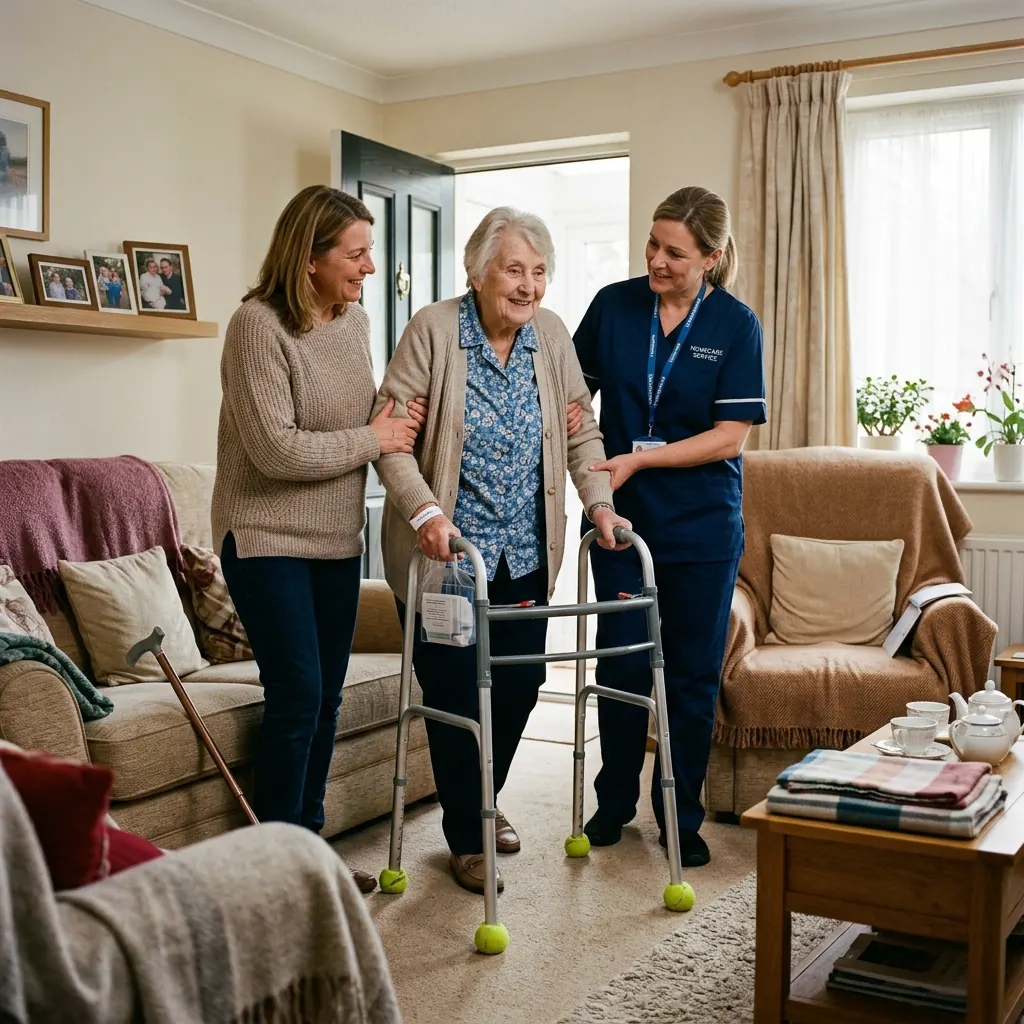

When the phone rings and it’s your mother saying she’s been in a car accident, or when the surgeon finally walks out and says, “everything went well,” your body relaxes for about three seconds. Then a quieter worry settles in. What happens now? Who’s going to be there when she gets home? How do I make sure she actually heals?
If you’re reading this somewhere in the middle of one of those moments, maybe in a hospital hallway, maybe at the kitchen table at midnight, take a breath. You don’t have to have all the answers tonight. This is a gentle walk through what recovery really looks like for an older adult, the small things that make the biggest difference, and the signs that tell you it’s time to lean on someone else. Think of it less as a checklist barked at you and more as a steady hand on your shoulder.
Need care for your parent?
Get a professional care assessment at no cost.
Why Recovery Asks More of an Older Body
Here’s something the discharge papers rarely say out loud: a seventy-year-old doesn’t bounce back the way a thirty-year-old does. That isn’t discouraging news, it’s simply how the body works as it ages, and understanding it changes everything about how you plan.
Car crashes are the second most common cause of serious injury in older adults, just behind falls. And because of something doctors call frailty, the slow loss of the body’s built-in reserves, even an event that seems minor can land harder than expected. Older bodies are more easily hurt and slower to mend, and that’s worth respecting rather than fearing.
There’s a quieter risk, too, one that hides inside the hospital stay itself. When someone lies in a bed for days, their muscles fade surprisingly fast, a process called deconditioning. The figures are eye-opening: somewhere between 30 and 41 percent of older adults lose meaningful strength and function during a hospital admission, and an independent senior becomes roughly four times more likely to slip into real decline afterward. Worse, that lost ground is slow to recover, often taking twice as long to rebuild as it took to lose.
Recovery isn’t won in the operating room. It’s won, gently, in the days and weeks back home.
None of this is meant to frighten you. It’s meant to point you toward where your attention truly matters, not the surgery that’s already done, but the homecoming that’s about to begin.
The First Days Home: Softening the Landing
The move from hospital bed to home bed is the most fragile handoff in the whole journey. A little preparation before your loved one walks back through the door takes a surprising amount of fear out of it.
Make the space ready and safe. Pick a quiet, well-lit room close to a bathroom. Tuck pillows where they can sit up or rest without pulling at a wound. Roll up the loose rugs and tuck away the cords, the things we never notice until someone unsteady is trying to cross the room.
Gather supplies before they arrive. Have the medications filled, the wound-care supplies stocked, and a few easy meals ready, so nobody is making a frantic pharmacy run on the first evening. Keep water, the phone, and anything they’ll reach for within arm’s length.
Get the instructions in writing, and read them twice. Before you leave the hospital, ask about medications, pain relief, wound care, signs of infection, diet, and exactly when the follow-up appointments are. Bring a written list of questions, because you will not remember them all once you’re standing there with a wheelchair and a parking ticket.
Want more deep knowledge like this?
Join our private Facebook group to connect with experts, get exclusive resources, and find support from families navigating the same journey.
Medications, Without the Guesswork
After surgery or a serious accident, your loved one is often juggling brand-new prescriptions on top of pills they already take, and that’s exactly where things go sideways. Painkillers, blood thinners, and antibiotics can interact with existing medications in ways that aren’t obvious from the label.
The principle is easy to say and hard to keep: everything, exactly as prescribed, on time. That means a real system you trust, a pill organizer, a chart on the fridge, an alarm on the phone, not “I think she took the morning ones.” And if dizziness, confusion, or nausea show up, especially in that first week, make the call rather than waiting it out. It’s never an imposition to ask.
Caring for the Wound, Watching for Trouble
Whether it’s a surgical incision or an injury from the crash, the wound is the frontline of recovery, and infection is one of the most common setbacks, as well as one of the most preventable.
A few simple habits head off most problems: keep dressings clean and dry, wash your hands well before and after touching the area, steer clear of clothing that rubs, and follow the team’s guidance on bathing. Most healing is quietly uneventful, and that’s exactly what you want.
Call the doctor right away if you notice:
- A fever or chills
- Redness, swelling, or warmth that’s spreading around the wound
- Drainage, especially if it changes color or has an odor
- Pain that’s getting worse instead of slowly better
Knowing the line between normal healing and a real warning sign saves families from both needless worry and dangerous delay.
Movement, Nourishment, and the Heart
Three things quietly decide how well recovery goes, and all three are easy to let slip.
Keep them moving, gently. It feels backwards to coax someone up when they’re sore, but careful, doctor-approved movement is what wards off blood clots, pneumonia, and that muscle loss we talked about. Short, frequent little walks beat long stretches in bed. A walker isn’t a defeat, it’s what makes those first steps safe.
Feed the healing. The body rebuilds from what you give it, lean protein, plenty of fluids, real food. If chewing is hard, lean on soups, yogurt, and oatmeal, and remember that several small meals often go down easier than three big ones. Go easy on alcohol, heavily processed foods, and too much caffeine, which all work against the repair.
Tend to the heart, too. Recovery is emotionally heavy. Many seniors grieve their lost independence or feel frustrated and low, and after a frightening accident, anxiety can surface days or even weeks later. Staying close, listening, and letting them name those feelings out loud isn’t separate from healing. It is healing.
Follow-Up Visits Are Not Just a Formality
Once someone seems to be doing better, it’s tempting to treat the follow-up appointment as optional. Please don’t. Those visits are how the care team catches problems early, fine-tunes medications, and adjusts the plan. Physical or occupational therapy, in particular, can be the difference between getting most of the way back and getting all the way home.
The real hurdle is almost always logistics, getting a recovering parent who can’t drive to a nine a.m. appointment across town while you’re due at work. That ordinary, exhausting gap is exactly where good recoveries quietly stall.
When You Can’t Do It All, And That’s Okay
Here’s the honest part, the one nobody says gently enough. Most families read a list like this and realize it adds up to a full-time job stacked on top of the full-time jobs they already have. You can’t take three weeks off. You can’t safely change a complicated dressing you’ve never been trained for. You can’t be there at two in the morning and at the morning therapy session and at the pharmacy.
That isn’t a failure of love. It’s just arithmetic. And it’s exactly the moment when a little professional help at home stops being a luxury and becomes the thing that protects everything you’ve been working so hard to hold together.
Where Corelia Health Can Step In
Corelia Health provides in-home senior care for families across Ontario and Alberta, and their services line up almost exactly with the recovery worries above, because supporting people through this very season is much of what they do.
Their After Surgery Care at Home service is built around a simple truth: the hardest moments tend to happen after the hospital, getting to the bathroom, taking medication on time, preparing a meal, and noticing when something just feels wrong. Caregivers and nurses help with the things that quietly decide an outcome:
- Pain and wound management, including watching the healing and changing dressings safely
- Medication reminders that keep doses accurate and on schedule
- Mobility and daily-living support for walking, bathing, and dressing, the everyday tasks that hold deconditioning at bay
- Housekeeping and meal prep, so good nutrition and a safe home don’t fall through the cracks
For the nerve-wracking move from hospital to home, their Hospital Discharge Support smooths the handoff with clinical backup. When recovery calls for a registered nurse, Skilled Nursing Care at Home covers the complex wound and medical needs families simply shouldn’t shoulder alone. And if your loved one shouldn’t be by themselves, 24/7 Senior Home Care keeps someone present, day and night.
A few things families tend to find reassuring: care can usually begin within 24 to 48 hours of a free assessment, every caregiver is licensed, insured, and background-checked, and there are no long-term contracts, so you can lean on more hours in those tender first weeks and ease off as your loved one finds their feet again.
If You Remember Nothing Else
1. Ready the home before discharge: safe space, supplies stocked, floors clear.
2. Get every instruction in writing while the medical team is still in front of you.
3. Build a medication system you’ll actually keep up with.
4. Protect the wound and learn the warning signs of infection.
5. Keep them moving and well-fed, gently and steadily.
6. Never skip the follow-ups, therapy very much included.
7. Reach for help before you burn out, not after.
The Heart of It
Recovery after an accident or surgery is rarely a straight line, and for an older loved one it asks for more time, more patience, and more support than any of us expect going in. The families who come through it well aren’t the ones who try to carry everything alone. They’re the ones who make a plan, keep a watchful eye, and bring in the right help at the right moment, so that the person they love can heal the way everyone hopes to: with dignity, and at home.
---
### You don’t have to figure this out alone
If you’re in the thick of it right now, Corelia Health offers a free, no-obligation assessment. A care coordinator will listen to your loved one’s situation and suggest a realistic level of support, no pressure, no contracts.
This article is for general information and isn’t a substitute for medical advice. Always follow the specific guidance of your loved one’s healthcare team.
Corelia Premium Guide
Use this guide to compare care options, prepare family questions, and understand what to check before starting in-home support.
Professional Care Services
Local Home Care Support
Why Corelia Health?
-
Customized care plans tailored to your unique needs and preferences.
-
Screened caregivers matched to the care plan, schedule, and level of help required.
-
Ongoing monitoring and regular family updates for peace of mind.
-
Locally owned and operated, providing a personalized community touch.
"We help at home, wherever home is for you."
Find The Right CareSpeak to our Clinical Care Coordinator
We are here to walk this journey with you. Our coordinators provide expert guidance on care options, funding, and next steps.