
Inside the Quiet War Between Who Seniors Feel Like and What Their Bodies Now Need
Frank is 81. In his head, he is 58.
He still climbs the ladder to clean his own eavestroughs every October. He still insists on carrying the heavier end of the couch when his daughter rearranges her living room. He still drives himself to his cardiologist appointment, even though his depth perception isn't what it was, and even though his daughter has offered, every single time, to take him.
When his daughter gently brought up moving the ladder task to someone else this year, Frank's response wasn't sadness. It was something closer to indignation.
"I'm not an invalid," he said. "I've been doing this since before you were born."
Frank isn't being stubborn for the sake of it. He isn't in denial in the way the word usually gets used — careless, foolish, unaware. Something much more human is happening, and it's happening to millions of people exactly like him. He knows, somewhere, that he's 81. He just doesn't feel 81. And that gap — between the age on his driver's licence and the age in his own mind — is where this entire story lives.
This one is for Frank. And for his daughter. And for everyone standing on either side of that gap.
Need care for your parent?
Get a professional care assessment at no cost.
The Feeling Has a Name — and the Research Says It's Mostly a Good Thing
Psychologists call it subjective age — how old a person feels inside, regardless of what their birth certificate says. And here's the part almost no one expects: most older adults feel younger than their actual age, and this isn't a flaw. It's associated with better physical and cognitive health, higher well-being, and even lower mortality risk.
15%
THE AVERAGE GAP BETWEEN HOW OLD SENIORS FEEL AND THEIR REAL AGE
One major study following adults aged 65 to 96 over eight years found the average participant reported feeling roughly 15% younger than their actual age. That's not denial. That's a documented, measurable, and largely healthy psychological pattern.
Brain imaging research backs this up in a striking way: older adults who reported feeling younger showed larger volumes in brain regions tied to language and social cognition, and a younger "predicted brain age" than their actual age. Feeling younger isn't just a nice thought — it correlates with something real happening at a neurological level.
So if you're a senior who looks in the mirror some mornings and thinks, that's not who I am inside, the research says: you're not wrong, and you're not alone. You're part of the statistical majority.
“"Most middle-aged and older adults feel younger than they actually are”
— and this 'youthful bias' is the norm, not the exception." — Wahl et al., 2023
So Where Does It Go Wrong?
Here's the twist that makes this so much more complicated than "feeling young is good" or "denial is bad." The same research shows the opposite extreme carries real risk too: adults who feel older than their actual age show measurably worse outcomes — poorer memory, slower executive function, even years later. Subjective age isn't a simple dial where younger is always better and older is always worse. It's more like a signal of how someone is relating to their own life.
The real danger isn't feeling younger. It's when that feeling gets used to override clear physical evidence — when "I don't feel old" becomes the reason to skip the cane, refuse the driving assessment, or climb the ladder anyway. That's not subjective age anymore. That's identity defending itself against a threat.
Want more deep knowledge like this?
Join our private Facebook group to connect with experts, get exclusive resources, and find support from families navigating the same journey.
To the Senior Reading This: We See What's Actually Happening
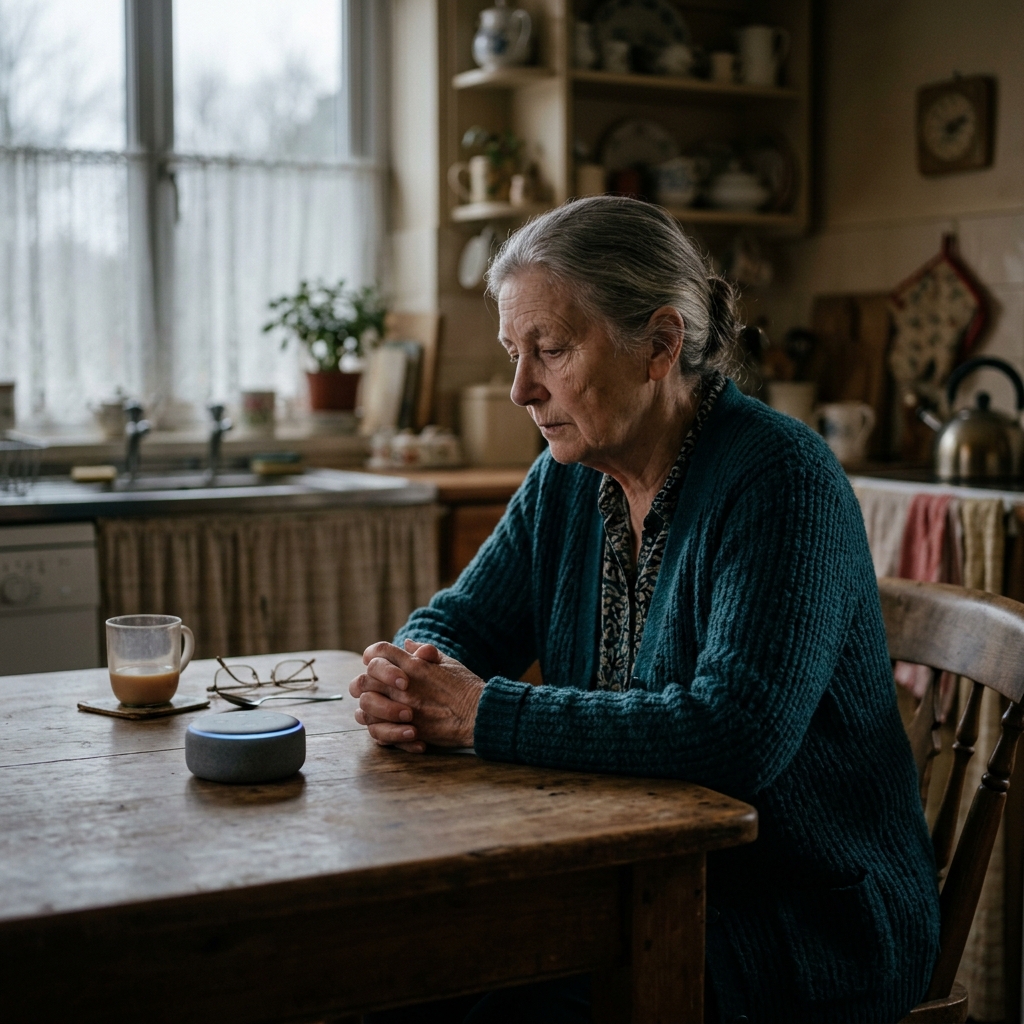
If you've ever bristled when someone offered to carry something for you. If you've ever insisted on doing a task specifically because someone implied you couldn't. If a part of you still expects to see a younger face in the mirror and feels a small jolt every time you don't — this section is for you, and it starts with something important: there is nothing wrong with you.
You're Defending Something Real
Researchers who study this describe it plainly: people tie their sense of self to their abilities — their strength, their competence, their usefulness. A decline in any of those doesn't just mean a physical change. It threatens the entire story you've told yourself about who you are. Refusing to acknowledge the decline isn't foolishness. It's a way of protecting the continuity of your own identity. That's not weakness. That's self-preservation, and it's deeply human.
You Might Be Fighting a Stereotype, Not Just Your Body
Decades of research by Yale's Becca Levy show that we absorb negative beliefs about aging — forgetfulness, frailty, irrelevance — from the culture around us, often starting in childhood, long before we're anywhere near old ourselves. By the time you reach the age those stereotypes were describing, some part of you has already decided what "old" means, and it usually isn't flattering. So when someone suggests you might need help, you may not just be hearing "let me help you." You may be hearing the stereotype itself, arriving to claim you. No wonder the instinct is to push back.
The Stakes Are Higher Than They Look
Here's the part worth sitting with honestly: the same research shows that believing negative things about your own aging is linked to worse cardiovascular health, while one landmark study found that older adults with more positive self-perceptions of aging lived an average of 7.5 years longer than those with less positive ones. In other words, fighting the idea that you're "old" might genuinely be good for you. What matters is what you're fighting. Fighting the stereotype that old age means uselessness — that fight can extend your life. Fighting the specific, factual reality that your balance has changed, or your night vision has weakened — that fight can end it.
The goal was never to feel old. It's to tell the difference between a stereotype worth rejecting and a fact worth respecting.
To the Adult Child Reading This: It's Not Stubbornness — It's Survival
If you've offered to help your parent with something simple — carrying groceries, using a handrail, giving up the car keys — and been met with sharp resistance or even hurt feelings, you may have walked away thinking why is this so hard for them? Understanding what's actually happening underneath that resistance changes how you can respond to it.
What Looks Like Stubbornness Is Often Self-Protection
Researchers who study this dynamic describe specific, recognizable patterns. Some seniors will argue outright, trying to persuade you they're not as frail as you seem to think. Others will go out of their way to prove themselves — doing the exact task you worried about, on purpose, immediately after you express concern. One researcher documented a woman who responded to her son-in-law's repeated offers to help with ladder work by proudly climbing the ladder herself, every time, specifically because he'd worried about her. That's not someone being difficult. That's someone whose identity just got challenged, fighting to hold onto it the only way available to them in that moment.
The Things They're Most Likely to Fight You On Aren't Random
Driving is almost always the hardest. It isn't really about the car — driving represents independence, control, and access to the rest of life: appointments, groceries, friends, church, grandchildren. Research on driving cessation shows it's associated with increased social isolation and increased depressive symptoms, which is exactly why the resistance is so fierce. Your parent isn't being irrational when they fight to keep their keys. They're fighting to keep everything driving represents. That doesn't mean the fight should win — it means the conversation needs to address the real loss, not just the safety statistics.
How You Frame the Conversation Changes Everything
Researchers consistently find one pattern: when family members emphasize a senior's weaknesses or simply forbid certain activities, conflict escalates. When the conversation instead appeals to the values that matter most to that specific person — independence, respect, being useful to others — and frames support as something that protects the life they still get to live, resistance tends to soften. The goal isn't to win the argument about whether they're capable. It's to find a version of support they can accept without it costing them their sense of self.
WHAT THE SENIOR IS FEELING
"If I let them help with this, what else are they going to decide I can't do?"
WHAT THE ADULT CHILD CAN TRY SAYING INSTEAD
"I know you've done this for decades — I just don't want one bad fall to take away the next decade of doing it."
Where the Line Actually Is
Feeling younger than you are: healthy, evidence-backed, worth protecting. Refusing a fact that puts you or someone else in danger: a different thing entirely. A few honest markers worth noticing on either side of that line:
- For seniors: ask yourself if you're declining help because you genuinely don't need it, or because accepting it feels like agreeing with a stereotype you've spent your whole life resisting. Those are two very different reasons, and only one of them should change your decision.
- For seniors: a single near-miss — a stumble, a close call while driving, a task that took twice as long and left you more exhausted than it used to — is information, not an insult. Letting it inform one decision doesn't mean surrendering all of them.
- For adult children: notice whether you're reacting to an actual incident (a fall, a missed exit, a forgotten medication) or to a general anxiety about your parent aging. Specific, recent evidence makes for a much more productive conversation than a vague worry.
- For adult children: ask what your parent would feel they were losing if they accepted help with a specific task — then see if there's a version of that help that doesn't cost them that particular thing.
- For both: bring in a neutral third voice when it helps — a doctor, an occupational therapist, or a driving assessor can sometimes deliver hard truths more easily than family, simply because it doesn't carry the same emotional history.
- For both: remember that the goal was never to make anyone feel old. It's to make sure that feeling young on the inside doesn't come at the cost of safety on the outside.
Back to Frank
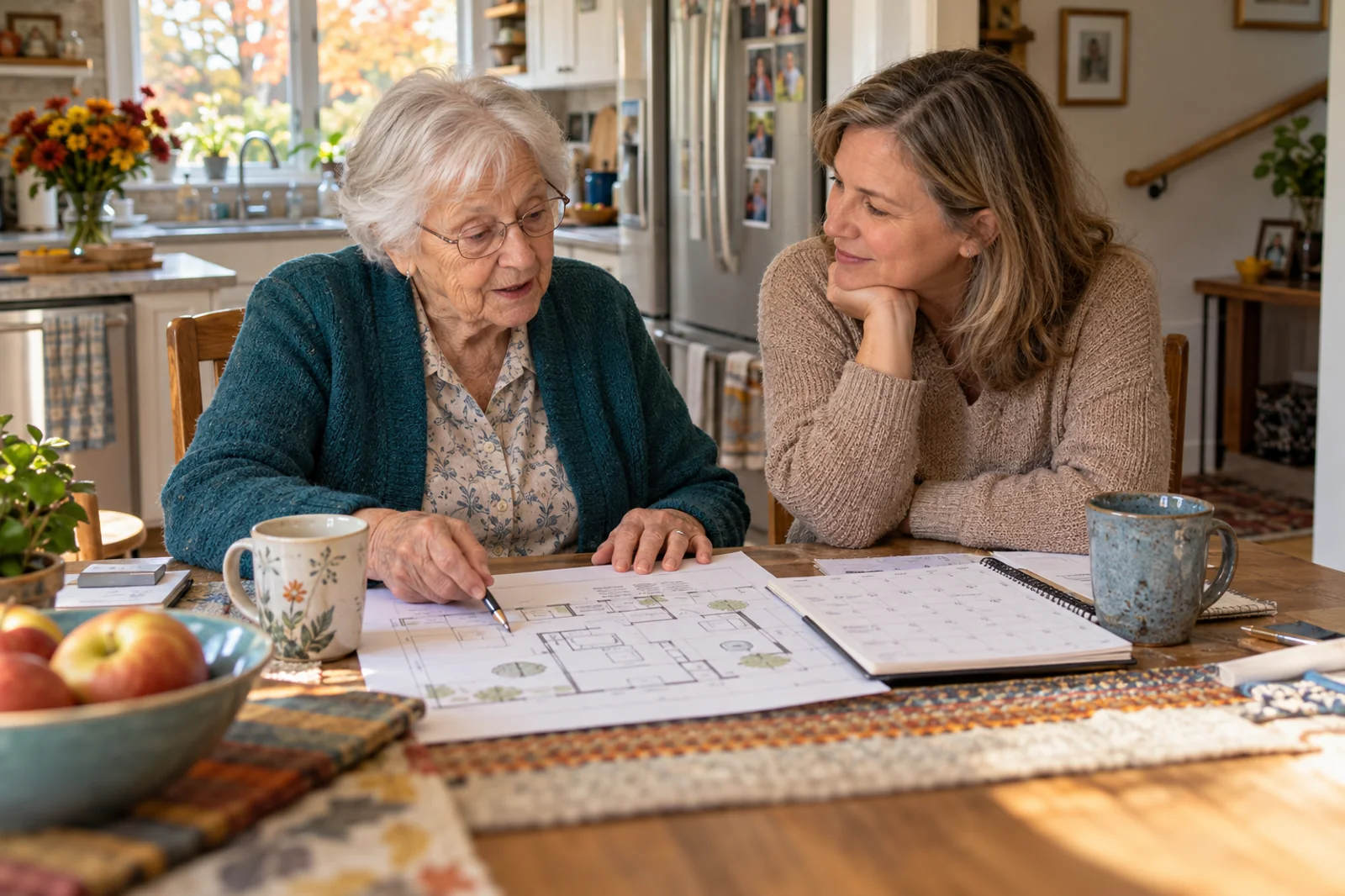
Frank still climbed the ladder that October. His daughter didn't take the ladder away, and she didn't bring it up again that week. Instead, a few days later, she asked him something different: "Would you teach me how you check the eavestroughs? I want to know how to do it properly, the way you do it."
Frank said yes immediately. He spent forty-five minutes at the bottom of the ladder, directing her, explaining which gutters clogged fastest and why. He never climbed it again after that — not because anyone told him he couldn't, but because the job had quietly become hers, and he got to be the one who taught her.
"He still talks about it like he did me a favour," his daughter said. "And honestly? I think he kind of did."
Nothing about Frank's body changed that week. He still feels closer to 58 than 81, and the research suggests that's doing him some good. What changed was the shape of the help — support that let him stay exactly who he's always been, just from a few rungs lower.
Feeling young at heart was never the problem. The problem is when that feeling gets handed the wrong job — defending against a fact instead of resisting a stereotype. Get that distinction right, and the years ahead don't have to feel like a fight against who you've become. They can feel like more of who you've always been.
If Frank's story — or his daughter's — feels familiar in your own home, you don't have to navigate it alone. Corelia Health's care coordinators have these exact conversations with families across Ontario and Alberta every week, and we know how to talk about support in a way that respects who your parent has always been, not just what they can no longer do.
A few starting points, depending on where the conversation in your family actually is:
- Companion Care — if the goal right now is simply having someone present, building trust, and easing into support without it feeling like a loss of independence.
- Personal Care Assistance — for the specific physical tasks, like the ladder, the heavy lifting, or the bathroom routines, where a trained pair of hands lowers the risk without taking away the task entirely.
- Skilled Nursing Care at Home — if a near-miss, a new diagnosis, or a doctor's note has made the safety question medical rather than just a difference of opinion.
A free, no-pressure conversation with a care coordinator is always available, whichever of these feels closest to where your family is right now.
Corelia Premium Guide
Use this guide to compare care options, prepare family questions, and understand what to check before starting in-home support.
Professional Care Services
Local Home Care Support
Why Corelia Health?
-
Customized care plans tailored to your unique needs and preferences.
-
Screened caregivers matched to the care plan, schedule, and level of help required.
-
Ongoing monitoring and regular family updates for peace of mind.
-
Locally owned and operated, providing a personalized community touch.
"We help at home, wherever home is for you."
Find The Right CareSpeak to our Clinical Care Coordinator
We are here to walk this journey with you. Our coordinators provide expert guidance on care options, funding, and next steps.